DAILY YOGA · Adho Mukha Vrksasana
Handstand
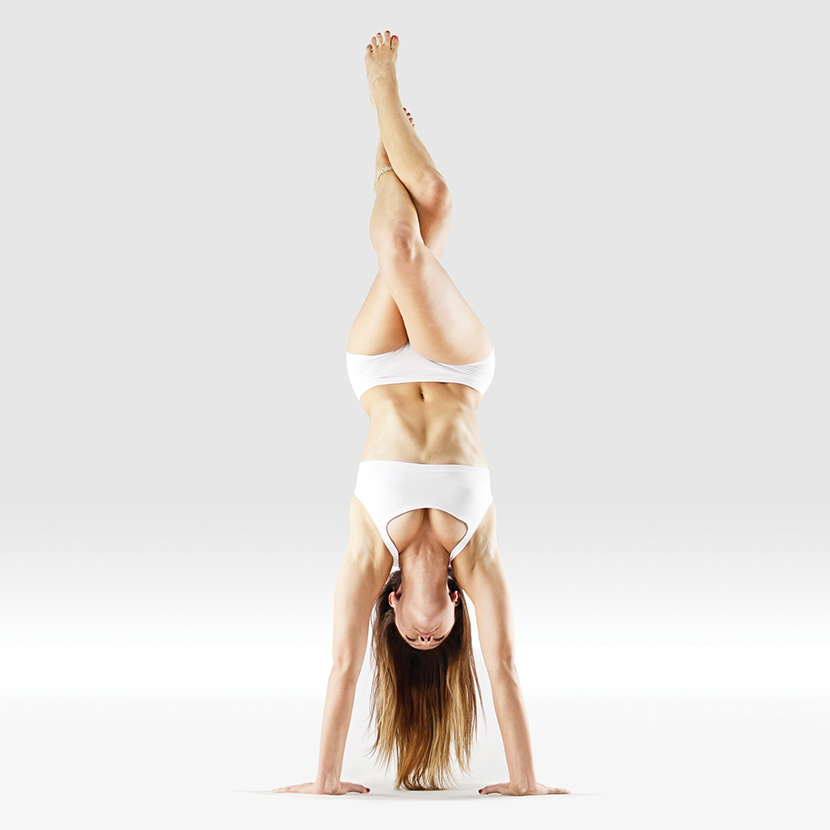
Adho Mukha Vrksasana — Handstand (literally "downward-facing tree") — is the full inversion balanced entirely on the hands. It builds tremendous shoulder and core strength, focus and fearlessness. Best learned patiently at a wall.
Name meaning: "Adho" (downward) + "mukha" (facing) + "vrksa" (tree) + "asana" (pose) — the "downward-facing tree", rooted through the hands with the legs reaching up like branches.
Classification: Asana — an arm-supported full inversion (arm balance + inversion).
Tradition & origin: Full handstand as a held yoga asana is largely a feature of modern postural yoga and 20th-century gymnastics-influenced practice. While inversions are praised in the medieval hatha texts (chiefly the headstand/Viparita Karani family), the free-standing hand balance as taught today is modern.
This guide was drafted with the help of AI and reviewed by us. It is for general education only and is not medical or professional advice. It may contain errors. Please practise mindfully, listen to your body, and consult a qualified yoga teacher or doctor for anything specific. Spotted an error? Tell us in the comments below.
How to do it — step by step
- 1Face a wall; place the hands shoulder-width, a few inches from it, fingers spread.
- 2Step one foot in close and lift the other leg straight up.
- 3Use a controlled kick — not a wild throw — to float the hips over the shoulders.
- 4Stack hips over shoulders over wrists; press the floor firmly away.
- 5Engage the core and reach the legs up, feet lightly to the wall if needed.
- 6Keep the ribs in and the gaze between the hands.
- 7Come down one leg at a time with control.
Breath & hold
Breathe steadily; do not hold the breath. Begin with short holds at the wall and build over time.
Benefits
- ✓Builds strong shoulders, arms, wrists and core.
- ✓Develops balance, focus and confidence.
- ✓An energising, invigorating inversion.
- ✓Improves body awareness and control.
🪔 The traditional / desi way
- A "downward tree" (adho mukha vrksa) — rooted through the hands as a tree is through its roots, reaching legs to the sky.
- Traditional wisdom: strength and patience first. Build the shoulders (Dolphin, wall drills) before chasing the free balance.
Common mistakes
- ✕Throwing the legs up wildly instead of a controlled kick.
- ✕Over-arching the lower back with flared ribs (banana back).
- ✕Bending the elbows and collapsing the shoulders.
Modifications & props
- 🧩Practise at a wall.
- 🧩Build shoulder strength with Dolphin Pose and half-handstand (feet on the wall, L-shape).
Muscles & anatomy
- 💪Strengthens: shoulders (deltoids), the serratus and upper back, the arms and wrists, and the whole core.
- 💪Works hard: the wrist and forearm muscles that stabilise the base.
- 💪Requires: coordinated core and gluteal engagement to hold the line.
What you may feel
- 🫧Normal: strong effort in the shoulders and core; a light, stacked feeling when the balance is found.
- 🫧Warning: wrist pain, elbow collapse, or any neck loading — come down at once. Never work through joint pain here.
Variations to grow into
Hold a free balance briefly away from the wall, then work small shape changes (straddle, tuck) with control.
Press to handstand from a controlled entry without kicking, and hold longer free-standing — advanced, and best with a coach.
Using props
- 🧱A wall — the standard learning tool for safe entry and holds.
- 🧱A folded mat or wedge under the heels of the hands to ease wrist angle.
Warm-up & counterpose
- Wrist rotations and gentle wrist-loading drills.
- Dolphin Pose and half-handstand (feet on the wall, hips over shoulders) to warm the shoulders.
- Child’s Pose and gentle wrist stretches to release the shoulders and wrists.
- Standing forward fold to let the head and blood pressure settle.
Progression path
Build shoulder strength (Dolphin, plank, half-handstand) for weeks or months first; then practise controlled kick-ups at a wall; only later attempt a free balance away from the wall.
Who it suits — and who should modify
- ✓Intermediate to advanced practitioners with strong shoulders and wrists.
- ✓Beginners working at a wall with a teacher or spotter.
- ✓Those who have built shoulder strength through Dolphin and half-handstand.
- !Absolute (for the full pose): uncontrolled high blood pressure, glaucoma or other pressure-sensitive eye conditions, and pregnancy.
- !Absolute: recent wrist, shoulder, neck, or back injury.
- !Relative: beginners should not attempt a free balance without wall support and guidance.
When to practise
Early in a practice when you are warm but fresh and strong — inversions like this need alertness. Avoid last thing at night, as it can be quite energising.
Two to three times a week as skill work; short holds with full rest between attempts, building gradually.
Traditional view vs. modern evidence
A "downward tree", rooted and reaching; the hatha tradition prizes inversions broadly for turning the usual flow of energy around.
The medieval texts emphasise the headstand/Viparita Karani family; the free handstand as held today is a modern development.
A demanding strength-and-balance skill with clear physical benefits when trained safely.
Circulatory or "anti-ageing" claims beyond the transient effects of inverting are unsupported.
Evidence at a glance
Handstand practice builds shoulder, arm and core strength.
Consistent with general resistance/weight-bearing training principles.
Regular practice improves balance and body control.
Balance-skill practice reliably improves balance.
Inverting "detoxes" or reverses ageing.
No evidence supports these claims.
Myths vs. reality
✕ Myth: You need to be able to "throw" yourself up to learn handstand.
✓ Reality: A controlled kick from a strong, stacked shoulder position is far safer and more reliable than a big throw.
✕ Myth: Handstands "reverse ageing" or dramatically boost brain circulation.
✓ Reality: Inversions briefly shift circulation but there is no evidence of anti-ageing or major cognitive effects. The benefits are strength, balance and confidence.
⚠️ Cautions
- Wrist, shoulder or neck injury, high blood pressure, glaucoma, or pregnancy — avoid. Learn with a wall and, ideally, a teacher or spotter.
Frequently asked questions
How do I get up without kicking hard?
Use a small, controlled kick from a bent front knee, aiming the hips over the shoulders — not a big throw. Strong shoulders and core do most of the work.
Is a wall cheating?
Not at all — the wall is the standard way to learn safely. Free balance comes later, once the strength and control are there.
Key takeaways
- ⭐The full hand-balancing inversion — a "downward-facing tree".
- ⭐Learn at a wall with a controlled kick, not a wild throw.
- ⭐A modern posture; medieval hatha favoured the headstand family instead.
- ⭐Avoid with wrist/shoulder/neck injury, high blood pressure, glaucoma, or pregnancy.
References
- Yoga: What You Need To Know — NCCIH · health authority (public domain)
- Adho Mukha Vrksasana — Wikipedia · encyclopedia
Sources are provided for further reading; always consult a qualified teacher or clinician for personal guidance.
📝 Your private notes
Saved only on this device — jot down what helped.
💬 Improvements, corrections & suggestions
Found an error or have a better cue? Share it — practitioners help make each guide more accurate.
No comments yet — be the first to help improve this guide.