DAILY YOGA · Akarna Dhanurasana
Archer Pose
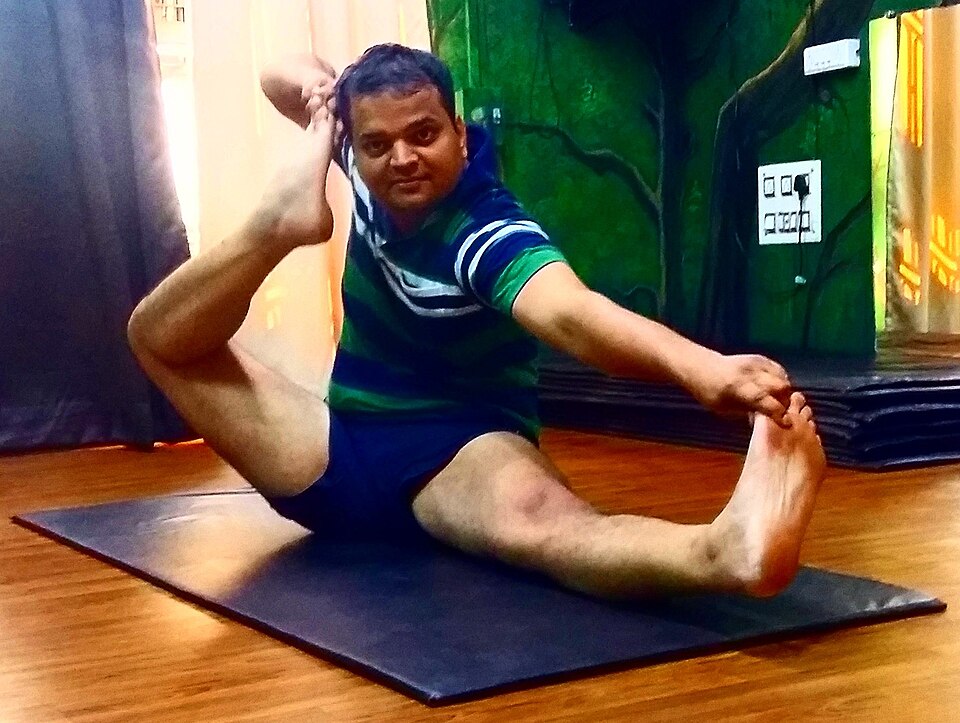
Akarna Dhanurasana — Archer Pose (Shooting Bow) — is a seated pose where one foot is drawn back toward the ear while the other hand holds the opposite big toe, mimicking an archer drawing a bow. It opens the hips and hamstrings and builds focus and coordination.
Name meaning: From ākarṇa meaning "toward the ear", dhanu meaning "bow", and āsana — the "bow-drawn-to-the-ear posture", one foot pulled back toward the ear like an archer drawing a bowstring.
Classification: Asana — a seated hip- and hamstring-opener resembling an archer.
Tradition & origin: Archer Pose has a partly-classical footing: an Akarna Dhanurasana appears in the 19th-century Sritattvanidhi, and the modern form is described in 20th-century texts (Light on Yoga). So a related shape is documented in a 19th-century manuscript; the pose as widely practised today is modern.
This guide was drafted with the help of AI and reviewed by us. It is for general education only and is not medical or professional advice. It may contain errors. Please practise mindfully, listen to your body, and consult a qualified yoga teacher or doctor for anything specific. Spotted an error? Tell us in the comments below.
How to do it — step by step
- 1Sit with both legs extended (Staff Pose).
- 2Hold the right big toe with the right hand and the left big toe with the left hand.
- 3Keep the left leg extended and active on the floor.
- 4Bend the right knee and draw the right foot up toward the right ear.
- 5Keep the chest lifted and spine tall as you "draw the bow".
- 6Hold, breathing steadily; then lower the foot.
- 7Switch sides.
Breath & hold
Breathe steadily; hold 15–30 seconds each side.
Benefits
- ✓Opens the hips and hamstrings.
- ✓Improves coordination and focus.
- ✓Strengthens the core and arms.
- ✓Traditionally said to stimulate the abdominal organs.
🪔 The traditional / desi way
- Akarna = toward the ear, dhanura = bow — the drawn-back foot and the toe-hold form an archer's pose, string pulled to the ear.
- Traditional cue: keep the extended leg strong and the spine tall; draw the foot back only as far as the hips allow.
Common mistakes
- ✕Rounding the back or collapsing the chest.
- ✕Letting the extended leg go slack.
- ✕Forcing the foot to the ear before the hip is open.
Modifications & props
- 🧩Loop a strap around the drawn-back foot.
- 🧩Draw the foot only to the knee/shin height at first.
Muscles & anatomy
- 💪Opens the hip and stretches the hamstring of the drawn-back leg.
- 💪The extended leg's hamstring stays active as a steady anchor.
- 💪The core and arms work to "draw the bow" with a tall spine.
What you may feel
- 🫧Normal: a strong hip and hamstring stretch in the drawn-back leg, spine tall.
- 🫧Warning sign: rounding the back or forcing the foot up — use a strap and draw the foot only as high as the hip allows.
Variations to grow into
Draw the foot toward the shin or knee height first, keeping the extended leg strong and the chest lifted.
Draw the foot all the way to the ear while holding the opposite big toe, chest lifted — for open hips only.
Using props
- 🧱A strap around the drawn-back foot.
- 🧱A cushion under the sitting bones.
Warm-up & counterpose
- Hip openers and hamstring stretches to prepare.
- A gentle forward fold or seated twist to release.
Supporting exercises
Why: Opens the hamstrings safely lying down.
How: Raise one leg with a strap; 30–60 seconds each side.
Why: Open the outer hip for the drawn-back leg.
How: Hold these hip openers over time.
Progression path
Start with a strap, drawing the foot to knee/shin height; raise it toward the ear as the hip opens, keeping the extended leg strong and the spine tall.
Who it suits — and who should modify
- ✓Practitioners with reasonable hip and hamstring openness.
- ✓Those wanting a strong hip/hamstring opener with a focus-and-coordination challenge.
- ✓Anyone building the external rotation (use a strap, keep the foot lower).
- !Hip, hamstring or lower-back injury — use a strap and keep the foot lower; never force.
- !Knee discomfort — keep the drawn-back knee comfortable and the movement gentle.
- !Sit on a cushion if the spine rounds.
When to practise
In the seated part of a practice, once the hips are warm.
A few times a week; hold 15–30 seconds each side.
Traditional view vs. modern evidence
The archer drawing the bow to the ear; a focused hip-and-hamstring opener.
A related shape in the 19th-c. Sritattvanidhi; the modern form is 20th-century.
Valued as a hip/hamstring opener and a coordination-and-focus challenge.
Organ-stimulating claims are traditional, not established.
Evidence at a glance
The pose opens the hips and hamstrings and builds coordination.
Consistent with anatomy and general mobility exercise.
It stimulates or heals the abdominal organs.
A traditional-style claim offered as tradition, not established fact.
Myths vs. reality
✕ Myth: You must reach the foot to your ear.
✓ Reality: Foot-to-ear depends on hip openness; drawing it lower with a strap is a full expression while you build.
✕ Myth: Archer Pose is a purely ancient asana.
✓ Reality: A related shape appears in a 19th-century manuscript, but the pose as practised today is modern.
⚠️ Cautions
- Hip, hamstring, or lower-back injury — use a strap and keep the foot lower; never force.
Frequently asked questions
I cannot bring my foot to my ear — is that normal?
Very. Use a strap and draw the foot only as high as the hip allows. It rises over time with hip-opening practice.
Where should I feel it?
A strong stretch in the hip and hamstring of the drawn-back leg, with the extended leg giving a steady anchor.
Key takeaways
- ⭐A seated hip- and hamstring-opener resembling an archer drawing a bow.
- ⭐Use a strap and draw the foot only as high as the hip allows; keep the extended leg strong.
- ⭐A related shape is in a 19th-c. manuscript; the modern form is 20th-century.
- ⭐Keep the spine tall; never force the foot to the ear.
References
- Wikipedia — List of asanas (Akarna Dhanurasana / Archer Pose) · Encyclopaedia, scholarly-sourced
- NCCIH — Yoga: What You Need To Know · Government health body (public domain)
Sources are provided for further reading; always consult a qualified teacher or clinician for personal guidance.
📝 Your private notes
Saved only on this device — jot down what helped.
💬 Improvements, corrections & suggestions
Found an error or have a better cue? Share it — practitioners help make each guide more accurate.
No comments yet — be the first to help improve this guide.