DAILY YOGA · Anjaneyasana
Low Lunge
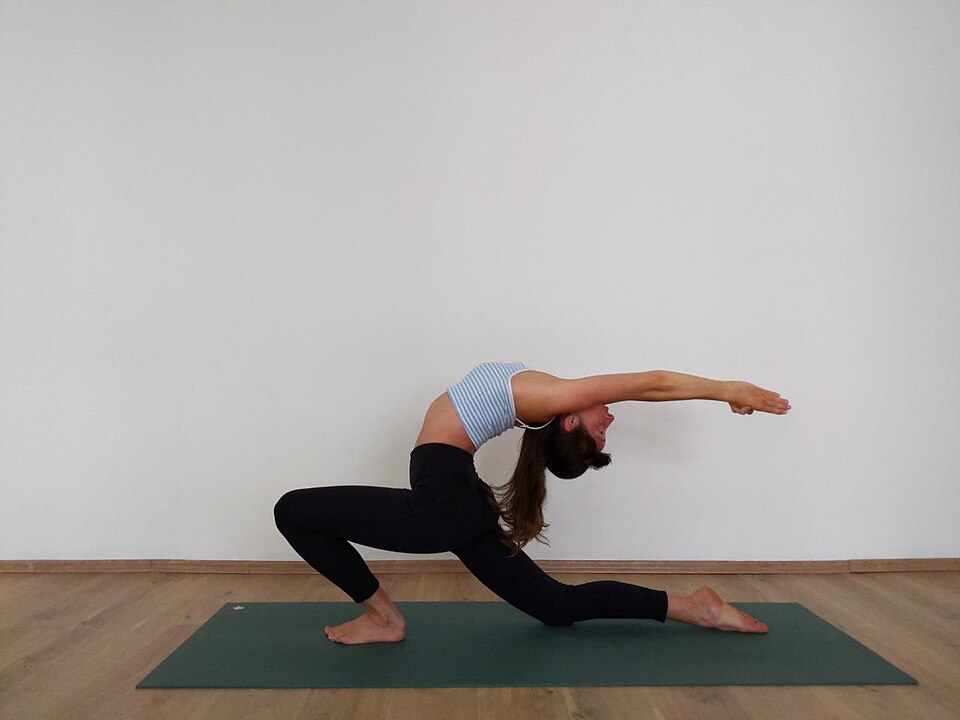
Anjaneyasana — Low Lunge (Crescent Moon) — is a graceful lunge that opens the hip flexors and front of the back leg while lifting the heart. Named after Anjaneya (Hanuman), it brings a sense of devotion and openness, and is a key stretch for anyone who sits a lot.
Name meaning: Añjaneya is a matronymic for Hanuman (son of Añjanī), the monkey-hero of the Rāmāyaṇa, with āsana meaning "posture" — "son-of-Añjanī posture". Also called Crescent Moon Pose or Low Lunge.
Classification: Asana — a lunging backbend and deep hip-flexor opener.
Tradition & origin: Like many standing/lunging poses, Anjaneyasana was unknown in medieval hatha yoga; it was brought into modern yoga in the 20th century, drawing on Indian martial-arts movement, and is used in schools such as Sivananda and Ashtanga (sometimes within Surya Namaskar). Present it as modern postural yoga with a devotional name.
This guide was drafted with the help of AI and reviewed by us. It is for general education only and is not medical or professional advice. It may contain errors. Please practise mindfully, listen to your body, and consult a qualified yoga teacher or doctor for anything specific. Spotted an error? Tell us in the comments below.
How to do it — step by step
- 1From Downward Dog or standing, step one foot forward between the hands.
- 2Lower the back knee to the floor and untuck the back toes.
- 3Slide the back knee back until you feel an even stretch in the front hip.
- 4Keep the front knee stacked over the ankle.
- 5Inhale and sweep the arms overhead, lifting the chest.
- 6Let the hips sink gently forward and down.
- 7Optionally arch back for Crescent; then release and switch sides.
Breath & hold
Breathe steadily; hold 30–45 seconds each side. Inhale to lift and lengthen, exhale to sink a little deeper.
Benefits
- ✓Deeply opens the hip flexors and front of the back thigh.
- ✓Stretches the groin and lengthens the spine.
- ✓Counteracts tight hips from sitting.
- ✓Opens the chest and shoulders (arms-up version).
🪔 The traditional / desi way
- Named for Anjaneya — a name of Hanuman, the devoted monkey god — evoking humility, strength and an open heart.
- Traditional cue: root the back thigh and lift the front body; the lunge is as much about lifting up as sinking down.
Common mistakes
- ✕Letting the front knee shoot past the toes.
- ✕Over-arching the lower back when the arms lift.
- ✕Grinding the back kneecap into a hard floor.
Modifications & props
- 🧩Place a blanket under the back knee.
- 🧩Rest the hands on the front thigh or on blocks instead of overhead.
Muscles & anatomy
- 💪Stretched: the back-leg hip flexors (psoas) and quadriceps, and the front of the body as the arms lift.
- 💪Working: the front-leg glute and thigh stabilise; the back and shoulders lift the chest.
- 💪The core keeps the lower back long as the arms reach up.
What you may feel
- 🫧Normal: a strong opening across the back-leg hip front, and a lifted, uplifted chest.
- 🫧Warning sign: back-knee pain (pad it) or lower-back compression (lengthen the tailbone, lower the arms).
Variations to grow into
Lift the arms overhead and add a gentle back-bend of the upper back, keeping the lower back long.
Raja Anjaneyasana: bend the back knee and reach back to catch the foot, drawing it toward the head — a deep quad and hip-flexor stretch for open bodies.
Using props
- 🧱A folded blanket under the back knee.
- 🧱Blocks under the hands, or hands on the front thigh, instead of overhead.
Warm-up & counterpose
- Cat–Cow and gentle lunges.
- Hip-flexor and quad openers.
- Child's Pose or Downward Dog to release the hips and lower back.
- A gentle seated forward fold.
Supporting exercises
Why: Directly opens the back-leg hip the pose stretches.
How: From a kneeling lunge, ease the hips forward; 20–30 seconds each side.
Why: Prepares the upper back for the arms-up lift.
How: Hold a low backbend for 20–30 seconds.
Progression path
Begin with the back knee padded and hands on the thigh; add the arms overhead and a small back-bend, then explore catching the back foot (Raja Anjaneyasana) as the front body opens.
Who it suits — and who should modify
- ✓Beginners, with the back knee padded and hands on the thigh.
- ✓Desk workers and runners with tight hip flexors.
- ✓Those preparing for deeper backbends or the splits.
- !Modify: knee sensitivity — pad the back knee with a folded blanket.
- !Modify: lower-back issues — keep the arms lower and the backbend small.
- !Relative caution: recent hip or knee injury — keep it shallow and supported.
When to practise
Any time once warm; a great hip-flexor opener after sitting or running.
Safe most days; hold each side and swap.
Traditional view vs. modern evidence
Named for Hanuman (Añjaneya); taught with a sense of devotion and openness.
Not in the medieval hatha texts; a 20th-century pose from Indian martial-arts movement.
Valued as an accessible, deep hip-flexor opener and gentle backbend.
Specific therapeutic claims beyond opening the hips are limited.
Evidence at a glance
The pose opens the hip flexors and quadriceps and lifts the chest.
Consistent with the biomechanics of a lunging backbend.
It counters the effects of prolonged sitting.
Plausible and widely taught; direct pose-specific evidence is limited.
Myths vs. reality
✕ Myth: Anjaneyasana is an ancient devotional asana.
✓ Reality: The name is devotional (Hanuman), but the pose is modern (20th century), drawn from martial-arts movement.
✕ Myth: Arms overhead means arching the lower back hard.
✓ Reality: Keep the ribs and tailbone long; the lift comes from the upper back, not a lumbar crunch.
⚠️ Cautions
- Knee sensitivity — pad the back knee with a folded blanket. Lower-back issues — keep the arms lower and the backbend small.
Frequently asked questions
Low Lunge or High Lunge?
Low Lunge (Anjaneyasana) rests the back knee on the floor; High Lunge keeps the back leg lifted and straight. Low Lunge gives a deeper hip-flexor stretch.
My back knee hurts on the floor — help?
Simply fold a blanket or the edge of your mat under the knee. There is no need to grind it into a hard surface.
Key takeaways
- ⭐A lunging backbend that deeply opens the back-leg hip flexor.
- ⭐Pad the back knee, keep the lower back long, and lift from the upper back.
- ⭐A modern pose with a devotional name (Hanuman), from martial-arts movement.
- ⭐Rest the hands on the thigh or blocks to modify.
References
- Wikipedia — Anjaneyasana (etymology & origins) · Encyclopaedia, scholarly-sourced
- NCCIH — Yoga: What You Need To Know · Government health body (public domain)
Sources are provided for further reading; always consult a qualified teacher or clinician for personal guidance.
📝 Your private notes
Saved only on this device — jot down what helped.
💬 Improvements, corrections & suggestions
Found an error or have a better cue? Share it — practitioners help make each guide more accurate.
No comments yet — be the first to help improve this guide.