DAILY YOGA · Ardha Chandrasana
Half Moon Pose
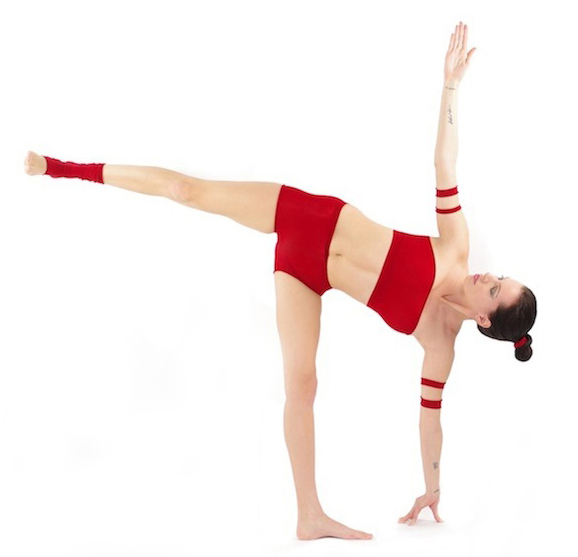
Ardha Chandrasana — Half Moon Pose — is an elegant standing balance on one leg and one hand, with the body opening sideways like a crescent moon. It builds balance, leg strength and an open, spacious chest.
Name meaning: From ardha meaning "half", chandra meaning "moon", and āsana meaning "posture" — the "half-moon posture", the arced, open body suggesting a half-moon shape.
Classification: Asana — a standing balance and side-opening pose, usually entered from Triangle.
Tradition & origin: Half Moon Pose as practised today is modern: the modern usage of the name is found in B. K. S. Iyengar's 1966 Light on Yoga. Notably, the 19th-century Sritattvanidhi used the same name for a different pose (Tree Pose), a good example of how a Sanskrit name can shift over time — so the name is old but this posture is 20th-century.
This guide was drafted with the help of AI and reviewed by us. It is for general education only and is not medical or professional advice. It may contain errors. Please practise mindfully, listen to your body, and consult a qualified yoga teacher or doctor for anything specific. Spotted an error? Tell us in the comments below.
How to do it — step by step
- 1From Triangle or Warrior II, bend the front knee and look down.
- 2Reach the front hand to the floor (or a block) about a foot ahead of the front foot.
- 3Shift weight onto the front foot and float the back leg up to hip height.
- 4Straighten the standing leg (knee soft, not locked).
- 5Stack the top hip over the bottom hip and open the chest to the side.
- 6Reach the top arm to the ceiling; flex the lifted foot.
- 7Gaze forward, up, or down as balance allows.
Breath & hold
Breathe steadily; hold 20–30 seconds each side. A calm breath steadies the balance.
Benefits
- ✓Improves balance and coordination.
- ✓Strengthens the standing leg, ankle and core.
- ✓Opens the hips, chest and shoulders.
- ✓Builds confidence and poise.
🪔 The traditional / desi way
- The half-moon (ardha chandra) is a graceful, luminous shape — the pose asks for the same lightness and openness.
- Traditional cue: use a block under the lower hand generously; the openness of the chest matters more than a low reach.
Common mistakes
- ✕Placing the bottom hand too close, cramping the pose.
- ✕Locking the standing knee.
- ✕Letting the top hip roll forward and the chest face the floor.
Modifications & props
- 🧩Use a block under the lower hand.
- 🧩Practise with the back against a wall for stability.
- 🧩Keep the top hand on the hip.
Muscles & anatomy
- 💪Working: the standing-leg ankle, quadriceps and glute stabilise the balance; the core holds the torso open.
- 💪Stretched: the hamstrings and inner thigh of the standing leg, and the whole top side of the body.
- 💪The lifted leg engages to reach strongly out of the hip.
What you may feel
- 🫧Normal: strong standing-leg and ankle effort, an open side body, and focused balance.
- 🫧Warning sign: tipping, dizziness, or knee/neck strain — reach onto a block, soften the knee, lower the gaze.
Variations to grow into
Lift the top arm toward the ceiling and gaze up (if steady), opening the chest more fully.
Parivrtta Ardha Chandrasana (Revolved Half Moon): revolve the torso toward the standing leg — a distinct, more demanding balance.
Using props
- 🧱A block under the lower hand so the torso stays long and the balance steadier.
- 🧱A wall behind the back to learn the open, stacked alignment.
Warm-up & counterpose
- Triangle and Tree to prepare the side body and balance.
- Ankle mobility and hamstring stretches.
- A forward fold or Mountain Pose to re-centre.
- A gentle standing twist to balance the side-bend.
Supporting exercises
Why: Builds the single-leg balance Half Moon needs.
How: Balance on one leg with a fixed gaze, 20–30 seconds each side.
Why: Teaches the side-opening and leg strength that lead into Half Moon.
How: Hold Triangle with a long spine, 20–30 seconds each side.
Progression path
Enter from Triangle with the lower hand on a block and back to a wall; find the balance with the top hand on the hip, then reach it up and add the gaze as steadiness grows.
Who it suits — and who should modify
- ✓Intermediate practitioners with reasonable standing balance.
- ✓Beginners, using a block under the lower hand and a wall behind the back.
- ✓Those wanting to build balance, ankle strength and side-body opening.
- !Modify: neck issues — keep the gaze forward or down rather than up.
- !Relative caution: low blood pressure or dizziness — do not linger; use a wall.
- !Relative caution: ankle or knee injury — keep the standing knee soft and use support.
When to practise
Any time once warm; commonly placed after Triangle in the standing sequence.
Safe regularly; a hold per side is enough.
Traditional view vs. modern evidence
The open, arced body evokes a half-moon; taught for grace and steadiness.
Not in the medieval hatha texts; the modern usage is from Iyengar's 1966 Light on Yoga (the name meant a different pose in the 19th-century Sritattvanidhi).
Valued for balance, ankle strength and side-body opening.
No specific medical claims beyond balance and stretch are established.
Evidence at a glance
Half Moon improves balance and strengthens the ankles.
Consistent with the demands of a single-leg balancing pose; NCCIH notes yoga may help balance.
It stretches the side body, hamstrings and hips.
Consistent with the biomechanics of the shape.
Myths vs. reality
✕ Myth: Half Moon is an ancient named pose.
✓ Reality: The name is old but referred to different poses historically; this balance is 20th-century (Iyengar, 1966).
✕ Myth: The lower hand must be flat on the floor.
✓ Reality: A block keeps the torso long and the balance steadier — better than collapsing to reach the floor.
⚠️ Cautions
- Low blood pressure, neck or balance issues — use a wall behind you and gaze forward/down.
Frequently asked questions
I keep tipping over — why?
The bottom hand is often too close, or the standing knee is locked. Reach the hand further forward onto a block, soften the knee, and fix your gaze.
Should I look up?
Only if the neck and balance are steady. Gazing forward or down is perfectly good and often more stable.
Key takeaways
- ⭐A standing balance that builds ankle strength and opens the side body.
- ⭐Reach the lower hand onto a block, soften the standing knee, and fix the gaze.
- ⭐A modern pose (Iyengar, 1966); the name once meant a different posture.
- ⭐Use a wall and block, and lower the gaze for neck comfort.
References
- Wikipedia — Ardha Chandrasana (etymology & origins) · Encyclopaedia, scholarly-sourced
- NCCIH — Yoga: What You Need To Know · Government health body (public domain)
Sources are provided for further reading; always consult a qualified teacher or clinician for personal guidance.
📝 Your private notes
Saved only on this device — jot down what helped.
💬 Improvements, corrections & suggestions
Found an error or have a better cue? Share it — practitioners help make each guide more accurate.
No comments yet — be the first to help improve this guide.