DAILY YOGA · Ardha Matsyendrasana
Half Lord of the Fishes
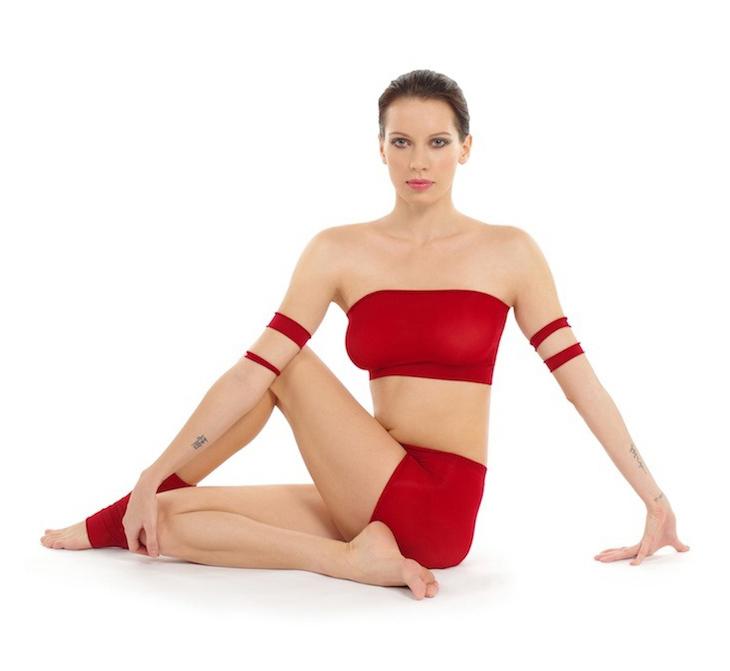
Ardha Matsyendrasana — Half Lord of the Fishes — is the classic seated spinal twist, named after the great yogi Matsyendra. It wrings and mobilises the spine, opens the chest and shoulders, and is said to aid digestion.
Name meaning: From ardha meaning "half", Matsyendra — a legendary founder of hatha yoga whose name means "lord of the fishes" — and āsana meaning "posture". Hence "Half Lord of the Fishes Pose".
Classification: Asana — a seated spinal twist.
Tradition & origin: This twist is genuinely medieval: it is described in the 15th-century Hatha Yoga Pradipika (1.26–27), which claims it "destroys many diseases", and the 17th-century Gheranda Samhita (2.22–23). It also featured on the cover of the first modern illustrated yoga book (Yogasopana, 1905). A real classical lineage.
This guide was drafted with the help of AI and reviewed by us. It is for general education only and is not medical or professional advice. It may contain errors. Please practise mindfully, listen to your body, and consult a qualified yoga teacher or doctor for anything specific. Spotted an error? Tell us in the comments below.
How to do it — step by step
- 1Sit with the legs extended, then bend the right knee and place the foot outside the left thigh.
- 2Bend the left knee and tuck the left foot near the right hip (or keep the leg straight).
- 3Inhale and lengthen the spine tall.
- 4Exhale and twist toward the right, hugging the right knee with the left arm.
- 5Place the right hand on the floor behind you for support.
- 6Turn from the base of the spine upward; keep both sit bones grounded.
- 7Gaze over the back shoulder; unwind, then switch sides.
Breath & hold
Inhale to lengthen, exhale to deepen the twist. Hold 30–45 seconds each side.
Benefits
- ✓Mobilises and lengthens the spine.
- ✓Opens the chest, shoulders and hips.
- ✓Traditionally said to stimulate digestion.
- ✓Relieves stiffness in the mid and upper back.
🪔 The traditional / desi way
- Named for Matsyendranath, a legendary founder of Hatha Yoga — the "half" version makes his seat accessible to everyone.
- Traditional cue: lengthen up on the inhale, twist a little more on the exhale — grow tall before you turn.
Common mistakes
- ✕Cranking the twist with the arm while the spine collapses.
- ✕Lifting the opposite sit bone off the floor.
- ✕Leading the twist with the neck instead of the spine.
Modifications & props
- 🧩Keep the bottom leg straight for an easier version.
- 🧩Sit on a cushion to lift the hips and lengthen the spine.
Muscles & anatomy
- 💪Working: the spinal rotators (obliques and deep back muscles) turn the torso; the arm gives gentle leverage.
- 💪Stretched: the outer hip and glute of the crossed leg, the chest and the sides of the trunk.
- 💪The spine lengthens first, then rotates evenly from the base upward.
What you may feel
- 🫧Normal: a freeing rotation through the spine and a stretch across the outer hip and chest.
- 🫧Warning sign: sharp back pain or pinching — lengthen up, ease the depth, and never force with the arm.
Variations to grow into
Bind the arms (reaching one hand behind the back toward the other) for a deeper twist, keeping the spine long.
The fuller Paripurna Matsyendrasana or bound variations — for open hips and spines, ideally with guidance.
Using props
- 🧱A cushion under the sitting bones to lift the hips and lengthen the spine.
- 🧱Keep the bottom leg straight for an easier, stable base.
Warm-up & counterpose
- Cat–Cow and a gentle seated twist.
- Hip openers for the crossed-leg position.
- A neutral forward fold or a twist to the other side to balance.
- A moment sitting tall and centred between sides.
Supporting exercises
Why: Warms the spine for a deeper rotation.
How: Cross-legged, twist gently to each side holding the opposite knee; 20–30 seconds each.
Why: Mobilises the spine before twisting.
How: A few slow rounds on all fours.
Progression path
Start with the bottom leg straight and a cushion under the hips, twisting gently from the base of the spine; add the crossed-leg tuck and, later, a bind as mobility grows.
Who it suits — and who should modify
- ✓Most people, including beginners (start with the bottom leg straight).
- ✓Desk workers wanting to mobilise the spine.
- ✓Those seeking a gentle, freeing rotational stretch.
- !Modify: spinal disc issues — twist gently and shallowly, or choose a supported/open twist.
- !Modify: pregnancy — twist "open" (away from the front thigh) rather than deeply compressing the belly.
- !Relative caution: recent abdominal or spinal surgery — ease off and get guidance.
When to practise
Any time; a nice way to unwind the spine later in a practice or after sitting.
Safe daily; hold each side and repeat as it feels good.
Traditional view vs. modern evidence
Named for the lord of the fishes; classical texts credit it with removing disease and kindling digestive fire.
Genuinely medieval — Hatha Yoga Pradipika 1.26–27 and Gheranda Samhita 2.22–23.
Valued as a spine-mobilising, hip- and chest-opening seated twist.
Disease-destroying and detox claims are traditional, not established.
Evidence at a glance
Seated twists mobilise the spine and stretch the outer hips and trunk.
Consistent with the biomechanics of a supported rotation.
It "destroys many diseases" or detoxes the body.
The Hatha Yoga Pradipika claim; treat as tradition, not established medical fact.
Myths vs. reality
✕ Myth: Twists "wring out toxins" from the organs.
✓ Reality: Twisting mobilises the spine and feels good, but it does not literally wring toxins from organs.
✕ Myth: Crank harder with the arm for a deeper twist.
✓ Reality: The rotation comes from the spine; forcing with the arm can strain the back. Lengthen first, then turn smoothly.
⚠️ Cautions
- Spinal injury, disc issues, or pregnancy — twist gently and shallowly, or choose a supported/open twist.
Frequently asked questions
Should I use my arm to force the twist?
The arm gives leverage, but the turn comes from the spine, not muscling the elbow. Lengthen up first, then rotate smoothly.
Where should the twist start?
From the base of the spine, moving upward. Keep both sit bones grounded so the rotation is even.
Key takeaways
- ⭐A freeing seated spinal twist that also opens the outer hips and chest.
- ⭐Lengthen the spine first, then rotate from the base — do not crank with the arm.
- ⭐A genuinely medieval pose (Hatha Yoga Pradipika; Gheranda Samhita).
- ⭐Twist gently with disc issues; twist "open" in pregnancy.
References
- Wikipedia — Matsyendrasana (etymology & origins, HYP 1.26-27; Gheranda Samhita 2.22-23) · Encyclopaedia, scholarly-sourced
- NCCIH — Yoga: What You Need To Know · Government health body (public domain)
Sources are provided for further reading; always consult a qualified teacher or clinician for personal guidance.
📝 Your private notes
Saved only on this device — jot down what helped.
💬 Improvements, corrections & suggestions
Found an error or have a better cue? Share it — practitioners help make each guide more accurate.
No comments yet — be the first to help improve this guide.