DAILY YOGA · Ardha Uttanasana
Half Forward Fold
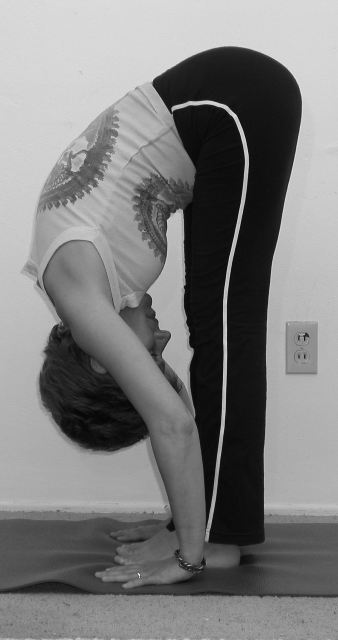
Ardha Uttanasana — Half Forward Fold (Flat Back) — is the "halfway lift" of the Sun Salutation, where from a forward fold you lengthen the spine to horizontal. It teaches a long, strong back and is a vital, spine-protecting transition in vinyasa flows.
Name meaning: From ardha meaning "half", uttāna meaning "intense stretch", and āsana — the "half intense-stretch posture", the halfway lift of a standing forward fold. Often called Half Forward Fold or "flat back".
Classification: Asana — a standing half-forward-fold and spine-lengthener; a key Sun Salutation step.
Tradition & origin: Half Forward Fold is modern: it is a 20th-century transition step, best known as the "halfway lift" in the modern Sun Salutation flow, not a medieval seated asana. Present it as modern postural yoga.
This guide was drafted with the help of AI and reviewed by us. It is for general education only and is not medical or professional advice. It may contain errors. Please practise mindfully, listen to your body, and consult a qualified yoga teacher or doctor for anything specific. Spotted an error? Tell us in the comments below.
How to do it — step by step
- 1From Uttanasana (forward fold), place the fingertips on the floor, shins, or thighs.
- 2Inhale and lengthen the spine forward to horizontal.
- 3Draw the shoulders down the back and broaden the chest.
- 4Keep the neck in line with the spine, gaze down and slightly forward.
- 5Engage the legs; keep a soft bend in the knees if needed.
- 6Lengthen from the tailbone to the crown.
- 7Exhale to fold, or flow on to the next step.
Breath & hold
Inhale to lengthen to flat back. It is usually a one-breath transition in a flow.
Benefits
- ✓Strengthens the back and improves posture.
- ✓Teaches a long, safe spine in forward bends.
- ✓Stretches the hamstrings gently.
- ✓A protective transition in Sun Salutations.
🪔 The traditional / desi way
- The "half lift" — the moment the spine finds its length before folding or flowing on.
- Traditional cue: reach the crown forward and the tailbone back, making the spine one long, flat line.
Common mistakes
- ✕Rounding the upper back instead of lengthening.
- ✕Lifting the chest so high it becomes a backbend.
- ✕Straining the neck by looking too far forward.
Modifications & props
- 🧩Rest the hands on the shins, thighs, or blocks to keep the back flat.
- 🧩Soften the knees generously.
Muscles & anatomy
- 💪Lengthens the spine and engages the back muscles to hold a flat back.
- 💪Stretches the hamstrings (less than a full fold) with the knees soft.
- 💪The core works lightly to support the lifted, level torso.
What you may feel
- 🫧Normal: a long, working stretch along the spine and a mild hamstring stretch.
- 🫧Warning sign: low-back rounding or strain — bend the knees more and lift the hands higher.
Variations to grow into
Straighten the legs more (keeping the back flat) and lower the fingertips toward the floor for a stronger hamstring stretch.
Flow smoothly between Half Fold and full Uttanasana with the breath, keeping the spine long throughout.
Using props
- 🧱Blocks under the hands to keep the back flat with tight hamstrings.
- 🧱Hands on the shins or thighs as a simple support.
Warm-up & counterpose
- Cat–Cow and a few gentle forward folds to warm the spine and hamstrings.
- Rise to standing tall, or fold fully and rest.
Supporting exercises
Why: The full-fold counterpart; builds hamstring length.
How: Fold fully with soft knees and a long spine.
Why: Teaches spinal lengthening and hip-hinging.
How: Alternate arching and rounding the spine with the breath.
Progression path
Start with hands on blocks or shins and soft knees; over time straighten the legs while keeping the back long and flat.
Who it suits — and who should modify
- ✓Most practitioners — a foundational, accessible movement.
- ✓Those learning to lengthen the spine and hinge from the hips.
- ✓Anyone flowing through Sun Salutations.
- !Lower-back injury — bend the knees generously and rest the hands high (shins, thighs or blocks).
- !Hamstring strain — soften the knees so the back can stay flat.
- !Keep the neck long — gaze down-and-forward, not craning up.
When to practise
Throughout practice as a transition, especially within Sun Salutations.
Freely, daily — it is a gateway movement of most flows.
Traditional view vs. modern evidence
A halfway lift to a long, flat back; a bridge within the flowing salutation.
A component of the modern Sun Salutation, not a medieval asana.
A foundational spine-lengthening transition and gentle hamstring stretch.
No special claims beyond ordinary stretch benefits.
Evidence at a glance
The pose lengthens the spine and gently stretches the hamstrings.
Consistent with anatomy and general mobility exercise.
It has specific therapeutic organ effects.
No solid evidence beyond ordinary stretch and mobility benefits.
Myths vs. reality
✕ Myth: Straight legs matter more than a flat back.
✓ Reality: The point of the pose is a long, flat back; bend the knees as needed so the spine can lengthen.
✕ Myth: It is an ancient asana.
✓ Reality: It is a modern transition step, central to the 20th-century Sun Salutation flow.
⚠️ Cautions
- Lower-back issues — keep the hands higher (on the shins or thighs) and the knees soft.
Frequently asked questions
Where do my hands go?
Wherever lets you keep a flat back — fingertips on the floor, or hands on blocks, shins or thighs. A long spine matters more than reaching the floor.
How is this different from the full fold?
Uttanasana folds the torso down over the legs; Ardha Uttanasana lifts the spine halfway to a long, flat back.
Key takeaways
- ⭐The "halfway lift" — a long, flat back that lengthens the spine.
- ⭐Bend the knees and raise the hands so the back can stay flat.
- ⭐Keep the neck long; gaze down-and-forward.
- ⭐A modern Sun Salutation step, not a medieval asana.
References
- Wikipedia — Surya Namaskar (Sun Salutation; the halfway lift) · Encyclopaedia, scholarly-sourced
- NCCIH — Yoga: What You Need To Know · Government health body (public domain)
Sources are provided for further reading; always consult a qualified teacher or clinician for personal guidance.
📝 Your private notes
Saved only on this device — jot down what helped.
💬 Improvements, corrections & suggestions
Found an error or have a better cue? Share it — practitioners help make each guide more accurate.
No comments yet — be the first to help improve this guide.