DAILY YOGA · Ashwa Sanchalanasana
High Lunge
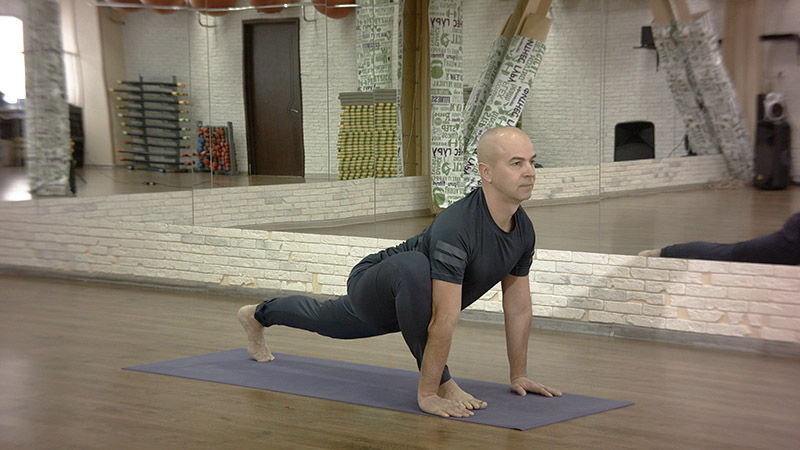
Ashwa Sanchalanasana — Equestrian Pose, often flowed through as a High Lunge — is a dynamic lunge that opens the hips and chest while building leg strength. A key step in Surya Namaskar, it brings a feeling of forward movement and rising energy.
Name meaning: From aśva meaning "horse", sañcalana meaning "movement/stepping", and āsana — the "equestrian" or "horse-riding posture", named for the forward-lunging stance of a rider.
Classification: Asana — a lunging standing pose, a key step in the Sun Salutation sequence.
Tradition & origin: The Equestrian lunge is best known as a step in Surya Namaskar (Sun Salutation). The flowing Sun Salutation sequence as practised today is modern — popularised in the early 20th century — so present this lunge as part of modern postural yoga rather than a medieval seated asana.
This guide was drafted with the help of AI and reviewed by us. It is for general education only and is not medical or professional advice. It may contain errors. Please practise mindfully, listen to your body, and consult a qualified yoga teacher or doctor for anything specific. Spotted an error? Tell us in the comments below.
How to do it — step by step
- 1From a forward fold, step one foot back into a long lunge.
- 2Keep the front knee stacked over the ankle.
- 3Ground the ball of the back foot and reach the back heel away.
- 4Lengthen the spine and lift the chest.
- 5Draw the front hip back and the back hip forward to square the pelvis.
- 6Reach the arms up (High Lunge) or keep the fingertips down.
- 7Gaze forward; then flow on or switch sides.
Breath & hold
Inhale as you step or lift into it. In a flow it is a one-breath transition; hold a few breaths when practised on its own.
Benefits
- ✓Opens the hip flexors and front of the back leg.
- ✓Strengthens the legs and glutes.
- ✓Lengthens the spine and lifts the chest.
- ✓Energising within a flowing practice.
🪔 The traditional / desi way
- Ashwa = horse, sanchalana = movement — the pose evokes a rider mid-stride, poised and dynamic.
- A core step of Surya Namaskar: traditional practice flows in and out of it with the breath, sunrise after sunrise.
Common mistakes
- ✕Letting the front knee shoot past the toes.
- ✕Collapsing the back leg and dropping the hip.
- ✕Over-arching the lower back when the arms lift.
Modifications & props
- 🧩Lower the back knee for Low Lunge (Anjaneyasana).
- 🧩Rest the hands on blocks either side of the front foot.
Muscles & anatomy
- 💪Stretches the back-leg hip flexor (psoas) and the front-leg groin.
- 💪Works the front-leg quadriceps and glutes to hold the lunge.
- 💪Engages the core and, in the lifted form, the upper back and shoulders.
What you may feel
- 🫧Normal: a pleasant opening across the front of the back hip and a working warmth in the front thigh.
- 🫧Warning sign: pressure or pain in the front knee (check the knee is over the ankle) or a pinch in the low back (lower the arms).
Variations to grow into
Lift the torso and sweep the arms overhead into High Lunge for a bigger hip-flexor and chest opening.
Add a gentle backbend, or drop the back knee and reach back toward the foot for a deeper Low-Lunge quad and hip-flexor stretch (Anjaneyasana).
Using props
- 🧱Blocks under the hands either side of the front foot for support and alignment.
- 🧱A folded blanket under the back knee in the Low-Lunge version.
Warm-up & counterpose
- Cat–Cow and a few gentle standing forward folds to loosen the spine and hamstrings.
- Downward Dog or a forward fold to neutralise the hips.
Supporting exercises
Why: Deepens the same hip-flexor opening with the knee down.
How: Drop the back knee to a padded floor and sink the hips forward.
Why: The natural pose to step back to and from in a flow.
How: From the lunge, step back to an inverted V and lengthen the legs.
Progression path
Start with fingertips down and the back knee low if needed; build to the lifted High Lunge with arms overhead, then link it smoothly into Sun Salutations.
Who it suits — and who should modify
- ✓Most practitioners — a foundational, accessible lunge.
- ✓Great for warming the hips and legs at the start of practice.
- ✓The lifted High Lunge form suits those comfortable balancing on the back toes.
- !Knee sensitivity — lower the back knee (Low Lunge) and pad it.
- !Lower-back issues — keep the arms lower and the torso less arched.
- !Ankle or toe pain in the back foot — pad under the toes or drop the knee.
When to practise
Early in practice as part of warming Sun Salutations, or any time you want to open the hips and legs.
Freely, daily — it is a gateway movement of most flowing sequences.
Traditional view vs. modern evidence
The rider's forward stance; a dynamic step in greeting the sun.
A component of the modern Sun Salutation, not a medieval seated asana.
A foundational warming lunge that opens the hips and legs.
No special claims beyond ordinary stretch and warm-up benefits.
Evidence at a glance
The lunge stretches the hip flexors and strengthens the legs.
Consistent with anatomy and general exercise science.
Sun Salutations provide light cardiovascular and mobility benefit.
Flowing sequences raise heart rate and mobilise joints, like other light exercise.
Myths vs. reality
✕ Myth: Ashwa Sanchalanasana is an ancient seated meditation pose.
✓ Reality: It is a lunge in the modern Sun Salutation flow, not a medieval seated asana; the Sun Salutation sequence is an early-20th-century development.
✕ Myth: The front knee should reach as far forward as possible.
✓ Reality: Keeping the knee stacked over the ankle protects the joint; pushing it past the toes stresses the knee.
⚠️ Cautions
- Knee sensitivity — lower the back knee (Low Lunge) and pad it. Lower-back issues — keep the arms lower.
Frequently asked questions
High Lunge or Equestrian — same thing?
They are closely related: Ashwa Sanchalanasana is the classic Sun Salutation lunge (often fingertips down), and High Lunge is the same shape with the torso lifted and arms up.
Where should the front knee be?
Stacked over the ankle, not pushing past the toes, so the knee stays safe.
Key takeaways
- ⭐The classic Sun Salutation lunge — a warming opener for the hips and legs.
- ⭐Keep the front knee over the ankle; drop and pad the back knee if it is sensitive.
- ⭐Part of the modern Sun Salutation flow, not a medieval seated pose.
- ⭐Lift into High Lunge or drop into Low Lunge to vary the intensity.
References
- Wikipedia — Surya Namaskar (Sun Salutation, modern history) · Encyclopaedia, scholarly-sourced
- NCCIH — Yoga: What You Need To Know · Government health body (public domain)
Sources are provided for further reading; always consult a qualified teacher or clinician for personal guidance.
📝 Your private notes
Saved only on this device — jot down what helped.
💬 Improvements, corrections & suggestions
Found an error or have a better cue? Share it — practitioners help make each guide more accurate.
No comments yet — be the first to help improve this guide.