DAILY YOGA · Bakasana
Crow / Crane Pose
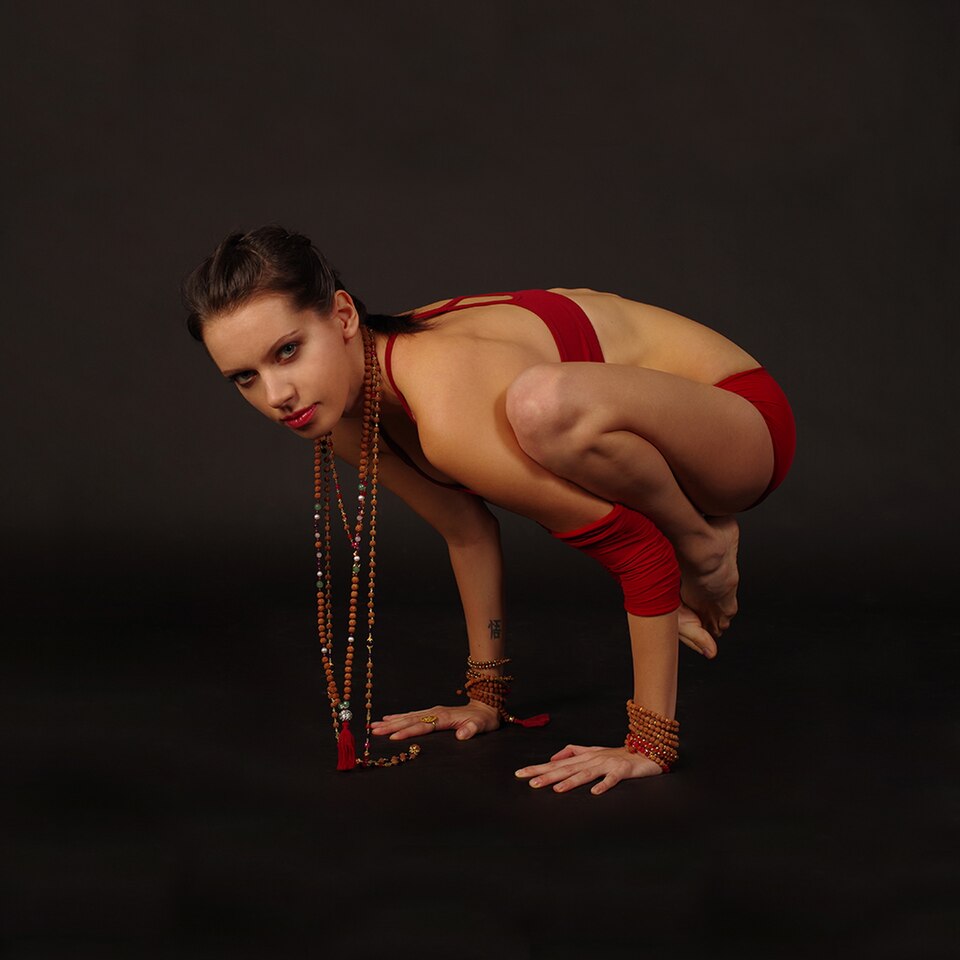
Bakasana — Crow (or Crane) Pose — is the arm balance most people learn first. The shins rest on the backs of the upper arms and the feet float up as the weight shifts forward onto the hands. It looks daring but is mostly about confidence, core engagement and a forward shift — not raw strength. (Strictly, Crow has bent arms and Crane has straight arms.)
Name meaning: From baka meaning "crane" (straight arms) or kāka meaning "crow" (bent arms), with āsana meaning "posture" — the "crane" or "crow" posture, balanced like the poised bird.
Classification: Asana — an arm-balance and core-strength pose; usually the first arm balance learned.
Tradition & origin: These balances are genuinely old: Bakasana is number 62 of the 84 poses in the 17th-century Hatha Ratnavali, and both Kakasana and Bakasana are described and illustrated in the 19th-century Sritattvanidhi. So Crow/Crane has a real classical record, though the modern vinyasa way of entering it is contemporary.
This guide was drafted with the help of AI and reviewed by us. It is for general education only and is not medical or professional advice. It may contain errors. Please practise mindfully, listen to your body, and consult a qualified yoga teacher or doctor for anything specific. Spotted an error? Tell us in the comments below.
How to do it — step by step
- 1Squat with the feet together and the knees wide, hands planted shoulder-width ahead.
- 2Spread the fingers and grip the floor; bend the elbows slightly (straight for Crane).
- 3Rise onto the balls of the feet and place the shins high on the backs of the upper arms.
- 4Round the upper back, draw the navel in, and gaze slightly forward (not down).
- 5Slowly shift the weight forward until the feet feel light.
- 6Lift one foot, then the other, hugging the heels toward the seat.
- 7To exit, shift back and lower the feet with control.
Breath & hold
Breathe steadily — do not hold the breath. Hold 10–20 seconds and build gradually.
Benefits
- ✓Strengthens the arms, wrists, shoulders and deep core.
- ✓Builds balance, focus and body awareness.
- ✓Teaches the forward weight-shift used in many arm balances.
- ✓Grows confidence — a friendly first taste of "flying".
🪔 The traditional / desi way
- Named for the baka (crane) or kaka (crow) — the poised bird balanced on thin legs. Traditional teaching stresses the still, forward gaze as the key to the balance.
- These balances are old: Bakasana is listed among the 84 poses in the 17th-century Hatha Ratnavali, and both Crow and Crane are drawn in the 19th-century Sritattvanidhi.
Common mistakes
- ✕Gazing down at the floor — this tips you forward; look slightly ahead.
- ✕Placing the knees too low on the arms (aim high, toward the armpits).
- ✕Not shifting enough weight forward, so the feet never lighten.
- ✕Tensing and forgetting to round the back and hug the midline.
Modifications & props
- 🧩Place a block under the feet to start higher, shortening the lift.
- 🧩Rest the forehead on a cushion/block ahead of you to build confidence.
- 🧩Practise lifting just one foot at a time.
Muscles & anatomy
- 💪Working: the wrists, forearms, shoulders (serratus anterior) and the deep core lift and hold you.
- 💪The hip flexors and adductors hug the legs onto the arms and the heels toward the seat.
- 💪The rounded upper back helps shift the weight forward over the hands.
What you may feel
- 🫧Normal: strong effort in the hands, forearms and core, and a light, balancing "float" once the weight shifts.
- 🫧Warning sign: sharp wrist pain — come down and build wrist strength; do not push through it.
Variations to grow into
Straighten the arms toward true Crane (Bakasana), lifting the hips higher and hugging the midline more.
Side Crow (Parsva Bakasana) or transitions to and from Downward Dog / headstand — for well-established arm-balancers, ideally with a teacher.
Using props
- 🧱A block under the feet to start higher and shorten the lift.
- 🧱A cushion or block ahead of you to rest the forehead on and to cushion a tip-forward.
Warm-up & counterpose
- Wrist mobility and a few Down-Dog to plank shifts.
- Malasana squats to open the hips.
- A gentle wrist counter-stretch (backs of the hands down, or prayer-hands) to release the wrists.
- Child's Pose or a standing forward fold.
Supporting exercises
Why: Builds the arm, shoulder and core strength Crow uses.
How: Hold plank, and slowly lower halfway (Chaturanga) with control, a few times.
Why: Opens the hips to tuck the knees high onto the arms.
How: Sit in a deep squat with the knees wide for 30–60 seconds.
Why: Prepares the wrists for weight-bearing.
How: Gentle wrist circles, stretches and light weight-bearing on all fours.
Progression path
Start squatting with a block under the feet and a cushion ahead; place the shins high, shift the weight forward and lift one foot at a time, then both; progress to straight-arm Crane and, later, Side Crow.
Who it suits — and who should modify
- ✓Beginners ready for a first arm balance (with a cushion for safety).
- ✓Most people with healthy wrists building balance and core strength.
- ✓Those preparing for further arm balances.
- !Modify / avoid: wrist injury or carpal tunnel — build wrist strength first or skip.
- !Modify: pregnancy, or recent abdominal/wrist surgery — avoid or choose an alternative.
- !Always cushion the space ahead of you while learning.
When to practise
When warm and focused, not fatigued; a fun mid-practice challenge.
Safe most days for healthy wrists; short attempts with rest between.
Traditional view vs. modern evidence
The poised crane/crow balanced on thin legs; a still, forward gaze is taught as the key to the balance.
Genuinely old — Hatha Ratnavali (17th century, pose 62) and Sritattvanidhi (19th century).
Valued as an accessible first arm balance that builds strength, balance and confidence.
Organ-toning claims are traditional, not scientifically established.
Evidence at a glance
Crow builds wrist, arm, shoulder and core strength and balance.
Consistent with the biomechanics of a hand-balancing pose.
It "tones the abdominal organs".
A traditional claim (e.g. from Iyengar) offered without supporting evidence; treat as tradition, not fact.
Myths vs. reality
✕ Myth: You need very strong arms to do Crow.
✓ Reality: It is mostly balance, core engagement and a forward weight-shift; placement and a forward gaze matter more than arm strength.
✕ Myth: Crow is purely a modern gymnastic pose.
✓ Reality: Arm balances like this appear in the 17th-century Hatha Ratnavali and the 19th-century Sritattvanidhi; the pose has a real classical record.
⚠️ Cautions
- Wrist injury or carpal tunnel — build wrist strength first and practise cautiously (or skip).
- Pregnancy, or recent abdominal/wrist surgery — avoid or modify.
- Cushion the landing zone: place a blanket or cushion ahead of you while learning, in case you tip forward.
Frequently asked questions
Do I need strong arms to do Crow?
Less than you think — it is mostly a forward weight-shift, core engagement and confidence. Strength helps, but placement and gaze matter more.
I keep tipping forward onto my face — help?
Put a cushion ahead of you so it feels safe, gaze slightly forward (not down), and shift weight gradually. Fear of falling is the main barrier.
Crow or Crane — what is the difference?
Traditionally Crow (Kakasana) has bent arms like a crow's shorter legs; Crane (Bakasana) has straight arms like the taller crane. Many teachers use the names interchangeably.
Key takeaways
- ⭐The friendly first arm balance — mostly a forward weight-shift, core and confidence.
- ⭐Place the shins high, gaze slightly forward, and cushion the space ahead of you.
- ⭐A genuinely classical balance (Hatha Ratnavali, Sritattvanidhi).
- ⭐Build wrist strength first; avoid with wrist injury, pregnancy or recent surgery.
References
- Wikipedia — Bakasana (etymology, origins & claims) · Encyclopaedia, scholarly-sourced
- NCCIH — Yoga: What You Need To Know · Government health body (public domain)
Sources are provided for further reading; always consult a qualified teacher or clinician for personal guidance.
📝 Your private notes
Saved only on this device — jot down what helped.
💬 Improvements, corrections & suggestions
Found an error or have a better cue? Share it — practitioners help make each guide more accurate.
No comments yet — be the first to help improve this guide.