DAILY YOGA · Balasana
Child's Pose
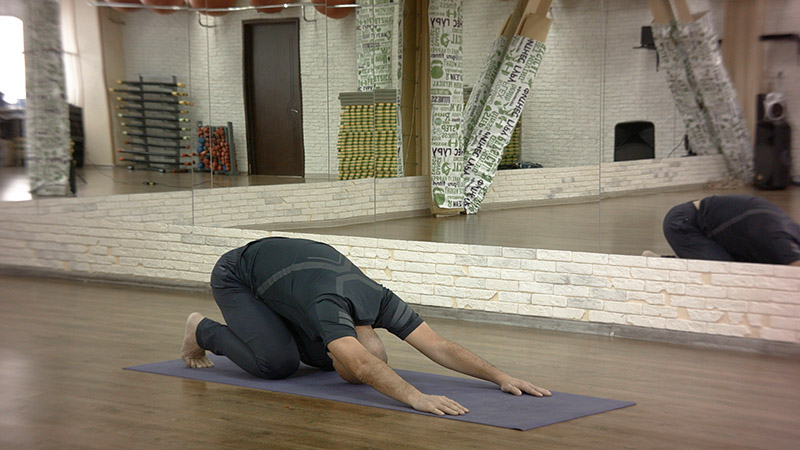
Balasana — Child's Pose — is the classic resting shape of yoga. Folding forward over the thighs quiets the mind, releases the back, and offers a safe place to pause and breathe whenever a practice feels like too much.
Name meaning: From bāla meaning "child" and āsana meaning "posture" — the "child's posture", named for its curled, resting shape.
Classification: Asana — a restorative, forward-folding resting pose (also called Garbhasana-style rest in some lineages).
Tradition & origin: Child's Pose is chiefly a modern resting posture, widely used as a pause in contemporary yoga classes. Traditional forward-kneeling rest shapes exist in older practice, but the specific pose as taught today belongs to modern yoga. It is honestly best described as a universal resting position rather than a scripture-based asana.
This guide was drafted with the help of AI and reviewed by us. It is for general education only and is not medical or professional advice. It may contain errors. Please practise mindfully, listen to your body, and consult a qualified yoga teacher or doctor for anything specific. Spotted an error? Tell us in the comments below.
How to do it — step by step
- 1Kneel on the mat and bring the big toes together.
- 2Take the knees as wide as is comfortable (or keep them together for a smaller fold).
- 3Sit the hips back toward the heels.
- 4Walk the hands forward and rest the forehead on the mat.
- 5Let the arms extend forward, or bring them alongside the body, palms up.
- 6Soften the shoulders, jaw and belly, and breathe into the back body.
Breath & hold
Breathe slowly into the back of the ribs. Rest here as long as you like — from a few breaths to several minutes.
Benefits
- ✓Gently stretches the hips, thighs and lower back.
- ✓Calms the nervous system and slows the breath.
- ✓Relieves mild tension in the neck and shoulders (arms-forward version).
- ✓A safe reset between stronger postures.
🪔 The traditional / desi way
- Traditionally the pose of surrender — the forehead touching the earth is a gesture of humility and letting go.
- Grandmothers often rest this way naturally; it is the body's instinctive "take a breath" position.
Common mistakes
- ✕Forcing the hips down when they are far from the heels — sit on a cushion instead.
- ✕Straining the neck; keep the forehead supported.
Modifications & props
- 🧩Place a bolster or pillow under the chest to rest on.
- 🧩Put a folded blanket behind the knees or under the ankles for comfort.
- 🧩Widen the knees to make room for the belly.
Muscles & anatomy
- 💪Gently lengthens: the muscles of the lower back (erector spinae) and the hips and thighs.
- 💪Relaxes rather than works: most muscles are meant to soften and release here.
- 💪The arms-forward version lightly stretches the shoulders and upper back.
What you may feel
- 🫧Normal: a soft stretch across the lower back and hips, a sense of the breath moving into the back ribs, and calming.
- 🫧Warning sign: knee or ankle pain — add padding or come out; never push into joint pain to "rest".
Variations to grow into
Extended (Utthita Balasana): walk the hands further forward and lengthen the arms for a fuller side-body and shoulder stretch.
Thread-the-needle from the fold, gently reaching one arm under the other for a mild upper-back release — optional and never forced.
Using props
- 🧱A bolster or stacked pillows under the chest to rest on for a fully supported version.
- 🧱A folded blanket behind the knees or under the ankles for joint comfort.
- 🧱A cushion under the forehead if it does not reach the floor.
Warm-up & counterpose
- None required — it is itself a gentle warm-up and rest.
- A slow, neutral return to a tall seat or table-top; a gentle spinal wave to re-awaken.
Supporting exercises
Why: Prevents joint strain in the deep fold.
How: Before folding, place a rolled blanket under the ankles and, if needed, behind the knees.
Why: Enhances the calming effect of the pose.
How: Rest in the fold and breathe slowly into the back and sides of the ribs for 5–10 breaths.
Progression path
Start with the fully supported version (bolster under the chest) if the deep fold is uncomfortable, then reduce the props over time. There is nothing to "achieve" — comfort is the goal.
Who it suits — and who should modify
- ✓Almost everyone, as a rest at any point in practice.
- ✓Beginners who need a safe place to pause and breathe.
- ✓People with tired lower backs seeking a gentle release.
- !Relative caution / modify: knee injuries — pad well or skip the deep knee bend.
- !Modify: late pregnancy — take the knees wide to make room for the belly, or rest differently.
- !Relative caution: ankle pain — place a rolled blanket under the ankles; recent knee surgery — avoid until cleared.
When to practise
Any time — during or after practice, before sleep to wind down, or whenever you need to settle.
As often as you like; there is no limit on gentle resting.
Traditional view vs. modern evidence
Regarded as a posture of surrender and letting go — the forehead to the earth as a gesture of humility and rest.
The pose as taught today is modern; older kneeling rest shapes exist but this specific form is contemporary.
Widely used as a safe reset; supported rest with slow breathing supports relaxation and recovery.
Specific therapeutic claims beyond general rest and comfort are not established.
Evidence at a glance
Slow breathing in a supported resting pose can promote relaxation and a calmer state.
Consistent with evidence that yoga and slow-breathing practices help with stress and relaxation (NCCIH).
Child's Pose specifically treats back conditions.
It may ease mild stiffness for many, but it is a comfort/rest pose, not a treatment.
Myths vs. reality
✕ Myth: You have to fold all the way down for it to work.
✓ Reality: Depth is irrelevant; a supported, comfortable rest calms the body just as well.
✕ Myth: Resting poses are a waste of practice time.
✓ Reality: Rest lets the nervous system settle and is a legitimate, valuable part of practice.
⚠️ Cautions
- Knee injuries, late pregnancy, or ankle problems — use props or choose an alternative rest.
Frequently asked questions
When should I use Child's Pose?
Any time you need to rest — during a hard class, after backbends, or simply to calm down. It is always available.
My hips will not reach my heels — is that wrong?
Not at all. Sit on a cushion or bolster; the pose is about rest, not depth.
Key takeaways
- ⭐The universal resting pose — always available during or after practice.
- ⭐Comfort matters more than depth; use props freely.
- ⭐Gently releases the lower back and hips and calms the mind.
- ⭐Pad the knees and ankles, and take the knees wide in later pregnancy.
References
- NCCIH — Yoga: What You Need To Know · Government health body (public domain)
Sources are provided for further reading; always consult a qualified teacher or clinician for personal guidance.
📝 Your private notes
Saved only on this device — jot down what helped.
💬 Improvements, corrections & suggestions
Found an error or have a better cue? Share it — practitioners help make each guide more accurate.
No comments yet — be the first to help improve this guide.