DAILY YOGA · Bharadvajasana
Bharadvaja’s Twist
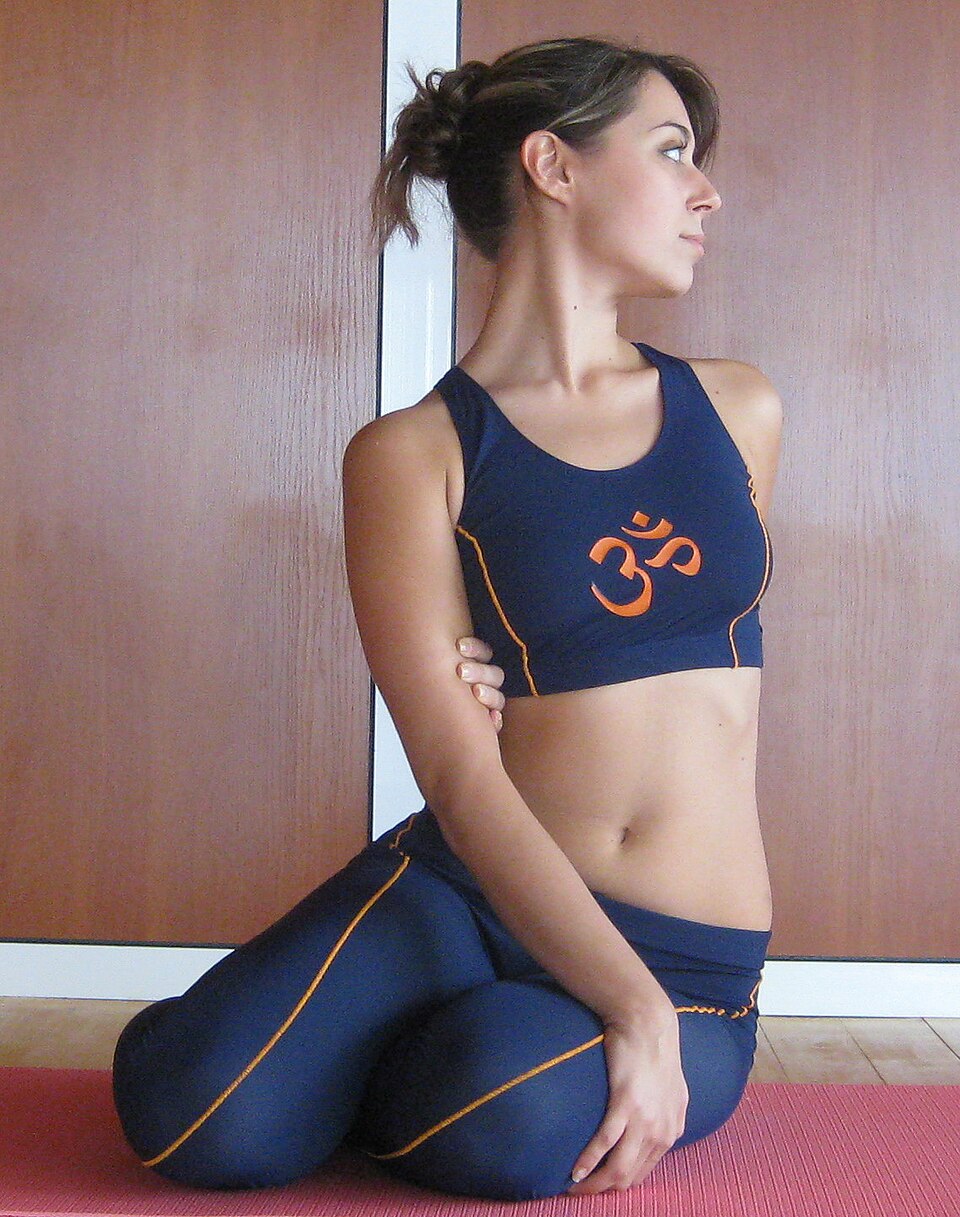
Bharadvajasana — Bharadvaja's Twist — is a gentle seated twist named after the sage Bharadvaja. With the legs folded to one side, it rotates the spine kindly and is one of the most accessible twists, suitable even when deeper twists are too much.
Name meaning: Named for the sage Bharadvāja, one of the seven great rishis and father of Drona in the Mahabharata, with āsana — "Bharadvaja's posture". A modern pose given a revered sage's name.
Classification: Asana — a gentle, accessible seated spinal twist.
Tradition & origin: Bharadvaja's Twist is modern: a different pose bore the name in the 19th-century Sritattvanidhi, and the twist known today is first seen in the 20th century in Iyengar's Light on Yoga (1966) and Pattabhi Jois's Ashtanga. The sage's name is traditional; this particular twist is modern.
This guide was drafted with the help of AI and reviewed by us. It is for general education only and is not medical or professional advice. It may contain errors. Please practise mindfully, listen to your body, and consult a qualified yoga teacher or doctor for anything specific. Spotted an error? Tell us in the comments below.
How to do it — step by step
- 1Sit tall, then shift both legs to the left, feet beside the left hip.
- 2Rest the left ankle in the arch of the right foot.
- 3Inhale and lengthen the spine.
- 4Exhale and twist gently to the right.
- 5Place the right hand behind you, left hand on the right thigh or knee.
- 6Keep both sit bones grounded and the neck soft.
- 7Unwind, switch the legs to the other side, and repeat.
Breath & hold
Inhale to lengthen, exhale to twist. Hold 30–45 seconds each side.
Benefits
- ✓Gently mobilises and lengthens the spine.
- ✓Opens the chest and shoulders.
- ✓A kind twist for stiff or sensitive backs.
- ✓Traditionally said to aid digestion.
🪔 The traditional / desi way
- Named for the rishi Bharadvaja, one of the revered seers — a dignified, gentle rotation fit for a sage's seat.
- Traditional cue: grow tall on the inhale, turn on the exhale — never yank; keep both sit bones heavy.
Common mistakes
- ✕Cranking the twist with the arms while the spine slumps.
- ✕Lifting a sit bone off the floor.
- ✕Leading with the neck instead of the spine.
Modifications & props
- 🧩Sit on a folded blanket to lift the hips.
- 🧩Keep the twist shallow and the hand light.
Muscles & anatomy
- 💪Gently rotates the muscles along the spine and works the obliques.
- 💪Opens the chest and shoulders as you turn.
- 💪The hips and legs stay folded softly to one side, so it demands little flexibility.
What you may feel
- 🫧Normal: a gentle, even rotation through the whole spine and a light opening across the chest.
- 🫧Warning sign: any pinch or sharp sensation in the back or neck — ease out and twist less.
Variations to grow into
Deepen slightly by hooking the outer hand to the opposite knee and lengthening taller on each inhale before turning on the exhale.
Bharadvajasana II folds one leg into Lotus and the other as in Hero pose — an advanced form needing open hips and knees.
Using props
- 🧱A folded blanket under the hips to sit level and tall.
- 🧱A chair (sit sideways, hold the backrest) for a fully supported version.
Warm-up & counterpose
- Cat–Cow and gentle seated side bends to loosen the spine.
- A neutral forward fold or simply sitting tall and breathing evenly.
Supporting exercises
Why: Mobilises the spine before twisting.
How: Alternate gently arching and rounding the back with the breath.
Why: Frees the ribs and waist for an easier turn.
How: Reach one arm overhead and lean gently to the side.
Progression path
Begin seated on a cushion or chair with a shallow turn; lengthen and rotate a little further as the spine frees up; only explore the Lotus-legged Bharadvajasana II with well-open hips.
Who it suits — and who should modify
- ✓Most people — one of the most accessible seated twists, kind to stiff backs.
- ✓Beginners and those wanting a gentle spinal rotation.
- ✓Can be done on a chair for extra support.
- !Spinal or disc injury — keep it very gentle and shallow, or check with a professional.
- !Pregnancy — favour open, gentle twists and sit tall on a cushion.
- !Knee discomfort in the folded legs — sit on a cushion or use the chair version.
When to practise
Any time — a soothing twist for after sitting, or to wind down a practice.
Daily is fine; hold 30–45 seconds each side.
Traditional view vs. modern evidence
Honouring the sage Bharadvaja; a calm seated turn of the spine.
The name is old (a different pose in the 19th-c. Sritattvanidhi); this twist is 20th-century.
A gentle, accessible spinal twist, good for stiff backs.
Detox claims are not established.
Evidence at a glance
Gentle twists mobilise the spine and can feel relieving for a stiff back.
Consistent with general mobility and back-care exercise.
Twisting detoxifies the internal organs.
A popular claim without solid supporting evidence.
Myths vs. reality
✕ Myth: Twists "wring toxins out" of the organs.
✓ Reality: Twists feel refreshing and mobilise the spine, but the "squeeze-and-detox" idea is a metaphor — your liver and kidneys do the detoxifying.
✕ Myth: You should crank harder for a "better" twist.
✓ Reality: A gentle rotation from a long spine is safer and more effective than forcing with the arms.
⚠️ Cautions
- Spinal injury or pregnancy — keep it very gentle; sit on a cushion for support.
Frequently asked questions
Is this easier than other seated twists?
Yes — with the legs folded to one side and a gentle rotation, it is one of the most accessible twists, kind to stiff backs.
Where should I feel it?
A gentle rotation through the whole spine and an opening across the chest — never a pinch.
Key takeaways
- ⭐One of the gentlest, most accessible seated twists — kind to stiff backs.
- ⭐Lengthen the spine, then rotate softly on the exhale; never crank with the arms.
- ⭐Use a cushion or a chair for easy support.
- ⭐A modern pose bearing a revered sage's ancient name.
References
- Wikipedia — Bharadvajasana (origins, Sritattvanidhi, Iyengar) · Encyclopaedia, scholarly-sourced
- NCCIH — Yoga: What You Need To Know · Government health body (public domain)
Sources are provided for further reading; always consult a qualified teacher or clinician for personal guidance.
📝 Your private notes
Saved only on this device — jot down what helped.
💬 Improvements, corrections & suggestions
Found an error or have a better cue? Share it — practitioners help make each guide more accurate.
No comments yet — be the first to help improve this guide.