DAILY YOGA · Bhujangasana
Cobra Pose
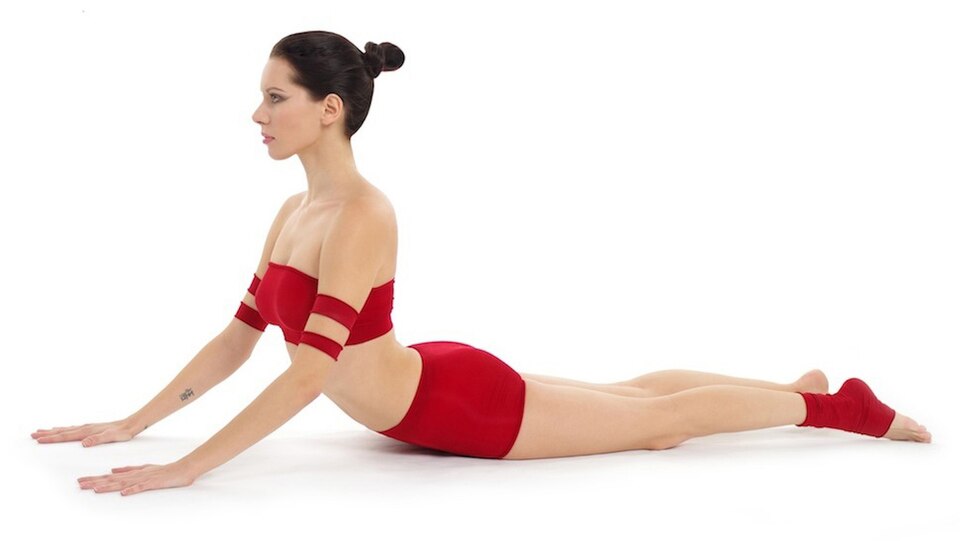
Bhujangasana — Cobra Pose — is a gentle backbend that opens the chest and strengthens the spine, named after a cobra rising with its hood lifted. It is a staple of Surya Namaskar and a friendly introduction to backbending.
Name meaning: From bhujaṅga meaning "snake" or "serpent" and āsana meaning "posture" — the "serpent posture", named for a cobra raising its hooded head.
Classification: Asana — a prone (belly-down) backbend; also a station in some forms of Surya Namaskar.
Tradition & origin: Cobra is one of the genuinely older postures: it is described in the 17th-century hatha-yoga text the Gheranda Samhita (chapter 2, verses 42–43), and appears as Sarpasana ("serpent pose") in the 19th-century Sritattvanidhi. This makes it a rare case where the modern pose has a real classical lineage, unlike many 20th-century standing poses.
This guide was drafted with the help of AI and reviewed by us. It is for general education only and is not medical or professional advice. It may contain errors. Please practise mindfully, listen to your body, and consult a qualified yoga teacher or doctor for anything specific. Spotted an error? Tell us in the comments below.
How to do it — step by step
- 1Lie on the belly, legs together, tops of the feet on the floor.
- 2Place the hands under the shoulders, elbows hugging in.
- 3Press the pubic bone and legs down to anchor the lower body.
- 4Inhale and peel the chest up using the back muscles first.
- 5Keep a slight bend in the elbows; the shoulders roll down and back.
- 6Lift only as high as feels smooth in the lower back.
- 7Gaze slightly forward, keeping the back of the neck long.
Breath & hold
Inhale to lift, breathe smoothly while holding for 15–30 seconds, exhale to lower. Repeat 2–3 times.
Benefits
- ✓Strengthens the muscles of the spine and back.
- ✓Opens the chest and front of the shoulders.
- ✓Counteracts the rounding of long hours at a desk.
- ✓Can gently tone the abdomen.
🪔 The traditional / desi way
- Named for the "bhujanga" (serpent) — the cobra rising is a powerful image in Indian tradition, linked to awakened energy along the spine.
- Old-school cue: lead with the heart, not the hands — rise like a snake charmed upward, slowly and with control.
Common mistakes
- ✕Pushing hard through the hands so the shoulders bunch up by the ears.
- ✕Crunching the lower back by lifting too high.
- ✕Letting the elbows splay out wide.
Modifications & props
- 🧩Sphinx pose (forearms down) for a gentler version.
- 🧩Keep the lift low and focus on length, not height.
Muscles & anatomy
- 💪Working: the spinal extensors (erector spinae) and, in a low Cobra, the mid-back muscles do most of the lifting.
- 💪Stretched: the abdominals, chest (pectorals) and the front of the shoulders and hip flexors.
- 💪Stabilising: the glutes and legs anchor the lower body; the hands assist rather than push you up.
What you may feel
- 🫧Normal: a broad opening across the chest and a working feeling along the back.
- 🫧Warning sign: a sharp pinch or compression in the lower back — lower down, lengthen, and lift less.
Variations to grow into
Rise a little higher using more back strength (hands light), keeping the shoulders drawing down and the lower back long.
Raja Bhujangasana (King Cobra): a deep backbend where the head reaches back toward lifted feet — an advanced shape only for well-prepared spines, ideally with a teacher.
Using props
- 🧱A folded blanket under the pelvis for comfort.
- 🧱Forearms on the floor (Sphinx) as a supported, low-effort version.
Warm-up & counterpose
- Cat–Cow to mobilise the spine.
- A few Sphinx holds to ease into extension.
- Child's Pose (Balasana) or a gentle knees-to-chest to neutralise the lower back.
- A slow, supported forward fold to balance the backbend.
Supporting exercises
Why: Builds gentle back extension and teaches leading with the chest.
How: Rest on the forearms with elbows under the shoulders; hold 20–40 seconds, breathing evenly.
Why: Prepares the back-body muscles that lift you.
How: Lying face down, gently lift the chest an inch using only the back, no hands; 6–8 slow reps.
Progression path
Start in Sphinx, then a low Cobra led by the back muscles, gradually increasing height only as the lower back stays comfortable. Build strength before height.
Who it suits — and who should modify
- ✓Beginners, as a first, gentle backbend (start low or in Sphinx).
- ✓Desk workers wanting to counter a rounded upper back.
- ✓Intermediate practitioners building spinal extension.
- !Relative caution / modify: existing lower-back pain — keep the lift low and lead with the upper back.
- !Modify: pregnancy — avoid lying prone; use a gentler standing or supported backbend instead.
- !Relative caution: recent abdominal or back surgery, or hernia — avoid until cleared by a clinician.
- !Ease off with wrist pain by using Sphinx (forearms down).
When to practise
Good in the morning to open the chest, and as part of Surya Namaskar. Practise on a fairly empty stomach.
Safe most days; 2–3 gentle lifts is plenty for a beginner.
Traditional view vs. modern evidence
The rising serpent is linked in tradition to awakened energy along the spine; classical texts include it among the core asanas.
Genuinely old: described in the 17th-century Gheranda Samhita (2.42–43) and as Sarpasana in the 19th-century Sritattvanidhi.
Understood as a back-strengthening, chest-opening backbend; part of some Sun Salutation forms.
Traditional energetic and curative claims are not scientifically established.
Evidence at a glance
Back-extension exercises like Cobra can strengthen the spinal muscles.
Consistent with general exercise/biomechanics evidence for back-extensor strengthening.
Yoga overall offers a small benefit for chronic low-back pain.
From reviews summarised by NCCIH; refers to yoga programmes, not this pose alone.
Cobra "detoxes" or cures organ or menstrual disease.
Some find gentle backbends relieving, but specific curative claims are not established.
Myths vs. reality
✕ Myth: Push up hard with the arms to get higher.
✓ Reality: Cobra is a back-strengthener; leading with the arms bunches the shoulders and compresses the low back. Let the back do the work.
✕ Myth: Cobra cures back disease.
✓ Reality: It can strengthen the back and feel relieving for mild stiffness, but it is not a cure; acute or serious back problems need professional care.
⚠️ Cautions
- Back injury, hernia, recent abdominal surgery or pregnancy — avoid or modify with guidance.
Frequently asked questions
What is the difference between Cobra and Upward Dog?
In Cobra the legs and often the pelvis stay on the floor and the back does the work; in Upward Dog the thighs lift and weight rests on hands and feet.
My lower back pinches — what do I do?
Lift less high, widen the legs slightly, and press the pubic bone down. Try Sphinx if the pinch persists.
Key takeaways
- ⭐A gentle, back-strengthening backbend that opens the chest.
- ⭐Lead with the back muscles; keep the lower back long and the lift moderate.
- ⭐One of the genuinely classical poses (Gheranda Samhita, 17th century).
- ⭐Use Sphinx to modify, and rest in Child's Pose afterward.
References
- Wikipedia — Cobra pose (etymology & origins, incl. Gheranda Samhita reference) · Encyclopaedia, scholarly-sourced
- NCCIH — Yoga: What You Need To Know · Government health body (public domain)
Sources are provided for further reading; always consult a qualified teacher or clinician for personal guidance.
📝 Your private notes
Saved only on this device — jot down what helped.
💬 Improvements, corrections & suggestions
Found an error or have a better cue? Share it — practitioners help make each guide more accurate.
No comments yet — be the first to help improve this guide.