DAILY YOGA · Bitilasana
Cow Pose
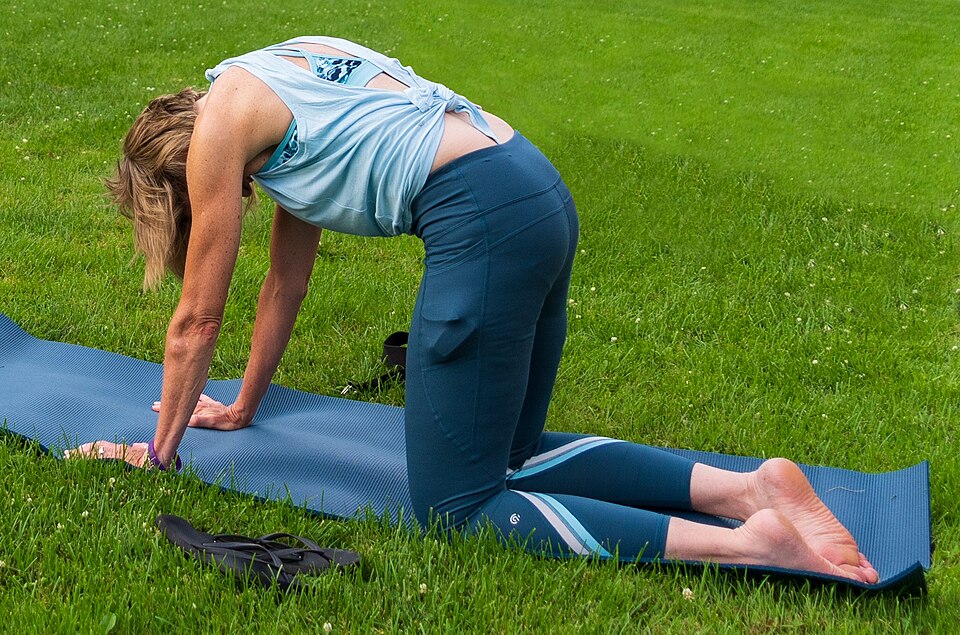
Bitilasana — Cow Pose — is the gentle, inhaling backbend done on all fours, the "cow" half of the Cat–Cow flow. Dropping the belly and lifting the chest and tailbone, it warms the spine and opens the front body in a soft, accessible way.
Name meaning: "Bitila" (cow) + "asana" (pose) — the "cow pose", named for the way the dipped back and lifted head resemble a cow at ease. (It is also commonly spelled Bitilasana.)
Classification: Asana — a gentle kneeling backbend / spinal mobiliser.
Tradition & origin: Cow Pose and its pairing with Cat (Marjariasana) as the Cat–Cow flow are features of modern postural yoga, widely taught as a warm-up. They are not headline poses of the medieval hatha texts; the value is practical mobility rather than lineage.
This guide was drafted with the help of AI and reviewed by us. It is for general education only and is not medical or professional advice. It may contain errors. Please practise mindfully, listen to your body, and consult a qualified yoga teacher or doctor for anything specific. Spotted an error? Tell us in the comments below.
How to do it — step by step
- 1Come to hands and knees: wrists under shoulders, knees under hips.
- 2Spread the fingers and press the hands down evenly.
- 3Inhale and drop the belly toward the floor.
- 4Lift the chest and tailbone, rolling the shoulders back.
- 5Let the gaze rise softly without crunching the neck.
- 6Keep the arms straight and the shoulders away from the ears.
- 7Flow to Cat on the exhale, or hold and breathe.
Breath & hold
Inhale into Cow; if flowing, exhale into Cat. Move slowly, one shape per breath.
Benefits
- ✓Gently warms and mobilises the spine.
- ✓Opens the chest and front body.
- ✓Relieves mild back stiffness.
- ✓Coordinates breath with movement.
🪔 The traditional / desi way
- Bitila = cow — the dipped back and lifted head mirror a cow at ease. It pairs with Marjari (cat) as the classic spine warm-up.
- Traditional cue: lead the movement with the breath; inhale opens the "cow", exhale rounds the "cat".
Common mistakes
- ✕Crunching the back of the neck by throwing the head back.
- ✕Sinking heavily into the wrists.
- ✕Over-arching the lower back instead of lengthening evenly.
Modifications & props
- 🧩Pad the knees with a folded blanket.
- 🧩Keep the neck neutral rather than lifting the gaze.
Muscles & anatomy
- 💪Mobilises: the spinal column into gentle extension.
- 💪Works gently: the spinal extensors, and the muscles around the shoulder blades.
- 💪Opens: the chest and front of the torso.
What you may feel
- 🫧Normal: a pleasant, gentle opening across the belly and chest, and easy movement through the back.
- 🫧Warning: pinching in the lower back (lengthen more evenly, arch less) or the back of the neck (keep it neutral).
Variations to grow into
Flow smoothly and slowly between Cow and Cat with the breath, feeling each vertebra move in turn.
Add gentle side-bending or small circular "puppy" movements of the hips to explore the spine in more directions.
Using props
- 🧱A folded blanket under the knees for comfort.
- 🧱A rolled towel under the wrists if they are sensitive.
Warm-up & counterpose
- Simple wrist rotations before loading the hands.
- A few easy breaths on all fours to find a neutral spine.
- Child’s Pose to gently round and rest the back after the extension.
Progression path
Begin with a small, comfortable arch; over time coordinate the movement fully with the breath and explore a slightly fuller range, always pain-free.
Who it suits — and who should modify
- ✓Everyone, including complete beginners and seniors.
- ✓People with mild back stiffness looking for gentle movement.
- ✓Those in pregnancy (a comfortable, common warm-up) — within comfort.
- !Relative: wrist pain — come onto fists or forearms.
- !Relative: neck problems — keep the gaze forward rather than lifting the head.
- !Relative: knee sensitivity — pad the knees with a folded blanket.
When to practise
Ideal at the very start of practice as a warm-up, or any time during the day to relieve a stiff back — it is gentle enough for morning or evening.
Safe daily and often; flow through several rounds whenever the back feels tight.
Traditional view vs. modern evidence
Led by the breath — inhale opens the "cow", exhale rounds the "cat".
A modern warm-up rather than a medieval hatha posture.
A safe, gentle way to mobilise the spine and relieve everyday stiffness.
Claims of "realigning" the spine are not supported.
Evidence at a glance
Gentle spinal movement like Cat–Cow eases mild back stiffness.
Consistent with general advice that gentle movement helps non-specific back stiffness.
Coordinating breath with movement is calming.
Plausible and widely reported; a gentle mind-body effect.
Myths vs. reality
✕ Myth: You should throw the head all the way back in Cow.
✓ Reality: A soft lift of the gaze is enough. Cranking the neck back compresses it and offers no extra benefit.
✕ Myth: Cat–Cow can "realign" or "crack" your spine into place.
✓ Reality: It gently mobilises the spine and eases stiffness; it does not realign vertebrae.
⚠️ Cautions
- Wrist pain — come onto fists or forearms. Neck issues — keep the gaze forward, not up.
Frequently asked questions
Is Cow Pose the same as Cat–Cow?
Cow (Bitilasana) is the inhaling, belly-dropping half; Cat (Marjariasana) is the exhaling, rounding half. Together they make the Cat–Cow flow.
Should I look up?
Only a soft lift of the gaze — never crank the neck back. Keeping it neutral is perfectly good.
Key takeaways
- ⭐The gentle, inhaling backbend half of the Cat–Cow warm-up flow.
- ⭐Lift the gaze only softly — never crank the neck back.
- ⭐A modern warm-up pose; gentle and suitable for almost everyone.
- ⭐Pad the knees and rest on forearms or fists if the wrists complain.
References
- Yoga: What You Need To Know — NCCIH · health authority (public domain)
- Bitilasana — Wikipedia · encyclopedia
Sources are provided for further reading; always consult a qualified teacher or clinician for personal guidance.
📝 Your private notes
Saved only on this device — jot down what helped.
💬 Improvements, corrections & suggestions
Found an error or have a better cue? Share it — practitioners help make each guide more accurate.
No comments yet — be the first to help improve this guide.