DAILY YOGA · Dandasana
Staff Pose
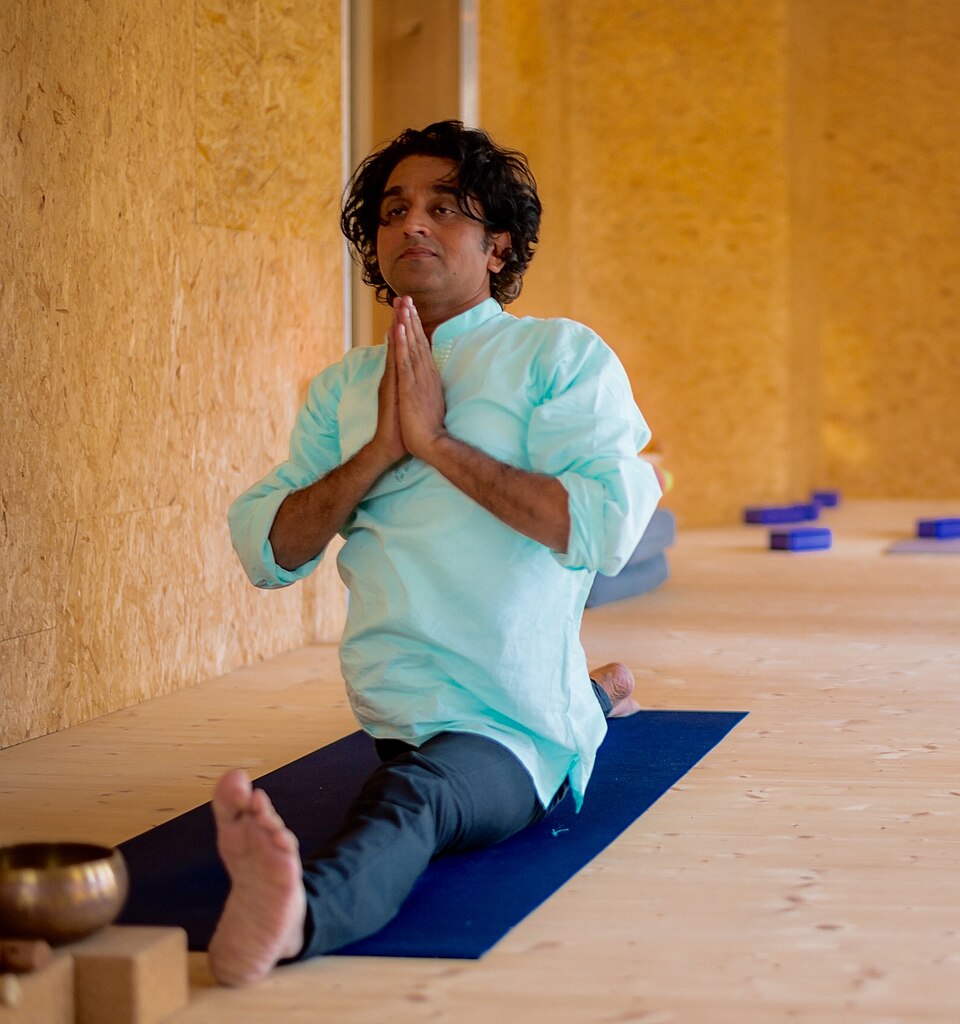
Dandasana — Staff Pose — is the seated equivalent of Mountain Pose: a simple, upright seat with the legs extended that teaches the alignment for every seated posture. Sitting tall like a straight staff builds core awareness and a healthy spine.
Name meaning: From daṇḍa meaning "stick" or "staff", and āsana — the "staff posture", the body held straight and upright like a staff. It is the seated equivalent of Mountain Pose.
Classification: Asana — a foundational seated pose (the blueprint for seated postures).
Tradition & origin: Staff Pose is modern: it is not found in the medieval hatha texts (the 19th-century Sritattvanidhi uses the name Dandasana for a different, rope-supported pose). The scholar Norman Sjoman links the name to the traditional "dands" of Indian gymnastics. Present it as modern postural yoga.
This guide was drafted with the help of AI and reviewed by us. It is for general education only and is not medical or professional advice. It may contain errors. Please practise mindfully, listen to your body, and consult a qualified yoga teacher or doctor for anything specific. Spotted an error? Tell us in the comments below.
How to do it — step by step
- 1Sit with the legs extended straight in front, together.
- 2Flex the feet and firm the thighs, kneecaps pointing up.
- 3Press the sit bones down and lengthen the spine tall.
- 4Place the hands beside the hips, fingertips down, pressing lightly.
- 5Stack the shoulders over the hips and the head over the shoulders.
- 6Draw the lower belly in gently and lift the chest.
- 7Breathe steadily, holding the upright line.
Breath & hold
Breathe naturally; hold 30–60 seconds, feeling the spine stay long.
Benefits
- ✓Builds core and postural strength.
- ✓Teaches the alignment for all seated poses.
- ✓Stretches the hamstrings gently.
- ✓Improves spinal awareness.
🪔 The traditional / desi way
- Danda = staff — the body upright and firm as a straight stick, the seated reference posture.
- Traditional cue: sit on a cushion if the back rounds; the tall spine is the whole point of the pose.
Common mistakes
- ✕Rounding the lower back and slumping.
- ✕Letting the feet flop open instead of flexing.
Modifications & props
- 🧩Sit on a folded blanket to tilt the pelvis forward.
- 🧩Bend the knees slightly if the hamstrings are very tight.
Muscles & anatomy
- 💪The spinal and core muscles work to hold the spine tall and stacked.
- 💪The quadriceps engage and the feet flex to keep the legs active.
- 💪A subtle but real strengthener of upright seated posture.
What you may feel
- 🫧Normal: a tall, engaged, upright feeling and a gentle hamstring stretch.
- 🫧Warning sign: the back rounding or straining — sit up higher on a cushion.
Variations to grow into
Press the hands down and lift the chest more, engaging the legs firmly for an active hold.
Use Staff Pose as the foundation to transition into seated forward bends and lifts (e.g. toward Lolasana).
Using props
- 🧱A folded blanket under the sitting bones to tilt the pelvis forward.
- 🧱Blocks under the hands if the arms are short of the floor.
Warm-up & counterpose
- Gentle seated pelvic tilts and hamstring stretches.
- A gentle forward fold or a reclined rest.
Supporting exercises
Why: Teach the upright pelvis position.
How: Rock the pelvis forward and back, finding the tall middle.
Why: Lengthens the hamstrings so the spine can stack.
How: Loop a strap around one foot and raise the leg; 30 seconds each side.
Progression path
Start seated high on a cushion with soft knees; over time straighten the legs and sit taller, using it as the blueprint for all seated poses.
Who it suits — and who should modify
- ✓Everyone — a foundational, accessible seated pose (sit on a cushion as needed).
- ✓Those learning to sit tall and stack the spine.
- ✓Anyone preparing for seated forward bends and twists.
- !Tight hamstrings — sit up on a folded blanket and/or bend the knees slightly.
- !Lower-back rounding — tilt the pelvis forward by sitting higher.
- !Generally very safe for all.
When to practise
Any time; especially as a set-up before seated poses.
Daily; hold as long as is comfortable.
Traditional view vs. modern evidence
The straight staff; a tall, dignified seated blueprint.
This seated pose is modern; a different Dandasana appears in a 19th-c. manuscript.
Valued as the foundational seated posture for stacking the spine.
No special claims beyond posture and mobility.
Evidence at a glance
The pose builds upright seated posture and gently stretches the hamstrings.
Consistent with basic postural and mobility principles.
It has specific therapeutic organ effects.
No evidence beyond ordinary posture/stretch benefits.
Myths vs. reality
✕ Myth: It is too simple to matter.
✓ Reality: Learning to sit tall and stack the spine makes every seated forward bend and twist safer and more effective.
✕ Myth: It is an ancient asana.
✓ Reality: This seated pose is modern; a different rope-supported Dandasana appears in a 19th-century manuscript.
⚠️ Cautions
- Tight hamstrings that pull the pelvis back — sit up on a folded blanket.
Frequently asked questions
My back keeps rounding — help?
Sit up on a firm cushion so the pelvis can tilt slightly forward; that lets the spine stack tall without strain.
Why practise such a simple pose?
It is the seated blueprint — learning it well makes every seated forward bend and twist safer and more effective.
Key takeaways
- ⭐The seated blueprint — sit tall and stack the spine.
- ⭐Sit up on a cushion and soften the knees if the hamstrings are tight.
- ⭐Learning it well makes every seated pose safer and better.
- ⭐A modern pose; a different Dandasana is in a 19th-c. manuscript.
References
- Wikipedia — Paschimottanasana (Dandasana / Staff Pose, origins) · Encyclopaedia, scholarly-sourced
- NCCIH — Yoga: What You Need To Know · Government health body (public domain)
Sources are provided for further reading; always consult a qualified teacher or clinician for personal guidance.
📝 Your private notes
Saved only on this device — jot down what helped.
💬 Improvements, corrections & suggestions
Found an error or have a better cue? Share it — practitioners help make each guide more accurate.
No comments yet — be the first to help improve this guide.