DAILY YOGA · Durvasasana
Sage Durvasa
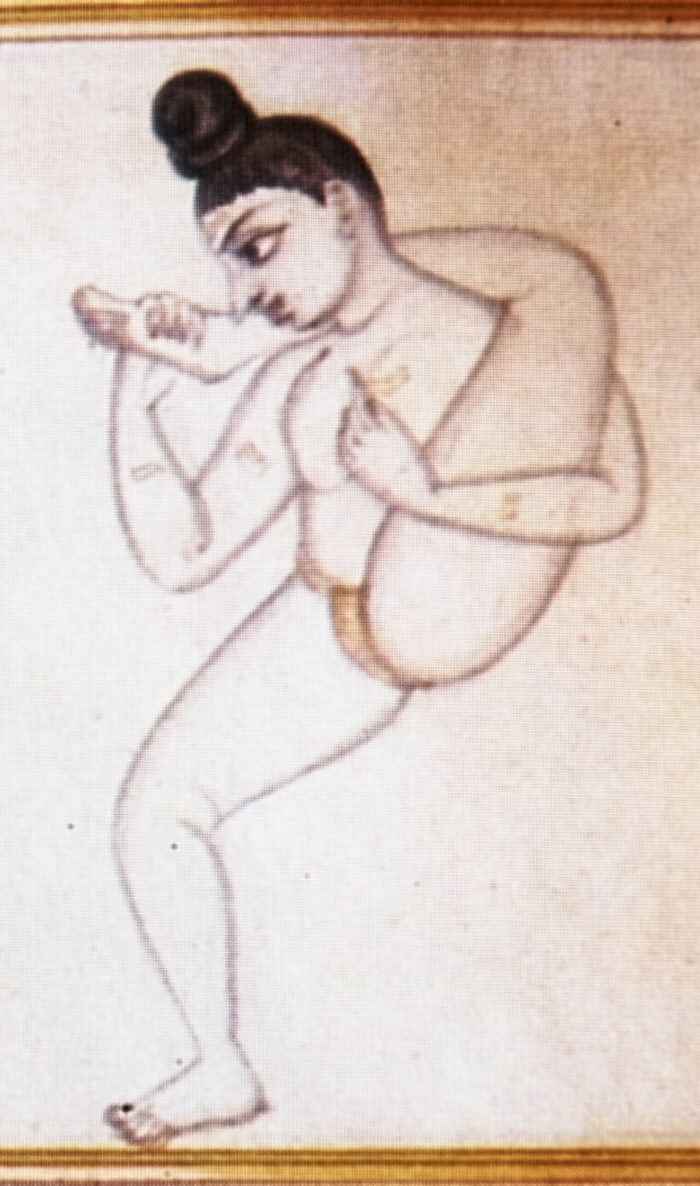
Durvasasana — dedicated to the short-tempered sage Durvasa — is an advanced standing balance where one leg is hooked behind the head while you stand tall on the other leg. It combines extreme hip and hamstring openness with one-legged standing balance and deep concentration.
Name meaning: Named for the sage Durvāsa (a famously fierce-tempered rishi), with āsana — "Durvasa's posture", a standing one-legged balance with the other leg hooked behind the head.
Classification: Asana — an advanced standing balance with a leg behind the head (elite).
Tradition & origin: Durvasasana is modern: it is a contemporary leg-behind-head balance, not found in the medieval hatha texts, though it bears the ancient sage Durvasa's name. Present it as modern postural yoga.
This guide was drafted with the help of AI and reviewed by us. It is for general education only and is not medical or professional advice. It may contain errors. Please practise mindfully, listen to your body, and consult a qualified yoga teacher or doctor for anything specific. Spotted an error? Tell us in the comments below.
How to do it — step by step
- 1Seated, safely work one leg behind the head (only if easily available).
- 2Keep the leg hooked securely behind the neck, spine tall.
- 3Bring the hands to the heart in prayer.
- 4Root the standing-side foot and begin to stand up on that leg.
- 5Rise to standing, keeping the other leg behind the head.
- 6Fix the gaze, balance, and breathe.
- 7Lower with control; release the leg carefully; switch sides.
Breath & hold
Breathe steadily; hold briefly. Never strain the neck or hamstrings.
Benefits
- ✓Extreme hip and hamstring opening.
- ✓Builds one-legged standing balance and leg strength.
- ✓Develops deep focus and steadiness.
- ✓An advanced leg-behind-head standing posture.
🪔 The traditional / desi way
- Named for Durvasa, a rishi famed for his fierce temper and great tapas — the pose demands the discipline his name evokes.
- Traditional wisdom: a safe, comfortable leg-behind-head (built over years) is essential; standing on it adds a serious balance challenge. Expert guidance only.
Common mistakes
- ✕Forcing the leg behind the head without the required openness.
- ✕Loading the neck to keep the leg up.
- ✕Standing before the balance is secure.
Modifications & props
- 🧩Work Eka Pada Sirsasana (seated leg-behind-head) safely first, over a long time.
- 🧩Practise one-legged balances (Tree, Hand-to-Big-Toe) for the standing component.
Muscles & anatomy
- 💪Demands extreme hip and hamstring openness (leg behind head).
- 💪The standing leg, core and balance muscles work to stand tall.
- 💪The neck must NOT bear the leg's weight — openness must come from the hip.
What you may feel
- 🫧For the prepared few: a deep hip opening with a standing balance, breath steady.
- 🫧Warning sign: any neck or hamstring strain — come out; the hip is not open enough.
Variations to grow into
Work Eka Pada Sirsasana (seated leg-behind-head) safely over a long time first.
The full standing balance with the leg behind the head and hands at the heart — elite, expert-guided only.
Using props
- 🧱A wall for the standing balance while learning the components.
- 🧱Realistically, safe hip openers and accessible balances are the right practice for almost everyone.
Warm-up & counterpose
- Years of deep hip opening; a thorough same-day warm-up.
- Gentle forward folds and hip releases to neutralise.
Supporting exercises
Why: Opens the hips toward leg-behind-head, safely.
How: Draw one leg up toward the shoulder with a strap over time.
Why: Build the one-legged balance.
How: Hold these steadily first.
Progression path
Open the hips over years toward a safe, easy seated leg-behind-head; build standing balance; combine only with expert guidance — and there is no shame in never attempting it.
Who it suits — and who should modify
- ✓A small number of elite practitioners with a safe, easy leg-behind-head and strong balance.
- ✓Those who have opened the hips over years and can do Eka Pada Sirsasana comfortably.
- ✓Realistically: most people should build hip openness and enjoy accessible balances instead.
- !Neck, hamstring, hip or knee injury — do NOT attempt the leg-behind-head.
- !Anyone without a safe, comfortable seated leg-behind-head — not yet.
- !Never lever the leg into place with force; the neck is at risk.
When to practise
Only within an advanced, expertly-guided practice, thoroughly warmed.
Rarely, for the few prepared for it.
Traditional view vs. modern evidence
The fierce sage Durvasa's pose; a dramatic leg-behind-head balance.
Not in the medieval texts; a modern balance bearing a sage's name.
An elite leg-behind-head standing balance — admired more than attempted.
Spiritual/therapeutic claims are not established.
Evidence at a glance
The pose demands and demonstrates extreme hip openness and balance.
Self-evident from the biomechanics; only for the exceptionally prepared.
It has special spiritual or therapeutic effects.
Symbolic claims without supporting evidence.
Myths vs. reality
✕ Myth: With enough stretching anyone can put a leg behind the head.
✓ Reality: It needs exceptional, often anatomy-dependent hip openness; forcing it risks the neck and hamstrings.
✕ Myth: The sage's name makes it ancient or spiritual.
✓ Reality: The name honours the sage Durvasa; the pose itself is a modern balance.
⚠️ Cautions
- Neck, hamstring, hip, or knee injury — do NOT attempt. Advanced/extreme; build over years with expert guidance.
Frequently asked questions
How is this different from Kala Bhairavasana?
Both use a leg behind the head. Durvasasana is a standing balance on one leg; Kala Bhairavasana is an arm balance in a side-plank-like line.
Should most people attempt this?
No — it needs extreme, safely-developed hip openness. For nearly everyone, the safer path is gradually opening the hips and enjoying accessible balances.
Key takeaways
- ⭐An elite standing balance with a leg behind the head.
- ⭐Needs a safe, easy seated leg-behind-head first (built over years); openness from the hip, never the neck.
- ⭐For a tiny minority only; most should open the hips and enjoy accessible balances.
- ⭐A modern pose bearing the sage Durvasa's name.
References
- Wikipedia — List of asanas (Durvasasana / leg-behind-head balances) · Encyclopaedia, scholarly-sourced
- NCCIH — Yoga: What You Need To Know · Government health body (public domain)
Sources are provided for further reading; always consult a qualified teacher or clinician for personal guidance.
📝 Your private notes
Saved only on this device — jot down what helped.
💬 Improvements, corrections & suggestions
Found an error or have a better cue? Share it — practitioners help make each guide more accurate.
No comments yet — be the first to help improve this guide.