DAILY YOGA · Eka Pada Rajakapotasana
King Pigeon
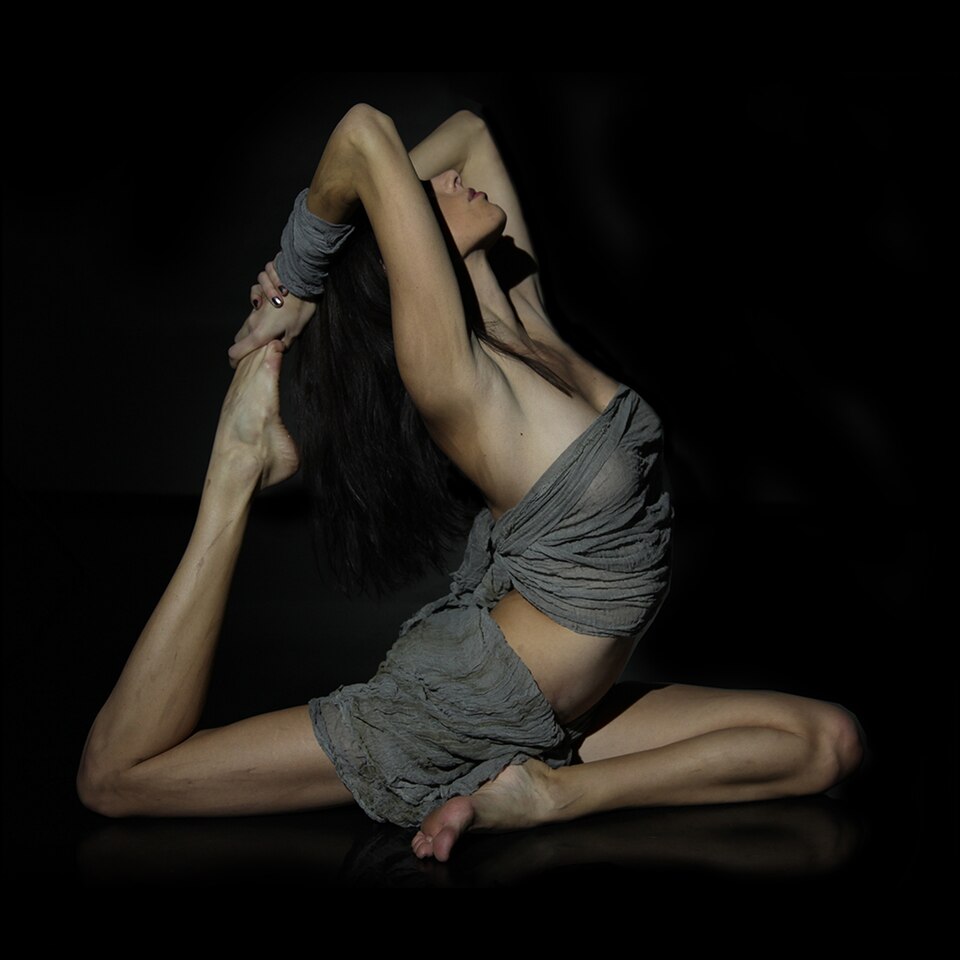
Eka Pada Rajakapotasana — One-Legged King Pigeon — is a deep hip opener (in its common forward-folding form) and, in its full expression, a backbend too. The classic "Pigeon" stretch releases the outer hip and glute of the front leg like few other poses can.
Name meaning: From eka meaning "one", pāda meaning "foot/leg", rāja meaning "king", kapota meaning "pigeon", and āsana — the "one-legged king pigeon posture". The lifted, proud chest of the full pose recalls a pigeon puffing its breast.
Classification: Asana — a seated hip-opener and, in its full form, a deep backbend.
Tradition & origin: One-Legged King Pigeon is a modern pose: it is not found in the medieval hatha texts and is described in the 20th century by two of Krishnamacharya's pupils — Pattabhi Jois (Ashtanga) and B. K. S. Iyengar (Light on Yoga, 1966). The common forward-folding "Pigeon" hip stretch is a modern staple.
This guide was drafted with the help of AI and reviewed by us. It is for general education only and is not medical or professional advice. It may contain errors. Please practise mindfully, listen to your body, and consult a qualified yoga teacher or doctor for anything specific. Spotted an error? Tell us in the comments below.
How to do it — step by step
- 1From Downward Dog, bring the right knee forward behind the right wrist.
- 2Angle the right shin under the torso; extend the left leg straight back.
- 3Square the hips toward the front and keep the back leg's toes pointing back.
- 4Stay upright for a gentler version, or walk the hands forward to fold.
- 5Rest the forehead on the mat or a block, releasing into the front hip.
- 6Breathe into the sensation without forcing.
- 7Press back up and switch sides.
Breath & hold
Breathe slowly and deeply; hold 1–2 minutes each side, softening with each exhale.
Benefits
- ✓Deeply opens the outer hip, glute and hip flexor.
- ✓Relieves tightness from sitting and running.
- ✓Calming in the forward-fold version.
- ✓Prepares the hips for deeper backbends (full King Pigeon).
🪔 The traditional / desi way
- The "king pigeon" puffs its chest proudly — the full pose lifts the heart while the hips open, a blend of strength and surrender.
- Traditional cue: keep the hips square and level; if one side lifts, support it so the stretch stays safe and even.
Common mistakes
- ✕Letting the hips tilt so all the weight dumps onto one side.
- ✕Forcing the front shin parallel before the hips are open.
- ✕Twisting the back knee by letting the leg splay out.
Modifications & props
- 🧩Place a block or cushion under the front-leg hip to keep the pelvis level.
- 🧩Stay upright instead of folding forward.
- 🧩Practise reclined figure-4 (Sucirandhrasana) for a knee-friendly alternative.
Muscles & anatomy
- 💪Deeply stretches the front-leg glutes and external hip rotators, and the back-leg hip flexors (psoas).
- 💪The full pose stretches the chest, shoulders, quads and abdomen while the back muscles work.
- 💪The pelvis must be supported and level to protect the front knee and sacrum.
What you may feel
- 🫧Normal: a strong, deep stretch in the outer front hip and glute, easing as you soften and breathe.
- 🫧Warning sign: any pain in the front knee — come out and support the hip; sharp or pinching sensations mean back off.
Variations to grow into
Stay upright with the hands by the hips (Salamba Kapotasana) for a gentler chest-lift, or fold forward over the front shin for a deep hip release.
The full Eka Pada Rajakapotasana: bend the back knee and reach back to catch the foot, drawing it toward the head for a deep backbend.
Using props
- 🧱A folded blanket or block under the front-leg hip to keep the pelvis level.
- 🧱A strap to the back foot when working toward the full backbend.
Warm-up & counterpose
- Low lunges, figure-4 stretches and gentle hip circles to warm the hips.
- A gentle seated twist or Downward Dog to neutralise the hips and spine.
Supporting exercises
Why: A knee-friendly way to open the same outer-hip muscles.
How: Lying on the back, cross one ankle over the opposite thigh and draw the legs in.
Why: Opens the back-leg hip flexor used in the pose.
How: Lunge with the back knee down and hips sinking forward.
Progression path
Begin with reclined figure-4 and upright Pigeon; progress to folding forward; only much later, with warm and open hips and shoulders, explore catching the back foot for the full backbend.
Who it suits — and who should modify
- ✓Most practitioners, for the upright or forward-folding hip-opener version.
- ✓Those with tight outer hips and glutes from sitting or running.
- ✓The full backbend form suits advanced practitioners with open hips, shoulders and spine.
- !Knee injury — the front knee is vulnerable; keep the shin tucked, support the hip, or use reclined figure-4 instead.
- !Recent hip or sacroiliac issues — keep the pelvis square and level, or skip.
- !The full backbend needs advanced shoulder and spine mobility; do not force it.
When to practise
Excellent late in a practice once the hips are warm, or as a long-held release after sitting or running.
A few times a week; hold 1–2 minutes each side, breathing into the sensation.
Traditional view vs. modern evidence
The proud king pigeon, chest lifted; a deep opening of the hips and heart.
Not in the medieval hatha texts; a 20th-century pose (Jois, Iyengar).
A hallmark hip-opener for tight glutes and hip flexors, plus an advanced backbend.
Emotional-release and detox claims are not established.
Evidence at a glance
Pigeon-style hip openers stretch the glutes and external hip rotators.
Consistent with anatomy; the target muscles are clearly lengthened.
It "releases trauma" or detoxifies the hips.
A popular claim without solid supporting evidence.
Myths vs. reality
✕ Myth: Pigeon Pose "releases stored emotions or trauma" from the hips.
✓ Reality: It is a deep, often intense hip stretch that can feel emotionally releasing, but the idea that hips literally store emotions is a metaphor, not an established mechanism.
✕ Myth: You should force the front shin parallel to the mat.
✓ Reality: Shin angle depends on your hip openness; forcing it strains the knee. Keep the shin more tucked and support the hip.
⚠️ Cautions
- Knee injury — be very cautious with the front knee; keep the shin more tucked and support the hip. Skip if the knee complains.
Frequently asked questions
My front knee hurts — what should I do?
Come out and support the hip with a cushion, and keep the shin more tucked under you. A reclined figure-4 stretch is a safe knee-friendly alternative.
Why is one hip lifting off the floor?
That is normal with tight hips. Slide a block or blanket under that hip so the pelvis stays level and the stretch stays safe.
Key takeaways
- ⭐A deep opener for the outer hip and glute — one of the most effective hip stretches.
- ⭐Keep the pelvis square and level, supported on a blanket, to protect the front knee and sacrum.
- ⭐A modern pose (20th century), not a medieval one; the full backbend is advanced.
- ⭐Come out at any knee pain; reclined figure-4 is a safe alternative.
References
- Wikipedia — Eka Pada Rajakapotasana (origins, Jois & Iyengar) · Encyclopaedia, scholarly-sourced
- NCCIH — Yoga: What You Need To Know · Government health body (public domain)
Sources are provided for further reading; always consult a qualified teacher or clinician for personal guidance.
📝 Your private notes
Saved only on this device — jot down what helped.
💬 Improvements, corrections & suggestions
Found an error or have a better cue? Share it — practitioners help make each guide more accurate.
No comments yet — be the first to help improve this guide.