DAILY YOGA · Gomukha Hasta
Gomukhasana Arms
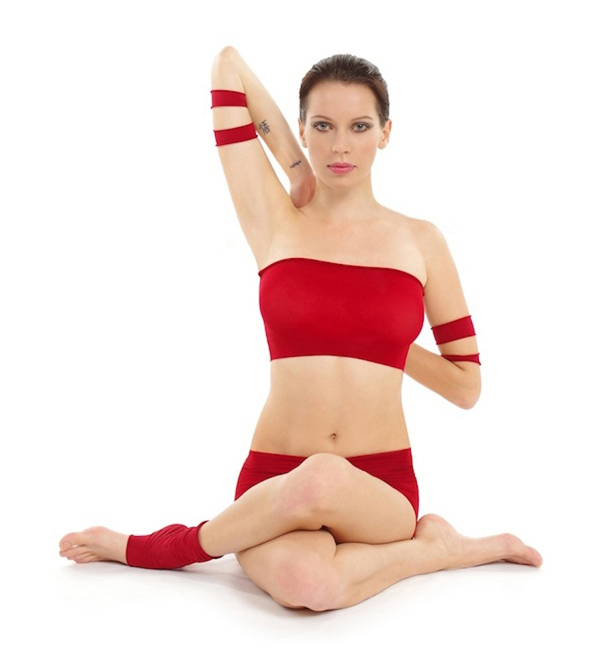
Gomukha Hasta is the upper-body half of Cow Face Pose (Gomukhasana), done on its own to open tight shoulders. One elbow points up and the other down as the hands reach to clasp behind the back — a superb, targeted release for desk-bound shoulders.
Name meaning: The arm position of Gomukhāsana — from go meaning "cow", mukha meaning "face", and āsana — the "cow-face" arms: one elbow up and one down, the hands clasping behind the back.
Classification: A shoulder-opening arm position (used within Cow-Face Pose and on its own).
Tradition & origin: The cow-face arm bind is part of Gomukhasana, whose name is old (a Gomukhasana appears in the medieval texts, though describing a somewhat different seated pose). As a standalone shoulder opener it is used throughout modern practice. Present the arm bind as a modern application of a traditionally-named pose.
This guide was drafted with the help of AI and reviewed by us. It is for general education only and is not medical or professional advice. It may contain errors. Please practise mindfully, listen to your body, and consult a qualified yoga teacher or doctor for anything specific. Spotted an error? Tell us in the comments below.
How to do it — step by step
- 1Sit or stand tall.
- 2Reach the right arm up, bend the elbow, and drop the right hand down the back.
- 3Reach the left arm behind and up the back.
- 4Clasp the fingers (or hold a strap between the hands).
- 5Draw the top elbow back and the bottom elbow toward the midline.
- 6Keep the spine tall and the ribs from flaring.
- 7Release and switch which arm is on top.
Breath & hold
Breathe smoothly into the stretch; hold 30–60 seconds each side.
Benefits
- ✓Opens tight shoulders, chest and the backs of the arms.
- ✓Improves shoulder mobility.
- ✓Counteracts rounded, hunched posture.
- ✓Can be done anywhere, anytime.
🪔 The traditional / desi way
- The arm shape of the "cow face" — practised alone whenever the shoulders need a quick, focused opening.
- Traditional cue: keep the spine tall and avoid arching the lower back; use a strap freely — the shoulders open over time.
Common mistakes
- ✕Arching the lower back and flaring the ribs to force the clasp.
- ✕Cranking the top shoulder aggressively.
- ✕Hunching the spine.
Modifications & props
- 🧩Hold a strap or belt between the hands if they do not meet.
- 🧩Do it standing against a wall to keep the spine tall.
Muscles & anatomy
- 💪Stretches the triceps and the top shoulder, and the front of the bottom shoulder.
- 💪Opens the chest and rotator-cuff muscles.
- 💪The upper back works to draw the shoulder blades toward each other.
What you may feel
- 🫧Normal: a strong shoulder and triceps stretch, and an opening across the chest.
- 🫧Warning sign: shoulder-joint pinching — back off, use a strap, and never force the clasp.
Variations to grow into
Shorten the strap over time until the hands meet.
Add it into the full Cow-Face Pose (Gomukhasana) with the legs stacked for a hip stretch too.
Using props
- 🧱A strap or belt between the hands if they do not meet.
- 🧱Practise against a wall to keep the spine tall.
Warm-up & counterpose
- Shoulder rolls and gentle chest/triceps stretches.
- Circle the shoulders and shake out the arms; a gentle chest opener.
Supporting exercises
Why: Prepare the shoulders for the bind.
How: Gentle rolls and doorway chest stretches.
Why: Opens the upper back and shoulders differently.
How: Wrap the forearms and lift the elbows.
Progression path
Start with a strap between the hands; shorten it over weeks until the hands meet, keeping the spine tall and the shoulders relaxed.
Who it suits — and who should modify
- ✓Almost everyone — done seated, standing or with a strap.
- ✓Desk workers and anyone with tight shoulders.
- ✓Those wanting to open the shoulders and chest and free the upper back.
- !Shoulder injury — use a strap between the hands and keep it gentle.
- !Rotator-cuff issues — do not force the clasp; hold a strap.
- !Work both sides; one is usually much tighter.
When to practise
Any time to counter rounded shoulders; within Cow-Face Pose or on its own.
Daily is fine; hold 30–60 seconds each side.
Traditional view vs. modern evidence
The cow-face arms; a humble, clasped shoulder opening.
Part of the traditionally-named Gomukhasana; used as a standalone opener in modern practice.
Valued as an accessible shoulder-, triceps- and chest-opener.
Joint-healing claims are not established.
Evidence at a glance
The bind stretches the shoulders and triceps and opens the chest.
Consistent with anatomy; the target tissues are clearly stretched.
It has specific organ or joint-healing effects.
Claims without solid supporting evidence.
Myths vs. reality
✕ Myth: If the hands won't meet you are failing.
✓ Reality: Hand-clasp depends on shoulder mobility (and differs side to side); a strap is a full expression while you open.
✕ Myth: It realigns the shoulders.
✓ Reality: It opens and stretches the shoulders and can help posture, but it does not "realign" the joints.
⚠️ Cautions
- Shoulder injury — use a strap and keep the reach gentle; never force the clasp.
Frequently asked questions
My hands will not meet — normal?
Very common. Hold a strap between them and let the gap close gradually over weeks of practice.
Which side is tighter?
Most people find one side noticeably tighter — that is normal. Practise both, and be patient with the stiffer side.
Key takeaways
- ⭐A shoulder-, triceps- and chest-opening arm bind (from Cow-Face Pose).
- ⭐Use a strap if the hands don't meet; never force the clasp.
- ⭐Work both sides — one is usually much tighter.
- ⭐Great for countering rounded shoulders.
References
- Wikipedia — Gomukhasana (cow-face arm position) · Encyclopaedia, scholarly-sourced
- NCCIH — Yoga: What You Need To Know · Government health body (public domain)
Sources are provided for further reading; always consult a qualified teacher or clinician for personal guidance.
📝 Your private notes
Saved only on this device — jot down what helped.
💬 Improvements, corrections & suggestions
Found an error or have a better cue? Share it — practitioners help make each guide more accurate.
No comments yet — be the first to help improve this guide.