DAILY YOGA · Janu Sirsasana
Head-to-Knee Pose
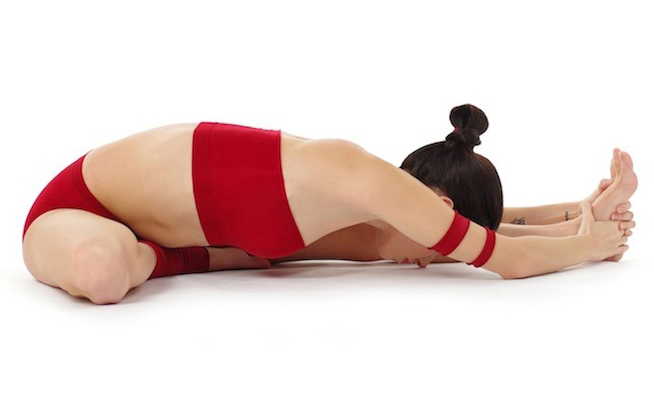
Janu Sirsasana — Head-to-Knee Pose — is a seated forward bend over one straight leg, with the other foot drawn into the inner thigh. It stretches the hamstring and side body, gently twists the spine, and quiets the mind.
Name meaning: From jānu meaning "knee", śīrṣa meaning "head", and āsana meaning "posture" — the "head-to-knee posture", the torso folding toward the straight leg.
Classification: Asana — a seated forward bend over one leg (with a gentle twist and side-stretch).
Tradition & origin: Head-to-Knee Pose is a modern posture, first seen in the 20th century: it is described in Krishnamacharya's 1934 Yoga Makaranda and in the works of his pupils (Iyengar, Pattabhi Jois). Not a medieval hatha pose.
This guide was drafted with the help of AI and reviewed by us. It is for general education only and is not medical or professional advice. It may contain errors. Please practise mindfully, listen to your body, and consult a qualified yoga teacher or doctor for anything specific. Spotted an error? Tell us in the comments below.
How to do it — step by step
- 1Sit with both legs extended, then bend the right knee out to the side.
- 2Place the right sole against the left inner thigh.
- 3Square the chest toward the straight left leg.
- 4Inhale and lengthen the spine, reaching up.
- 5Exhale and hinge forward from the hips over the straight leg.
- 6Hold the shin, ankle or foot — wherever you reach without rounding.
- 7Breathe, then switch sides.
Breath & hold
Breathe slowly; hold 45–60 seconds each side. Lengthen on the inhale, fold on the exhale.
Benefits
- ✓Stretches the hamstring and calf of the straight leg.
- ✓Opens the hip of the bent leg and the side body.
- ✓Calms the mind and can ease mild anxiety.
- ✓Gently lengthens the spine.
🪔 The traditional / desi way
- Janu = knee, sirsa = head — the name describes the shape, though touching the head to the knee is never the true aim.
- Traditional cue: turn the chest to face the straight leg first, then fold — square before you bow.
Common mistakes
- ✕Rounding the back to reach the foot.
- ✕Not squaring the chest toward the straight leg.
- ✕Locking the straight knee hard.
Modifications & props
- 🧩Loop a strap around the straight foot and hold that.
- 🧩Sit on a cushion to tilt the pelvis forward.
- 🧩Support the bent knee with a rolled blanket.
Muscles & anatomy
- 💪Stretched: the hamstring and calf of the straight leg, and the side body toward that leg.
- 💪The bent-leg hip opens in external rotation; the spine lengthens and gently rotates toward the straight leg.
- 💪The aim is a long spine folding from the hips, not a rounded reach for the foot.
What you may feel
- 🫧Normal: a clear stretch down the straight-leg hamstring and along one side of the back, and a calming quality.
- 🫧Warning sign: bent-knee strain or lower-back pain — support the knee, bend from the hips, and use a strap.
Variations to grow into
Fold deeper from the hips with a long spine, holding the foot and lengthening the chest toward the straight leg.
Bound or revolved variations (e.g. Parivrtta Janu Sirsasana, a side-bending twist) — with open hamstrings and a comfortable spine.
Using props
- 🧱A strap around the straight-leg foot so the spine stays long.
- 🧱A cushion under the sitting bones (to tilt the pelvis) and under the bent knee.
Warm-up & counterpose
- Gentle hamstring stretches and hip openers.
- A few Cat–Cow rounds.
- A gentle supine twist or a supported backbend to balance the fold.
- Straighten and shake out the bent leg.
Supporting exercises
Why: Lengthens one hamstring at a time so the fold comes from the hips.
How: Lying down, raise one leg with a strap; hold 30 seconds each side.
Why: Teaches folding from the hips with a long spine.
How: Sitting tall, rock the pelvis forward and back several times.
Progression path
Start seated on a cushion with the bent knee supported and a strap around the straight foot, folding from the hips; deepen over time — length before depth.
Who it suits — and who should modify
- ✓Beginners, using a strap and a supported bent knee.
- ✓Anyone wanting to stretch one hamstring at a time and the side body.
- ✓Those seeking a calming, inward seated fold.
- !Modify: bent-knee discomfort — support that knee with a cushion and let it open only as far as is comfortable.
- !Modify: lower-back issues — keep the spine long, bend from the hips, and use a strap.
- !Relative caution: recent knee or hamstring injury — ease off and get guidance.
When to practise
Any time; soothing later in a practice or in the evening.
Safe daily; hold each side and swap.
Traditional view vs. modern evidence
A quieting, inward single-leg fold in the modern seated sequence.
Not in the medieval hatha texts; first described by Krishnamacharya (Yoga Makaranda, 1934).
Valued as a one-leg-at-a-time hamstring and side-body stretch and a calming fold.
Organ-specific curative claims are not established.
Evidence at a glance
The pose stretches one hamstring and the side body and can feel calming.
Consistent with the biomechanics of a single-leg seated fold.
It cures kidney/liver or other organ ailments.
A traditional framing; not established as a specific medical effect.
Myths vs. reality
✕ Myth: Your head must touch your knee.
✓ Reality: That is not the goal (or the point). A long spine folding from the hips matters far more; use a strap.
✕ Myth: Forcing the fold stretches you faster.
✓ Reality: Rounding and yanking risks the back and hamstring; gentle, regular practice lengthens them more safely.
⚠️ Cautions
- Knee injury (bent leg), lower-back issues, or tight hamstrings — support the bent knee with a cushion and use a strap around the straight foot.
Frequently asked questions
My head will not reach my knee — is that wrong?
No — that is not the goal. Keep the spine long and fold from the hips; depth comes gradually and matters far less than length.
The bent knee feels strained — help?
Place a cushion or block under that knee for support, and let the leg relax open only as far as is comfortable.
Key takeaways
- ⭐A calming single-leg seated fold that stretches one hamstring and the side body.
- ⭐Keep the spine long and fold from the hips — head-to-knee is not the goal.
- ⭐A modern pose (Krishnamacharya, 1934).
- ⭐Support the bent knee and use a strap around the straight foot.
References
- Wikipedia — Paschimottanasana (covers Janusirsasana etymology & Krishnamacharya origin) · Encyclopaedia, scholarly-sourced
- NCCIH — Yoga: What You Need To Know · Government health body (public domain)
Sources are provided for further reading; always consult a qualified teacher or clinician for personal guidance.
📝 Your private notes
Saved only on this device — jot down what helped.
💬 Improvements, corrections & suggestions
Found an error or have a better cue? Share it — practitioners help make each guide more accurate.
No comments yet — be the first to help improve this guide.