DAILY YOGA · Jathara Parivartanasana
Reclined Twist
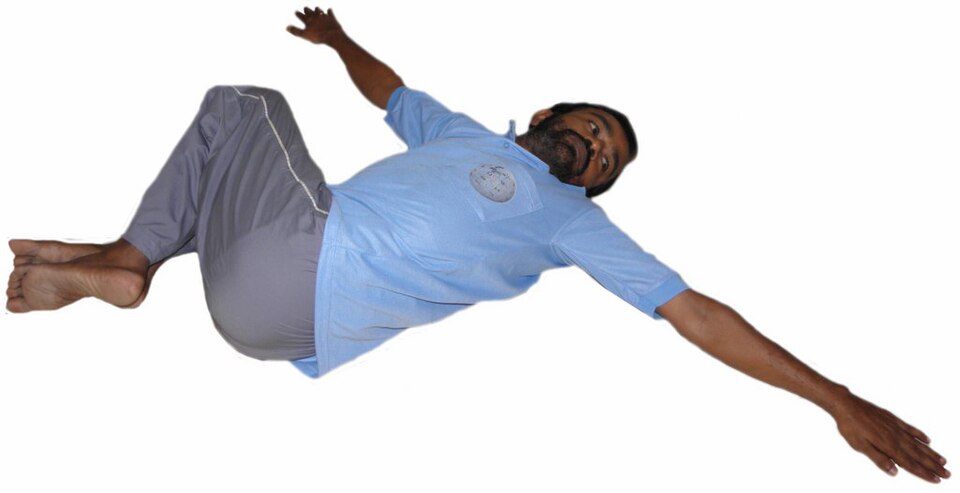
Jathara Parivartanasana — Reclined (Belly) Twist — is a gentle supine twist that releases the spine and lower back at the end of a practice. Lying on the back and letting the knees drop to one side, it unwinds tension and calms the body before rest.
Name meaning: From jaṭhara meaning "stomach/abdomen", parivartana meaning "to turn around", and āsana — the "revolved-abdomen posture", a reclining belly twist. Also called Belly Twist or Spinal Twist.
Classification: Asana — a reclining (supine) spinal twist.
Tradition & origin: Revolved Abdomen is modern: it is not found in the medieval hatha texts and is described in 20th-century manuals including B. K. S. Iyengar's 1966 Light on Yoga. Present it as modern postural yoga.
This guide was drafted with the help of AI and reviewed by us. It is for general education only and is not medical or professional advice. It may contain errors. Please practise mindfully, listen to your body, and consult a qualified yoga teacher or doctor for anything specific. Spotted an error? Tell us in the comments below.
How to do it — step by step
- 1Lie on the back and hug the knees into the chest.
- 2Open the arms out to a T, palms down.
- 3On an exhale, let both knees fall gently to the right.
- 4Turn the head to the left if the neck is comfortable.
- 5Keep both shoulders resting toward the floor.
- 6Breathe into the twist, softening with each exhale.
- 7Inhale to centre, then repeat to the other side.
Breath & hold
Breathe slowly; stay 30–60 seconds each side, softening on every exhale.
Benefits
- ✓Releases the spine, lower back and hips.
- ✓Calms the nervous system.
- ✓Traditionally said to aid digestion.
- ✓A soothing way to end a practice.
🪔 The traditional / desi way
- Jathara = belly, parivartana = turning — a gentle churning of the abdomen that old texts link to digestive health.
- Traditional cue: let gravity do the work; keep the far shoulder grounded and let the breath deepen the release.
Common mistakes
- ✕Forcing the knees down while the shoulder lifts.
- ✕Rushing the twist instead of releasing gradually.
Modifications & props
- 🧩Place a cushion under the knees where they fall.
- 🧩Keep the knees bent and stacked rather than extending the legs.
Muscles & anatomy
- 💪Rotates the muscles along the spine and stretches the obliques and lower back.
- 💪Opens the chest as the shoulders stay grounded.
- 💪The straight-leg (full) version strongly engages the deep core to lower and lift the legs.
What you may feel
- 🫧Normal: a gentle, even rotation through the spine and a pleasant release in the lower back.
- 🫧Warning sign: strain in the low back or neck — bend the knees more, support them on a cushion, and keep both shoulders down.
Variations to grow into
Straighten the legs toward one side (the full pose) for a stronger core and lower-back challenge, keeping the opposite shoulder grounded.
Lower and lift straight legs slowly from side to side with control — a demanding deep-core exercise.
Using props
- 🧱A cushion or bolster under the knees so both shoulders stay on the floor.
- 🧱A block held in the opposite hand (Iyengar style) to steady the shoulder.
Warm-up & counterpose
- Knees-to-chest and gentle knee circles to loosen the lower back.
- Hug the knees into the chest, then rest with the legs long.
Supporting exercises
Why: Warms and releases the lower back before twisting.
How: Hug both knees into the chest and rock gently.
Why: Builds the deep-core strength the straight-leg version needs.
How: On the back, extend opposite arm and leg slowly, keeping the low back down.
Progression path
Start with bent knees and cushioned support; over time lower the knees closer to the floor, then explore the straight-leg version only with a strong, stable core.
Who it suits — and who should modify
- ✓Most people — the knees-bent version is gentle and widely accessible.
- ✓Those wanting to release the spine and lower back at the end of a practice.
- ✓A soothing wind-down twist before Corpse Pose.
- !Spinal or disc injury, or pregnancy — keep the knees bent and the twist gentle; support the knees on a cushion.
- !The straight-leg version is strong for the core and low back — skip it if that feels like too much.
- !Recent abdominal surgery — avoid or keep it very gentle.
When to practise
Near the end of a practice, as a neutralising, calming twist before relaxation.
Daily is fine; hold 30–60 seconds each side.
Traditional view vs. modern evidence
A revolving of the belly; a calming, neutralising turn of the spine.
Not in the medieval texts; a 20th-century pose (Light on Yoga, 1966).
A gentle wind-down spinal twist, with a strong straight-leg core variation.
Detox and fat-loss claims are not established.
Evidence at a glance
Gentle reclining twists mobilise the spine and can ease a stiff lower back.
Consistent with general mobility and back-care exercise.
It reduces belly fat or detoxifies the organs.
A popular claim without solid supporting evidence.
Myths vs. reality
✕ Myth: Twists "detox" or "cleanse" the abdominal organs.
✓ Reality: Twists mobilise the spine and can feel relieving, but the squeeze-and-detox idea is a metaphor, not an established mechanism.
✕ Myth: The straight-leg version is simply better.
✓ Reality: It is much stronger on the core and low back; the bent-knee version is safer and often more appropriate.
⚠️ Cautions
- Recent spinal injury, disc issues, or pregnancy — keep the twist gentle and supported (knees on a cushion).
Frequently asked questions
My top shoulder lifts off the floor — is that ok?
A little is fine. Support the knees on a cushion so you can keep both shoulders grounded and the twist gentle.
When should I do this?
It is a lovely neutralising twist near the end of a practice, before Corpse Pose.
Key takeaways
- ⭐A gentle reclining spinal twist that releases the lower back — a lovely wind-down.
- ⭐Keep the knees bent and supported and both shoulders grounded.
- ⭐The straight-leg version is a strong deep-core exercise — approach it carefully.
- ⭐A modern pose (Light on Yoga, 1966).
References
- Wikipedia — Jathara Parivartanasana (origins, Light on Yoga) · Encyclopaedia, scholarly-sourced
- NCCIH — Yoga: What You Need To Know · Government health body (public domain)
Sources are provided for further reading; always consult a qualified teacher or clinician for personal guidance.
📝 Your private notes
Saved only on this device — jot down what helped.
💬 Improvements, corrections & suggestions
Found an error or have a better cue? Share it — practitioners help make each guide more accurate.
No comments yet — be the first to help improve this guide.