DAILY YOGA · Kapotasana
Pigeon Pose
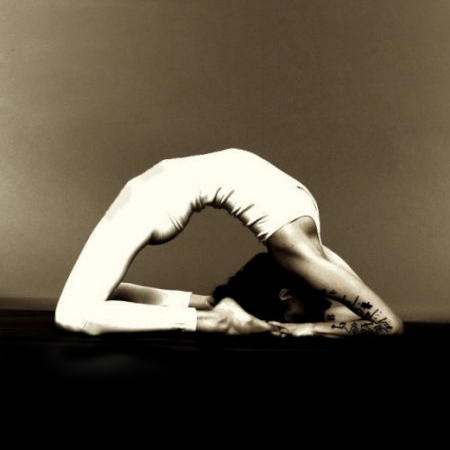
Kapotasana — Pigeon Pose — in its most common form is a powerful hip and glute opener done with the front shin angled beneath the torso and the back leg extended. It is one of the most effective releases for tight outer hips, and a doorway to deeper backbends.
Name meaning: From kapota meaning "pigeon" and āsana meaning "posture" — the "pigeon posture", named for the puffed-chest look of the fuller (backbending) forms.
Classification: Asana — a deep hip-opener (in this common forward-folding form); the name also denotes a kneeling backbend.
Tradition & origin: The name Kapotasana is a good example of shifting usage. A different, standing pose was called Kapotasana in the 19th-century Sritattvanidhi; the modern Ashtanga "Kapotasana" is an advanced kneeling backbend (in Light on Yoga); and the popular hip-opening "Pigeon" is usually a form of Eka Pada Rajakapotasana (One-Legged King Pigeon). All are modern in their current forms. This guide covers the widely practised hip-opening Pigeon.
This guide was drafted with the help of AI and reviewed by us. It is for general education only and is not medical or professional advice. It may contain errors. Please practise mindfully, listen to your body, and consult a qualified yoga teacher or doctor for anything specific. Spotted an error? Tell us in the comments below.
How to do it — step by step
- 1From Downward Dog or all fours, draw one knee forward toward the same-side wrist.
- 2Angle the shin under the body at a comfortable angle.
- 3Slide the back leg straight behind, top of the foot down.
- 4Square the hips toward the floor; keep them level.
- 5Stay tall for a gentler version, or walk the hands forward and fold.
- 6Rest the forehead on stacked hands or a block.
- 7Breathe into the front hip; then switch sides.
Breath & hold
Breathe slowly and deeply; hold 1–2 minutes each side, softening on each exhale.
Benefits
- ✓Opens the outer hip, glute and hip flexor deeply.
- ✓Relieves tension from sitting, walking and running.
- ✓Calming when folded forward.
- ✓Prepares the hips for backbends and seated poses.
🪔 The traditional / desi way
- Named for the pigeon (kapota) puffing its chest — the upright version lifts the heart while the hips release below.
- Traditional cue: level the hips first. If one side lifts, support it — never sacrifice the knee for a lower fold.
Common mistakes
- ✕Letting the hips tilt so weight dumps to one side.
- ✕Forcing the front shin parallel before the hips open.
- ✕Twisting the front knee by letting it torque.
Modifications & props
- 🧩Place a cushion under the folded-leg hip to keep the pelvis level.
- 🧩Stay upright rather than folding.
- 🧩Reclined figure-4 (Sucirandhrasana) for a knee-friendly alternative.
Muscles & anatomy
- 💪Stretched: the outer hip and glute (piriformis and other rotators) of the front leg, and the hip flexor of the back leg.
- 💪Working (lightly): the core and arms support the torso as you fold or stay upright.
- 💪Keeping the pelvis level protects the front knee and the lower back.
What you may feel
- 🫧Normal: a strong stretch deep in the front-leg outer hip and across the back-leg hip front.
- 🫧Warning sign: any pain in the front knee — come out, support the hip, and switch to a reclined figure-4.
Variations to grow into
Fold forward over the front shin for a deeper glute stretch, keeping the pelvis level and the front knee comfortable.
The backbending King Pigeon forms (Eka Pada Rajakapotasana), catching the back foot toward the head — for open hips, spine and shoulders, ideally with a teacher.
Using props
- 🧱A cushion or block under the folded-leg hip to keep the pelvis level and protect the knee.
- 🧱Reclined figure-4 (Sucirandhrasana) as a fully knee-friendly alternative.
Warm-up & counterpose
- Reclined figure-4 and gentle hip circles.
- A few low lunges.
- A gentle Downward Dog or a supine knees-to-chest to neutralise the hips.
- A reclined twist.
Supporting exercises
Why: Opens the same outer hip with no knee load.
How: On the back, cross one ankle over the opposite thigh and draw the legs in; 30–60 seconds each side.
Why: Frees the back-leg hip that Pigeon also stretches.
How: From a kneeling lunge, ease the hips forward; 20–30 seconds each side.
Progression path
Start with reclined figure-4, then upright Pigeon with the hip supported, then a forward fold — always keeping the pelvis level and the front knee pain-free.
Who it suits — and who should modify
- ✓Most people with healthy knees wanting to open tight outer hips.
- ✓Desk workers and runners with tight glutes and hips.
- ✓Those preparing for deeper hip openers or backbends.
- !Modify / avoid: knee injury — do not force the front-knee angle; use a reclined figure-4 instead.
- !Relative caution: hip, sacroiliac or lower-back issues — keep the pelvis level and stay upright, or choose the reclined version.
- !Never let the front knee take strain — support the hip so the stretch stays in the muscles.
When to practise
Any time once warm; a good hip release later in a practice or after sitting/running.
Safe most days for healthy knees; hold each side and repeat as it feels good.
Traditional view vs. modern evidence
The puffed-chest "pigeon" shape; deep hip openers are prized in modern practice for release and preparation.
The name has meant different poses over time (a standing pose in the 19th-century Sritattvanidhi; a kneeling backbend in modern Ashtanga).
The hip-opening Pigeon (a form of Eka Pada Rajakapotasana) is valued as a strong outer-hip release.
Emotional-release and detox claims are not established.
Evidence at a glance
Pigeon stretches the outer hip/glute and the back-leg hip flexor.
Consistent with the biomechanics of the shape.
It "detoxes" or releases stored emotion from the hips.
Not established; the stretch can feel relieving without these mechanisms.
Myths vs. reality
✕ Myth: Pigeon "releases stored emotions/trauma" from the hips.
✓ Reality: Deep hip stretches can feel intense and relieving, but the idea that hips literally store emotions is not established; enjoy it as a strong stretch.
✕ Myth: You should push through front-knee pain to open the hip.
✓ Reality: Knee pain means the setup is off — support the hip or use a reclined figure-4. Never force the knee.
⚠️ Cautions
- Knee injury — keep the shin tucked more, support the hip, or choose reclined figure-4 instead.
Frequently asked questions
Pigeon vs King Pigeon?
This hip-opening Pigeon is the forward-folding stretch; King Pigeon (Rajakapotasana / Eka Pada Rajakapotasana) adds a deep backbend, catching the back foot overhead.
My front knee hurts — what do I do?
Come out, support the hip, and tuck the shin closer to you. A reclined figure-4 gives the same stretch safely.
Key takeaways
- ⭐A strong outer-hip and glute opener (the widely practised "Pigeon").
- ⭐Keep the pelvis level and the front knee pain-free — support the hip.
- ⭐The name Kapotasana has meant several different poses over time.
- ⭐Use a reclined figure-4 as a fully knee-friendly alternative.
References
- Wikipedia — Kapotasana (etymology & origins; naming complexity) · Encyclopaedia, scholarly-sourced
- NCCIH — Yoga: What You Need To Know · Government health body (public domain)
Sources are provided for further reading; always consult a qualified teacher or clinician for personal guidance.
📝 Your private notes
Saved only on this device — jot down what helped.
💬 Improvements, corrections & suggestions
Found an error or have a better cue? Share it — practitioners help make each guide more accurate.
No comments yet — be the first to help improve this guide.