DAILY YOGA · Kukkutasana
Rooster Pose
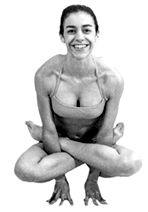
Kukkutasana — Rooster (Cockerel) Pose — is an advanced arm balance where, sitting in Lotus, you thread the arms through the gaps between the calves and thighs, plant the hands, and lift the whole body. The splayed limbs suggest a strutting rooster. It needs an easy Lotus and strong arms.
Name meaning: From kukkuṭa meaning "cockerel/rooster", and āsana — the "cockerel posture". The arms threaded through the folded Lotus legs, lifting the body, suggest a rooster standing tall.
Classification: Asana — an arm-balance built on Lotus (Padmasana).
Tradition & origin: Cockerel Pose is genuinely ancient: it is described across the medieval hatha texts — the c.7th-century Ahirbudhnya Samhita, the 13th-century Vasishtha Samhita and the 15th-century Hatha Yoga Pradipika — and even painted in the c.1602 Persian manuscript Bahr al-hayat. A real classical arm balance (unlike its modern cousins Lolasana and Tulasana).
This guide was drafted with the help of AI and reviewed by us. It is for general education only and is not medical or professional advice. It may contain errors. Please practise mindfully, listen to your body, and consult a qualified yoga teacher or doctor for anything specific. Spotted an error? Tell us in the comments below.
How to do it — step by step
- 1Sit in Padmasana (Lotus).
- 2Thread each hand through the gap between the calf and thigh, up to the forearms.
- 3Place the palms flat on the floor, fingers spread.
- 4Press down firmly and engage the core.
- 5Lift the crossed-Lotus body off the floor, balancing on the hands.
- 6Keep the chest lifted and gaze forward.
- 7Lower with control and release the Lotus.
Breath & hold
Breathe steadily; hold a few seconds and build up. Do not hold the breath.
Benefits
- ✓Strengthens the arms, wrists and shoulders.
- ✓Builds core lift and control.
- ✓Opens the hips (Lotus) and improves balance.
- ✓Traditionally linked with kindling digestive fire.
🪔 The traditional / desi way
- Kukkuta = rooster — the arms threaded through the legs splay like a cockerel's legs as it struts.
- Traditional wisdom: an easy, pain-free Lotus is essential first; the arm-threading needs open hips and slim... patience.
Common mistakes
- ✕Forcing Lotus with tight hips (knee strain).
- ✕Not pressing the hands down firmly enough to lift.
Modifications & props
- 🧩Master seated Lotus (Padmasana) comfortably first.
- 🧩Practise Tolasana (Scale Pose) to build the lift without threading the arms.
Muscles & anatomy
- 💪Works the wrists, arms, shoulders and deep core to lift the body.
- 💪Requires open hips and knees for the Lotus base.
- 💪The threaded arms and pressed hands carry the lifted weight.
What you may feel
- 🫧Normal: strong arm and core effort with the body lifted on the hands.
- 🫧Warning sign: any knee pain in Lotus, or wrist pain — come out; never force the Lotus for the lift.
Variations to grow into
Practise Tolasana (Scale) first — the same lift from Lotus without threading the arms through.
Urdhva Kukkutasana (Upward Cockerel): from a headstand, bring the Lotus knees onto the upper arms and lift into a hand-balance — very advanced.
Using props
- 🧱A cushion under the seat while opening into Lotus.
- 🧱Master Lotus and Scale Pose before threading the arms.
Warm-up & counterpose
- Deep hip openers to prepare Lotus, plus wrist mobility.
- Release the Lotus, straighten and shake out the legs; a wrist counter-stretch.
Supporting exercises
Why: The required base; must be comfortable first.
How: Fold into Lotus only with open hips, never forcing the knees.
Why: Builds the lift from Lotus without threading the arms.
How: From Lotus, press the hands down and lift the body.
Progression path
Open the hips for a comfortable Lotus over months; build the lift with Scale Pose; only then thread the arms through the Lotus and lift into Cockerel.
Who it suits — and who should modify
- ✓Advanced practitioners with a comfortable, open Lotus and strong arms.
- ✓Those with the hip openness to thread the arms between calf and thigh.
- ✓People with strong wrists building on a solid Lotus.
- !Knee injury — Lotus itself stresses the knees; never force it, and skip if the knees complain.
- !Wrist injury or carpal tunnel — build wrist strength first or skip.
- !Tight hips — open the hips for Lotus over months before attempting.
When to practise
In the stronger, warmed part of a practice, after hip and wrist preparation.
A couple of times a week for those with an easy Lotus.
Traditional view vs. modern evidence
The rooster standing tall; a lifted Lotus balance in the old hatha texts.
Genuinely ancient — Ahirbudhnya Samhita (7th c.), Vasishtha Samhita, HYP; painted c.1602.
Valued as an advanced Lotus-based arm balance.
Energy/cure claims are traditional, not established.
Evidence at a glance
Cockerel builds wrist, arm and core strength (given an open Lotus).
Consistent with the biomechanics of a lifting arm-balance.
It "awakens" specific energies or cures disease.
Traditional/subtle-body framing, offered as tradition rather than established fact.
Myths vs. reality
✕ Myth: You can force the knees into Lotus to do this.
✓ Reality: Forcing Lotus risks serious knee injury; the hips must open first — there is no shortcut.
✕ Myth: Being medieval means it suits everyone.
✓ Reality: It is genuinely old, but it demands an open Lotus and strong arms — an advanced pose regardless of its age.
⚠️ Cautions
- Knee or wrist injury — do NOT force Lotus or the lift; skip if the knees complain. Advanced.
Frequently asked questions
I cannot thread my arms through — why?
It needs an open Lotus with space between the calves and thighs. Work Lotus and Scale Pose first; the threading comes with openness.
Is Lotus required?
Yes — Rooster is built on Lotus. Never force the knees into Lotus; open the hips gradually first.
Key takeaways
- ⭐An advanced Lotus-based arm balance — the arms thread through the folded legs.
- ⭐A comfortable, open Lotus is required; never force the knees.
- ⭐Genuinely ancient — in the medieval hatha texts (unlike Scale/Pendant).
- ⭐Build with Lotus and Scale Pose first; protect the knees and wrists.
References
- Wikipedia — Kukkutasana (medieval origins; Ahirbudhnya, Vasishtha, HYP) · Encyclopaedia, scholarly-sourced
- NCCIH — Yoga: What You Need To Know · Government health body (public domain)
Sources are provided for further reading; always consult a qualified teacher or clinician for personal guidance.
📝 Your private notes
Saved only on this device — jot down what helped.
💬 Improvements, corrections & suggestions
Found an error or have a better cue? Share it — practitioners help make each guide more accurate.
No comments yet — be the first to help improve this guide.