DAILY YOGA · Kurmasana
Tortoise Pose
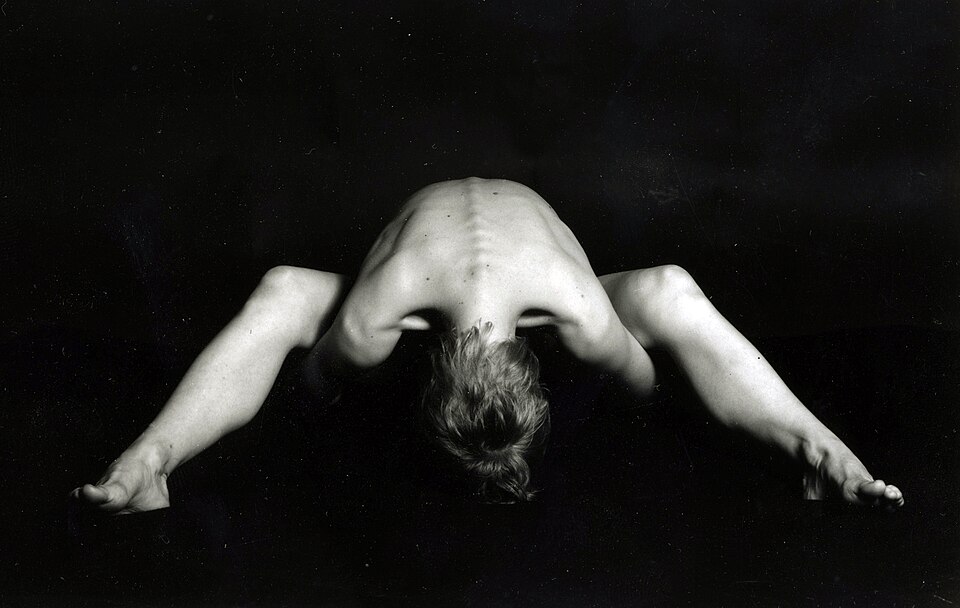
Kurmasana — Tortoise Pose — is a deep seated forward fold where the arms slide under the knees and out to the sides while the chest lowers toward the floor, drawing inward like a tortoise into its shell. It demands very open hips and hamstrings and cultivates deep introspection.
Name meaning: From kūrma meaning "tortoise", and āsana — the "tortoise posture". The arms tucked under the legs and the withdrawn head recall a tortoise pulling into its shell; dedicated to Kurma, Vishnu's tortoise avatar.
Classification: Asana — a deep seated forward bend and inward-drawing pose.
Tradition & origin: A partly-classical case: the upside-down Uttana Kurmasana is genuinely ancient (described in the c.7th-century Ahirbudhnya Samhita and drawn in the 19th-century Jogapradipika and Sritattvanidhi), but this modern seated forward-bend Kurmasana is 20th-century (Iyengar's Light on Yoga). So the name and a related shape are old; this deep fold is modern.
This guide was drafted with the help of AI and reviewed by us. It is for general education only and is not medical or professional advice. It may contain errors. Please practise mindfully, listen to your body, and consult a qualified yoga teacher or doctor for anything specific. Spotted an error? Tell us in the comments below.
How to do it — step by step
- 1Sit with the legs wide and knees bent, feet on the floor.
- 2Fold forward and slide each arm under the same-side knee.
- 3Extend the arms out to the sides, palms down.
- 4Slowly straighten the legs as much as is comfortable, drawing the torso down.
- 5Lower the chest and chin toward the floor.
- 6Keep the breath slow and the effort soft.
- 7Come out gently, bending the knees to free the arms.
Breath & hold
Breathe slowly and softly; hold 30–60 seconds, easing in gradually.
Benefits
- ✓Deeply stretches the hamstrings, hips and back.
- ✓Opens the shoulders.
- ✓Deeply calming and introspective (a "withdrawing inward" pose).
- ✓Improves overall flexibility.
🪔 The traditional / desi way
- The tortoise (kurma) withdraws into its shell — the pose embodies pratyahara, drawing the senses inward. Kurma is also an avatar of Vishnu.
- Traditional wisdom: this is a deep pose that opens over a long time. Warm up thoroughly and never force the chest down.
Common mistakes
- ✕Forcing the legs straight or the chest down before the body is ready.
- ✕Rounding harshly and straining the lower back.
- ✕Holding the breath.
Modifications & props
- 🧩Keep the knees bent and the legs less straight.
- 🧩Sit on a cushion and fold only partway.
Muscles & anatomy
- 💪Deeply stretches the hamstrings, inner thighs, hips and the whole back body.
- 💪The shoulders extend under the legs in the full expression.
- 💪A profound forward fold demanding open hips and hamstrings.
What you may feel
- 🫧Normal: a deep, broad stretch through the legs and back, and a calming, inward quality.
- 🫧Warning sign: sharp lower-back or hamstring pain — bend the knees, sit higher, and fold less.
Variations to grow into
Keep the knees bent and the legs less straight, folding only as far as the back stays long.
Supta Kurmasana (Sleeping Tortoise): the feet cross behind the head and the hands clasp behind the back — for exceptionally open bodies only, with great neck care.
Using props
- 🧱A cushion under the sitting bones to tilt the pelvis.
- 🧱Keep the knees bent to protect the back while opening.
Warm-up & counterpose
- Seated and wide-angle forward folds, and hip openers, to prepare.
- A gentle backbend or reclined twist to release the spine.
Supporting exercises
Why: Builds the hamstring and back-body length.
How: Fold over straight legs with a long spine and a strap.
Why: Opens the inner thighs and hamstrings the pose needs.
How: Fold forward with the legs wide.
Progression path
Open the hamstrings and hips over months with seated and wide folds; keep the knees bent and slide the arms under gradually — never forcing the back to round.
Who it suits — and who should modify
- ✓Advanced practitioners with very open hips, hamstrings and back.
- ✓Those wanting a deep, quieting forward fold and an inward focus.
- ✓People who have opened the hips and hamstrings over months (build slowly).
- !Lower-back or disc injury — keep the knees bent and fold only partway, or skip.
- !Hamstring injury — sit on a cushion and ease off.
- !Never round and force the arms under the legs; the shape opens over months.
When to practise
Later in a practice once the hips and hamstrings are very warm.
A couple of times a week; hold and breathe patiently.
Traditional view vs. modern evidence
The tortoise withdrawing into its shell; a doorway to sense-withdrawal (pratyahara).
The name/related upside-down shape is ancient (Ahirbudhnya Samhita, 7th c.); this seated fold is modern.
Valued as a deep, quieting hamstring and hip forward fold.
Detox/organ-cure claims are not established.
Evidence at a glance
The pose deeply stretches the hamstrings, hips and back and is calming.
Consistent with the biomechanics of a deep forward fold.
It cures organ disease.
A broad claim without solid supporting evidence.
Myths vs. reality
✕ Myth: The full leg-behind-head is the goal for everyone.
✓ Reality: That is only for exceptionally open bodies; the deep forward fold with bent knees is the real practice for most.
✕ Myth: It detoxifies or cures organ disease.
✓ Reality: It is a deep stretch and a calming, inward pose; specific cure claims are not established.
⚠️ Cautions
- Lower-back, hamstring, or shoulder injury — approach very gradually; keep the knees bent and do not force.
Frequently asked questions
I cannot get my arms under my legs — is that normal?
Yes — this is a deep pose needing very open hips and hamstrings. Keep the knees bent and work the forward fold; the shape opens over months.
Why does it feel so calming?
The deep forward, inward-drawing shape naturally turns attention inward, which the tradition calls a doorway to pratyahara (sense withdrawal).
Key takeaways
- ⭐A deep, quieting seated forward fold — hips and hamstrings must be very open.
- ⭐Keep the knees bent and fold only as far as the back stays long.
- ⭐The name and an upside-down form are ancient; this seated fold is modern.
- ⭐A doorway to inward focus (pratyahara); never force the arms under the legs.
References
- Wikipedia — Kurmasana (ancient Uttana Kurmasana vs modern seated form) · Encyclopaedia, scholarly-sourced
- NCCIH — Yoga: What You Need To Know · Government health body (public domain)
Sources are provided for further reading; always consult a qualified teacher or clinician for personal guidance.
📝 Your private notes
Saved only on this device — jot down what helped.
💬 Improvements, corrections & suggestions
Found an error or have a better cue? Share it — practitioners help make each guide more accurate.
No comments yet — be the first to help improve this guide.