DAILY YOGA · Malasana
Garland (Yogi Squat)
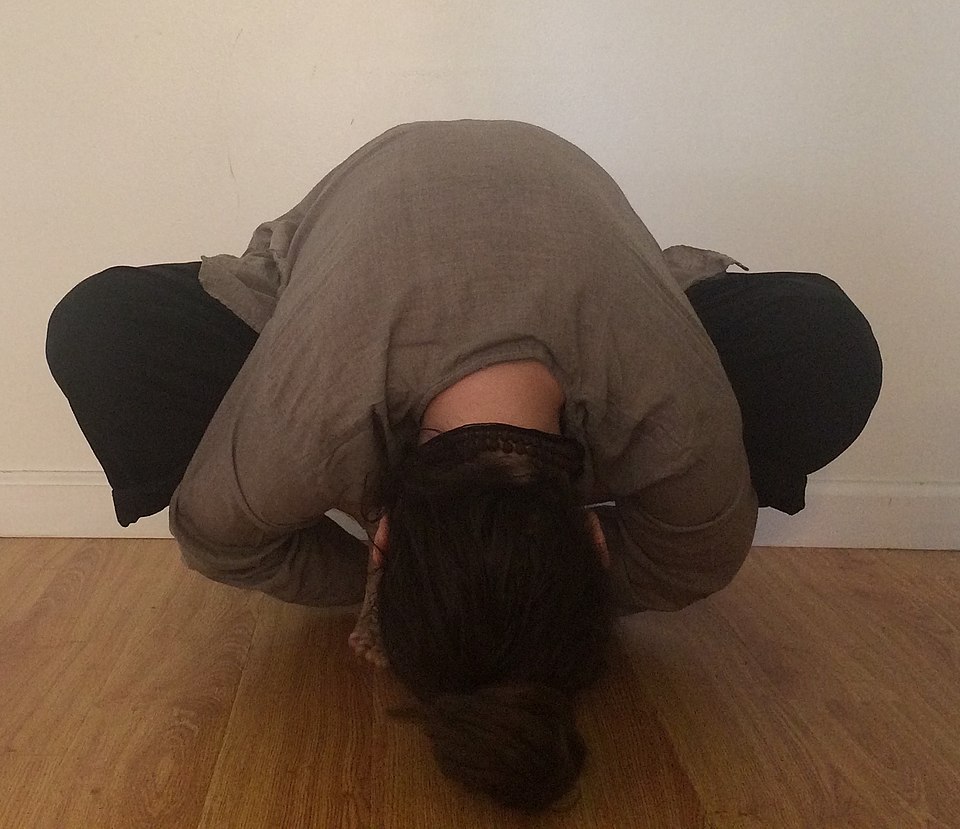
Malasana — Garland Pose, the deep yogi squat — is a grounding hip opener that most of the world once did daily. Sitting deep between the feet opens the hips, groin and ankles, and lengthens the lower back. It is a homecoming for the body.
Name meaning: From mālā meaning "garland", "necklace" or "rosary" and āsana meaning "posture" — the "garland posture". According to Iyengar the name comes from the arms hanging from the neck "like a garland" in the fuller bound forms.
Classification: Asana — a deep squat and hip-opener (in the widely practised form).
Tradition & origin: The name Malasana has been used for several different poses. Under the name Malasana the 19th-century Sritattvanidhi illustrates what is now called Bhujapidasana (an arm balance); Iyengar's Light on Yoga uses it for a squat with the back rounded and the arms bound; and in the West "Malasana" is commonly used for the upright prayer-hands squat (properly Upaveshasana). The deep squat itself is a universal human resting position; its yoga forms are modern in their current naming.
This guide was drafted with the help of AI and reviewed by us. It is for general education only and is not medical or professional advice. It may contain errors. Please practise mindfully, listen to your body, and consult a qualified yoga teacher or doctor for anything specific. Spotted an error? Tell us in the comments below.
How to do it — step by step
- 1Stand with the feet a little wider than hip-width, toes turned slightly out.
- 2Bend the knees and lower the hips into a deep squat.
- 3Bring the palms together at the heart (Anjali mudra).
- 4Press the elbows gently against the inner knees, and the knees back into the elbows.
- 5Lengthen the spine upward and lift the chest.
- 6Keep the heels down if possible; if not, support them.
- 7Breathe, then rise slowly to stand.
Breath & hold
Breathe slowly; hold 30–60 seconds or longer. It is a lovely pose to simply rest and breathe in.
Benefits
- ✓Opens the hips, groin and ankles.
- ✓Lengthens and releases the lower back.
- ✓Aids digestion and pelvic mobility.
- ✓Restores a natural, grounding resting posture.
🪔 The traditional / desi way
- The everyday squat of India and much of Asia — used for cooking, eating, waiting and working for centuries. Reclaiming it restores deep hip mobility modern chairs take away.
- Traditional cue: root down through the whole foot and lift tall through the crown — grounded below, light above.
Common mistakes
- ✕Letting the back round heavily (lift the chest and lengthen).
- ✕Forcing the heels down when the ankles are tight.
- ✕Collapsing the knees inward.
Modifications & props
- 🧩Sit on a block or bolster for support.
- 🧩Roll a blanket under the heels if they lift.
- 🧩Hold a support in front for balance.
Muscles & anatomy
- 💪Stretched: the groins, inner thighs, ankles and the lower back.
- 💪Working: the deep hip and postural muscles hold you upright; the ankles work to keep the heels down.
- 💪Pressing the elbows and knees apart helps lengthen the spine.
What you may feel
- 🫧Normal: a broad opening through the hips, groins and ankles, and a grounded, low position.
- 🫧Warning sign: knee pain or a hard-rounding lower back — sit on a block, support the heels, and lift the chest.
Variations to grow into
Take the prayer hands (Anjali Mudra) and press the elbows against the inner knees to open the hips and lift the chest.
Bound variations (arms wrapping the shins/back) or the tiptoe Prapadasana — for open hips, ankles and balance.
Using props
- 🧱A block or bolster under the seat for support.
- 🧱A folded blanket under the heels if they lift; a support in front for balance.
Warm-up & counterpose
- Ankle and calf mobility.
- Gentle hip openers.
- Stand and fold gently, or a seated forward fold, to release the hips.
Supporting exercises
Why: Builds comfort and mobility in the deep-squat position.
How: Squat with the seat on a block for 30–60 seconds, breathing easily.
Why: Lets the heels stay down in the squat.
How: Gently stretch the calves and ankles for 30–60 seconds.
Progression path
Start with the seat on a block and heels supported; over time lower the seat and let the heels settle as the hips and ankles open. There is no need to force depth.
Who it suits — and who should modify
- ✓Most people, with the heels supported and a block under the seat if needed.
- ✓Desk workers and anyone wanting to open tight hips, groins and ankles.
- ✓Those restoring a natural deep-squat position.
- !Modify: knee or lower-back injury — sit on a block, keep the squat shallow, or hold a support.
- !Relative caution: ankle stiffness — roll a blanket under the heels.
- !Come up slowly to avoid dizziness.
When to practise
Any time; a great hip and ankle opener, and a natural resting squat.
Safe daily; hold comfortably and repeat.
Traditional view vs. modern evidence
The "garland" of the arms in the bound forms; the deep squat is a familiar everyday resting position across many cultures.
The name has denoted different poses (an arm balance in the 19th-century Sritattvanidhi; a bound squat in Light on Yoga).
Valued as an accessible hip, groin and ankle opener and a natural resting squat.
Digestive/elimination claims are traditional, not established.
Evidence at a glance
The deep squat opens the hips, groins and ankles and mobilises the lower body.
Consistent with the biomechanics of a supported deep squat.
It aids digestion or elimination.
A common traditional/anecdotal claim; not established as a specific medical effect.
Myths vs. reality
✕ Myth: Everyone should be able to squat flat-footed immediately.
✓ Reality: Ankle and hip mobility vary; support the heels and seat and let the range grow gradually.
✕ Myth: Malasana is one fixed ancient pose.
✓ Reality: The name has meant several different poses; the deep squat is a universal position with modern yoga forms.
⚠️ Cautions
- Knee or ankle injury — support the seat on a block and the heels on a rolled blanket, or skip.
Frequently asked questions
My heels lift off the floor — is that a problem?
Not at all. Roll a folded blanket under the heels for support; ankle flexibility improves with regular practice.
Why does my lower back round?
Tight hips tip the pelvis back. Sit on a block, press the elbows and knees together, and lift the chest to lengthen the spine.
Key takeaways
- ⭐A deep squat that opens the hips, groins and ankles.
- ⭐Support the heels and seat, press elbows to knees, and lift the chest.
- ⭐The name has meant several different poses over time.
- ⭐Let the range grow gradually — no need to force a flat-footed squat.
References
- Wikipedia — Malasana (etymology & naming complexity) · Encyclopaedia, scholarly-sourced
- NCCIH — Yoga: What You Need To Know · Government health body (public domain)
Sources are provided for further reading; always consult a qualified teacher or clinician for personal guidance.
📝 Your private notes
Saved only on this device — jot down what helped.
💬 Improvements, corrections & suggestions
Found an error or have a better cue? Share it — practitioners help make each guide more accurate.
No comments yet — be the first to help improve this guide.