DAILY YOGA · Marichyasana III
Sage Marichi III
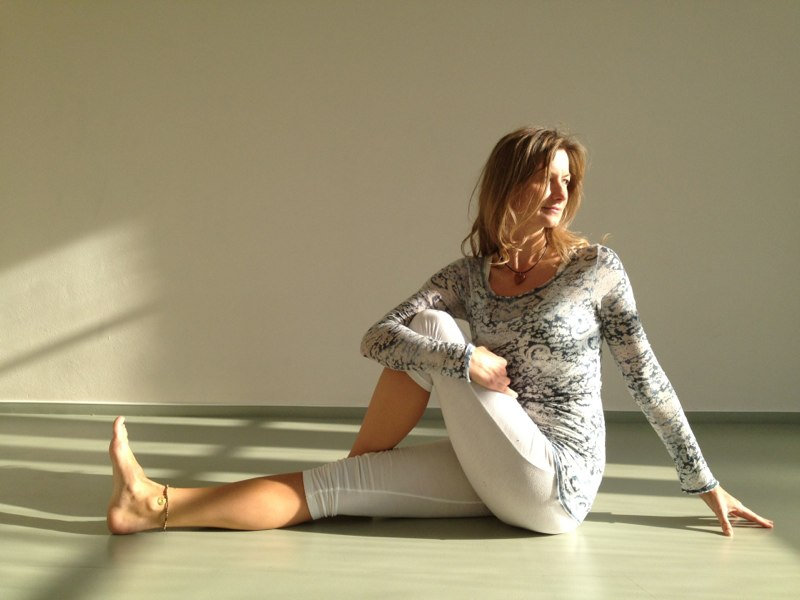
Marichyasana III — the seated twist dedicated to the sage Marichi — pairs one bent knee with a deep spinal rotation, often with a bind. It mobilises the spine, opens the chest and shoulders, and, like most twists, is said to aid digestion.
Name meaning: Named for the sage Marichi (a rishi and, in myth, a son of Brahma), with āsana — "Marichi's posture". The numeral III marks the twisting variation with one leg straight and one knee up.
Classification: Asana — a seated spinal twist (Marichyasana III).
Tradition & origin: Marichi's Pose is modern: it is not in the medieval hatha texts and is first described in Krishnamacharya's 1934 Yoga Makaranda, then taught by his pupils Iyengar and Pattabhi Jois. The sage's name is ancient; this twist belongs to modern postural yoga.
This guide was drafted with the help of AI and reviewed by us. It is for general education only and is not medical or professional advice. It may contain errors. Please practise mindfully, listen to your body, and consult a qualified yoga teacher or doctor for anything specific. Spotted an error? Tell us in the comments below.
How to do it — step by step
- 1Sit in Staff Pose, then bend the right knee, foot flat close to the sit bone.
- 2Keep the left leg extended and active, foot flexed.
- 3Inhale and lengthen the spine tall.
- 4Exhale and twist to the right, hooking the left elbow outside the right knee.
- 5Place the right hand on the floor behind you for support.
- 6Grow tall on each inhale, deepen the twist on each exhale.
- 7Optionally bind the arms around the back; unwind and switch sides.
Breath & hold
Inhale to lengthen, exhale to twist. Hold 30–45 seconds each side.
Benefits
- ✓Mobilises and lengthens the spine.
- ✓Opens the chest and shoulders (especially with the bind).
- ✓Traditionally said to stimulate digestion.
- ✓Improves posture and spinal rotation.
🪔 The traditional / desi way
- Named for Marichi, a mind-born son of Brahma and grandfather of Surya (the sun) — one of several "sage" poses honouring the great seers.
- Traditional cue: keep the extended leg strong and both sit bones grounded; lengthen before you twist.
Common mistakes
- ✕Rounding the spine to force the bind.
- ✕Letting the extended leg go slack or roll open.
- ✕Twisting mainly from the neck.
Modifications & props
- 🧩Simply hug the bent knee with the opposite arm instead of hooking the elbow.
- 🧩Sit on a cushion to lengthen the spine; skip the bind.
Muscles & anatomy
- 💪Rotates the muscles along the spine and works the obliques strongly.
- 💪Stretches the outer hip and glute of the bent leg; the extended leg's hamstring stays active.
- 💪The bind, when used, opens the shoulders and chest.
What you may feel
- 🫧Normal: a firm, even rotation through the spine and a stretch in the outer hip of the bent leg.
- 🫧Warning sign: pinching in the low back, knee or neck — release the bind and twist less.
Variations to grow into
Hook the elbow outside the raised knee for leverage, keeping the spine long and the extended leg active.
Take the full bind — wrap one arm around the raised knee and clasp the hands behind the back — only with open shoulders and a long spine.
Using props
- 🧱A folded blanket under the hips to lengthen the spine.
- 🧱A strap between the hands to work toward the bind.
Warm-up & counterpose
- Cat–Cow, gentle seated twists and a forward fold to warm the spine and hamstrings.
- A forward fold or a gentle backbend to neutralise the spine.
Supporting exercises
Why: A gentler twist to build the rotation safely.
How: Twist with the legs folded softly to one side.
Why: Lengthens the hamstrings of the extended leg.
How: Fold over both legs with a long spine and soft knees.
Progression path
Start by hugging the raised knee; progress to hooking the elbow outside it; add the full bind only once the shoulders open and the spine stays long throughout.
Who it suits — and who should modify
- ✓Practitioners with reasonable hip and spine mobility for a seated twist.
- ✓Those wanting a deeper, more precise twist than the gentle Bharadvaja version.
- ✓Anyone building toward bound twists — the bind is optional.
- !Spinal or disc injury, or pregnancy — keep the twist gentle and skip the bind.
- !Tight hamstrings — sit on a cushion so the extended leg and spine stay honest.
- !Shoulder issues — skip the arm bind and simply hug the knee.
When to practise
In the seated portion of a practice, once the spine and hips are warm.
A few times a week; hold 30–45 seconds each side.
Traditional view vs. modern evidence
Honouring the sage Marichi; a focused turning of the spine.
Not in the medieval texts; first described in the 1930s (Yoga Makaranda).
A precise seated twist that mobilises the spine and opens the outer hips and shoulders.
Detox claims are not established.
Evidence at a glance
Seated twists mobilise the spine and stretch the outer hips.
Consistent with anatomy and general mobility exercise.
Twisting squeezes toxins from the organs.
A popular claim without solid supporting evidence.
Myths vs. reality
✕ Myth: Twisting harder "detoxifies" or "massages" the organs into health.
✓ Reality: Twists mobilise the spine and feel refreshing, but the compress-and-detox idea is a metaphor, not an established mechanism.
✕ Myth: The bind is the goal.
✓ Reality: The bind is a bonus. A long spine and rotation from the base up matter far more than clasping the hands.
⚠️ Cautions
- Spinal or disc injury, or pregnancy — keep the twist gentle and skip the bind.
Frequently asked questions
I cannot bind my hands — is that ok?
Completely. Hook the elbow outside the knee, or just hug the knee. The bind is a bonus, not the goal.
Where should the twist come from?
From the base of the spine upward, with both sit bones grounded and the extended leg active — not from cranking the neck.
Key takeaways
- ⭐A precise seated twist that rotates the spine and opens the outer hips and shoulders.
- ⭐Lengthen the spine first, then twist from the base up; the bind is optional.
- ⭐Sit on a cushion and keep the extended leg active to protect the low back.
- ⭐A modern pose (1930s) bearing an ancient sage's name.
References
- Wikipedia — Marichyasana (origins, Yoga Makaranda, Iyengar & Jois) · Encyclopaedia, scholarly-sourced
- NCCIH — Yoga: What You Need To Know · Government health body (public domain)
Sources are provided for further reading; always consult a qualified teacher or clinician for personal guidance.
📝 Your private notes
Saved only on this device — jot down what helped.
💬 Improvements, corrections & suggestions
Found an error or have a better cue? Share it — practitioners help make each guide more accurate.
No comments yet — be the first to help improve this guide.