DAILY YOGA · Matsyasana
Fish Pose
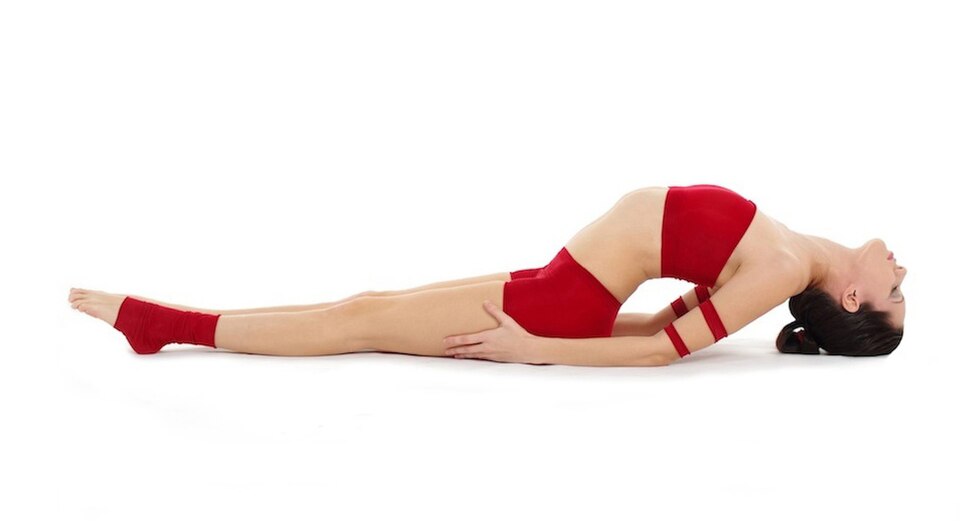
Matsyasana — Fish Pose — is a reclining backbend that opens the chest and throat. Lifting the heart while the crown lightly rests back, it is the classic counter-pose to Shoulderstand and Plough, releasing the front of the neck and upper body.
Name meaning: From matsya meaning "fish" and āsana meaning "posture" — the "fish posture"; tradition links the name to Matsya, the fish avatar of Vishnu.
Classification: Asana — a supine (reclining) backbend and chest-opener; a classic counter-pose to Shoulderstand.
Tradition & origin: Fish Pose is genuinely medieval: it is described in the 17th-century Gheranda Samhita (2.21), giving it a real place in the classical hatha tradition.
This guide was drafted with the help of AI and reviewed by us. It is for general education only and is not medical or professional advice. It may contain errors. Please practise mindfully, listen to your body, and consult a qualified yoga teacher or doctor for anything specific. Spotted an error? Tell us in the comments below.
How to do it — step by step
- 1Lie on the back with the legs extended and together.
- 2Slide the hands, palms down, under the hips or thighs.
- 3Press the forearms and elbows into the floor.
- 4Inhale, lift the chest high, and arch the upper back.
- 5Let the crown of the head rest lightly on the floor — no weight on it.
- 6Keep the weight in the elbows, not the head or neck.
- 7To release, lift the head, lower the chest, and rest.
Breath & hold
Breathe fully into the open chest. Hold 15–30 seconds, then release with care.
Benefits
- ✓Opens the chest, throat and front of the shoulders.
- ✓Counters forward-hunching and Shoulderstand.
- ✓Can help deepen the breath.
- ✓Gently stretches the neck (when done carefully).
🪔 The traditional / desi way
- Named for the fish (matsya) — legend links it to Matsya, the fish avatar of Vishnu; the buoyant chest is said to let you "float".
- Traditional pairing: always follow Shoulderstand or Plough with Fish to balance the neck in the opposite direction.
Common mistakes
- ✕Putting weight onto the crown/neck instead of the elbows.
- ✕Over-arching aggressively.
- ✕Letting the legs and glutes go completely slack so the lower back strains.
Modifications & props
- 🧩Place a bolster lengthwise under the upper back for a supported, restful Fish.
- 🧩Keep the head lifted or lightly supported rather than dropping it back.
Muscles & anatomy
- 💪Working: the upper-back muscles and the arms/elbows pressing down lift and hold the chest.
- 💪Stretched: the chest, throat, front of the shoulders and the abdominals.
- 💪The legs and glutes stay engaged to protect the lower back.
What you may feel
- 🫧Normal: a strong opening across the chest and throat and a lift through the upper back.
- 🫧Warning sign: any pressure or pinching in the neck — lift the head, take weight into the elbows, or use a bolster.
Variations to grow into
Lift the legs (or take them into Lotus, as in the classical form) for a stronger, more challenging Fish — only with a stable, pain-free neck.
The classical Padma Matsyasana with the legs in Lotus and hands holding the feet — for open hips and an established practice.
Using props
- 🧱A bolster lengthwise under the upper back and head for a supported, restful Fish.
- 🧱A folded blanket under the head so the neck is never loaded.
Warm-up & counterpose
- A few gentle chest-opening stretches.
- Slow neck mobility.
- Hug the knees to the chest, or a gentle reclined twist, to release the back.
- A neutral rest in Shavasana.
Supporting exercises
Why: Eases the chest and shoulders open before the active pose.
How: Lie back over a bolster placed across the upper back for 1–2 minutes.
Why: Prepares the neck so it stays comfortable.
How: Slow, small nods and turns of the head before practising.
Progression path
Start with the bolster-supported version, then the active pose with the crown lightly grazing the floor and weight in the elbows; add lifted or Lotus legs only once the neck is fully comfortable.
Who it suits — and who should modify
- ✓Intermediate practitioners, especially after Shoulderstand or Plough.
- ✓Beginners, in the bolster-supported version.
- ✓Desk workers wanting to open a rounded chest and throat.
- !Modify / avoid: neck injury — do not drop the head back; support the head and upper back on a bolster.
- !Relative caution: migraine or high/low blood pressure — keep it shallow or fully supported.
- !Keep the weight in the elbows, never on the head or neck.
When to practise
Any time; most often placed right after Shoulderstand/Plough as a counter-pose.
Safe most days; a short hold or a few supported minutes.
Traditional view vs. modern evidence
Named for the fish avatar of Vishnu; the buoyant, lifted chest is said to let you "float".
Genuinely medieval — Gheranda Samhita 2.21 (17th century).
Used as a chest- and throat-opening counter-pose to Shoulderstand and Plough.
Specific thyroid or respiratory cure claims are not established.
Evidence at a glance
Fish opens the chest and throat and can make the breath feel fuller.
Consistent with the biomechanics of an upper-back extension that expands the ribcage.
It treats thyroid or respiratory disease.
A commonly repeated claim without solid supporting evidence.
Myths vs. reality
✕ Myth: Rest your head hard on the floor to arch deeper.
✓ Reality: The crown should only graze the floor with the weight in the elbows; loading the head risks the neck.
✕ Myth: Fish Pose alone fixes thyroid or breathing problems.
✓ Reality: It opens the chest and throat and can feel breath-freeing, but specific medical cures are not established.
⚠️ Cautions
- Neck injury, migraine, or high/low blood pressure — keep it shallow or support the head/upper back on a bolster and do not drop the head back.
Frequently asked questions
Where should the weight be?
Firmly in the forearms and elbows — the crown only grazes the floor. Never load the head or neck.
Why do Fish after Shoulderstand?
Shoulderstand and Plough round the neck forward; Fish arches it back, balancing the two and releasing the throat.
Key takeaways
- ⭐A reclining chest- and throat-opener; the classic counter-pose to Shoulderstand.
- ⭐Keep the weight in the elbows — the crown only grazes the floor.
- ⭐A genuinely medieval pose (Gheranda Samhita, 17th century).
- ⭐Support the head/upper back on a bolster to protect the neck.
References
- Wikipedia — Matsyasana (etymology & origins, Gheranda Samhita 2.21) · Encyclopaedia, scholarly-sourced
- NCCIH — Yoga: What You Need To Know · Government health body (public domain)
Sources are provided for further reading; always consult a qualified teacher or clinician for personal guidance.
📝 Your private notes
Saved only on this device — jot down what helped.
💬 Improvements, corrections & suggestions
Found an error or have a better cue? Share it — practitioners help make each guide more accurate.
No comments yet — be the first to help improve this guide.