DAILY YOGA · Mayurasana
Peacock Pose
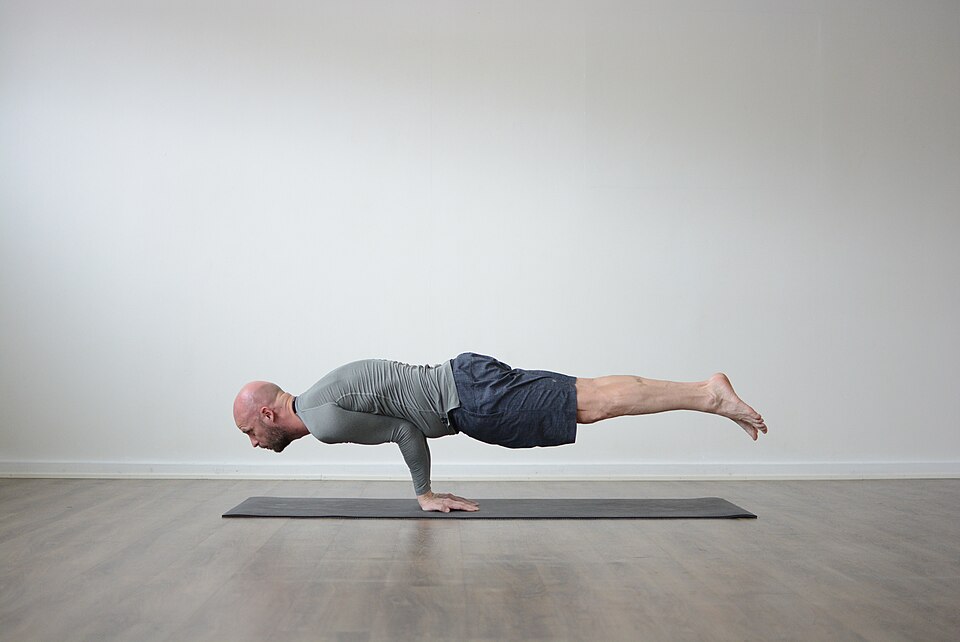
Mayurasana — Peacock Pose — is a striking advanced arm balance where the whole body hovers horizontally, supported on the hands with the elbows pressed into the belly. It builds intense wrist, arm and core strength, and looks like a peacock with its tail extended.
Name meaning: From mayūra meaning "peacock", and āsana — the "peacock posture", the body held horizontal over the hands like a peacock with its tail streaming behind.
Classification: Asana — an advanced arm-balance (the body horizontal on the hands, elbows into the belly).
Tradition & origin: Peacock is genuinely ancient — one of the oldest non-seated asanas. It is first described in the 10th-century Vimanarcanakalpa, and the Vasishtha Samhita (1.76–77) claims it "destroys all sins". A real classical pose with a long lineage in hatha yoga.
This guide was drafted with the help of AI and reviewed by us. It is for general education only and is not medical or professional advice. It may contain errors. Please practise mindfully, listen to your body, and consult a qualified yoga teacher or doctor for anything specific. Spotted an error? Tell us in the comments below.
How to do it — step by step
- 1Kneel and place the hands on the floor, fingers pointing back toward the knees/feet.
- 2Bend the elbows and draw them together, pressing them into the belly (near the navel).
- 3Lean the torso forward over the arms, forming a shelf with the elbows.
- 4Extend the legs straight back, together.
- 5Shift the weight forward until the feet float off the floor.
- 6Keep the whole body one horizontal line; gaze slightly forward.
- 7Lower with control.
Breath & hold
Breathe steadily; hold only a few seconds at first, building up. Never hold the breath.
Benefits
- ✓Builds strong wrists, forearms, arms and core.
- ✓Improves balance and focus.
- ✓Traditionally said to stimulate digestion (the elbows press the abdomen).
- ✓Develops determination and body control.
🪔 The traditional / desi way
- The peacock (mayura) — India's national bird — displays its splendour; the pose's extended legs echo the fanned tail.
- Old Hatha texts praise it for kindling the digestive fire; traditional wisdom: build wrist and core strength patiently first.
Common mistakes
- ✕Placing the elbows too low on the belly or too far apart.
- ✕Not shifting enough weight forward to lift the feet.
- ✕Straining the wrists without preparation.
Modifications & props
- 🧩Keep the toes on the floor and just practise the forward-lean and elbow placement.
- 🧩Cross the ankles / bend the knees to lighten the lift.
Muscles & anatomy
- 💪Strongly works the wrists, forearms, shoulders and deep core.
- 💪The elbows press into the abdomen, requiring a firm, engaged belly.
- 💪The whole body holds a stiff horizontal line balanced on the hands.
What you may feel
- 🫧Normal: intense wrist, forearm and core effort holding the horizontal balance.
- 🫧Warning sign: wrist pain — build strength gradually and never force; hernia/belly discomfort means stop.
Variations to grow into
Keep the toes on the floor and simply practise the forward-lean and elbow placement, or cross the ankles to lighten the lift.
Padma Mayurasana (legs in Lotus) or Hamsasana (Swan, fingers pointing forward) — for very strong, open practitioners.
Using props
- 🧱A folded blanket under the face/head to cushion a tip-forward while learning.
- 🧱Practise wrist strengthening and Plank/Chaturanga first.
Warm-up & counterpose
- Thorough wrist mobility and Plank/Chaturanga strength work.
- A wrist counter-stretch (backs of the hands down) and Child's Pose.
Supporting exercises
Why: Build the arm, shoulder and core strength.
How: Hold plank and lower slowly, a few times.
Why: Prepares the wrists for the heavy load.
How: Gentle weight-bearing on all fours and wrist stretches.
Progression path
Build wrist and core strength over time; place the elbows into the belly, lean forward until the weight shifts to the hands, and lift the feet briefly, extending the hold slowly.
Who it suits — and who should modify
- ✓Advanced practitioners with strong wrists, forearms and core.
- ✓Those who have built wrist and core strength gradually over time.
- ✓People comfortable bearing weight on the wrists.
- !Wrist injury or carpal tunnel — the wrists bear great load; build strength first or skip.
- !Hernia, pregnancy or recent abdominal surgery — the elbows press the belly hard; avoid.
- !Beginners — practise the forward-lean and elbow placement with the toes down first.
When to practise
In the stronger, warmed part of a practice, after wrist preparation.
A couple of times a week; hold only a few seconds, building up.
Traditional view vs. modern evidence
The peacock with streaming tail; a sin-destroying pose in the old texts.
Genuinely ancient — Vimanarcanakalpa (10th c.), Vasishtha Samhita.
Valued as an advanced wrist/forearm/core strength arm-balance.
Sin-destroying and detox claims are traditional, not established.
Evidence at a glance
Peacock builds wrist, forearm and core strength and balance.
Consistent with the biomechanics of a demanding arm-balance.
It cures digestive disease or detoxifies.
Traditional claims (belly compression “stimulates digestion”) offered as tradition, not established fact.
Myths vs. reality
✕ Myth: It "destroys all sins" or detoxifies the body.
✓ Reality: The Vasishtha Samhita's claim is traditional/symbolic; the belly compression is not a medical detox. Its real value is strength and balance.
✕ Myth: It burns belly fat.
✓ Reality: It strengthens the core powerfully, but you cannot spot-reduce fat.
⚠️ Cautions
- Wrist injury, carpal tunnel, hernia, pregnancy, or recent abdominal surgery — avoid. Build wrist and core strength gradually.
Frequently asked questions
My feet will not lift — why?
You likely need to lean further forward so your weight moves over the hands, and to build core and wrist strength. Start with toes down and lean.
Does it really help digestion?
The elbows pressing the abdomen is traditionally said to stimulate digestion — but it is an advanced pose; build strength first.
Key takeaways
- ⭐An advanced arm-balance — the body horizontal on the hands, elbows into the belly.
- ⭐Build wrist and core strength gradually; cushion the floor ahead while learning.
- ⭐Genuinely ancient (10th-century texts).
- ⭐Avoid with wrist issues, hernia, pregnancy or recent abdominal surgery.
References
- Wikipedia — Mayurasana (ancient origins, Vimanarcanakalpa, Vasishtha Samhita) · Encyclopaedia, scholarly-sourced
- NCCIH — Yoga: What You Need To Know · Government health body (public domain)
Sources are provided for further reading; always consult a qualified teacher or clinician for personal guidance.
📝 Your private notes
Saved only on this device — jot down what helped.
💬 Improvements, corrections & suggestions
Found an error or have a better cue? Share it — practitioners help make each guide more accurate.
No comments yet — be the first to help improve this guide.