DAILY YOGA · Natarajasana
Dancer Pose
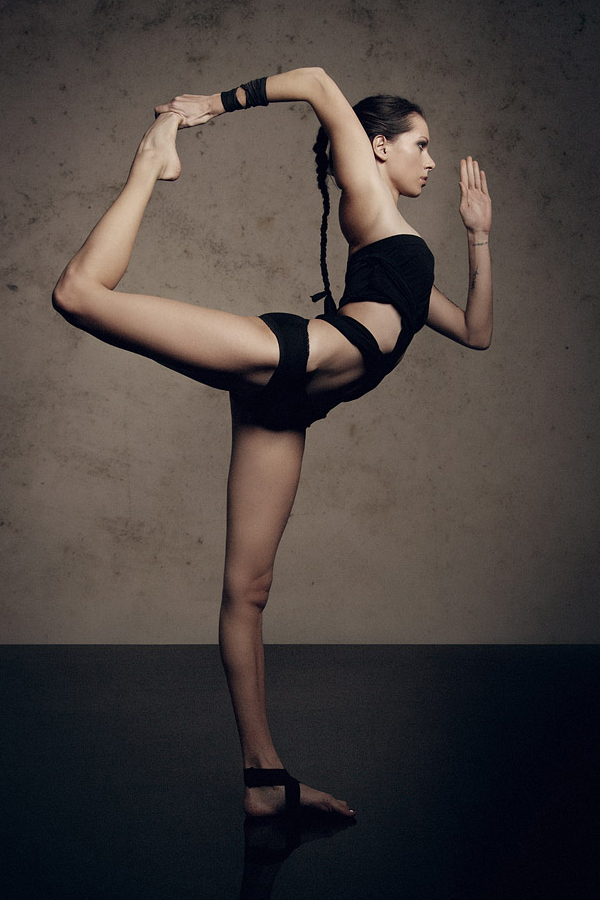
Natarajasana — Dancer Pose — is a graceful standing balance that combines focus, a backbend and an open chest. Named after Nataraja, the cosmic dancer form of Shiva, it blends steadiness and expression: one leg rooted, the other lifting behind into a beautiful arc.
Name meaning: From Naṭarāja, the "Dancing King" — an aspect of Shiva as the cosmic dancer (naṭa, "dancer" + rāja, "king") — and āsana meaning "posture". Hence "Lord of the Dance Pose".
Classification: Asana — a standing, balancing back-bend.
Tradition & origin: Although it carries a deeply traditional name (and mirrors a pose from the classical Bharatanatyam dance depicted in the Chidambaram temple), the yoga posture itself is not found in any medieval hatha text. Scholars note it was introduced into modern yoga by Krishnamacharya in the early 20th century and made a signature pose by his pupil B. K. S. Iyengar. So the image is ancient; the yoga asana is modern.
This guide was drafted with the help of AI and reviewed by us. It is for general education only and is not medical or professional advice. It may contain errors. Please practise mindfully, listen to your body, and consult a qualified yoga teacher or doctor for anything specific. Spotted an error? Tell us in the comments below.
How to do it — step by step
- 1Begin in Tadasana and shift the weight onto one foot.
- 2Bend the other knee and catch the inside of that ankle or foot behind you.
- 3Fix the gaze on a steady point ahead (drishti).
- 4Begin to press the lifted foot back and up into the hand.
- 5Simultaneously reach the opposite arm forward for counterbalance.
- 6Lift the chest and let the back gently arch as the leg rises.
- 7Hold, breathing steadily, then release with control and switch sides.
Breath & hold
Breathe smoothly and evenly; hold 15–30 seconds each side. A steady breath steadies the balance.
Benefits
- ✓Improves balance, focus and poise.
- ✓Strengthens the standing leg, ankle and core.
- ✓Opens the chest, shoulders and front of the hips.
- ✓Builds grace and full-body coordination.
🪔 The traditional / desi way
- Nataraja — Shiva as the "Lord of Dance" — dances the rhythm of creation and dissolution within a ring of fire. The pose channels that image of dynamic balance and inner steadiness.
- Traditional cue: root down as much as you lift up. The stillness of the gaze is what makes the dance possible.
Common mistakes
- ✕Letting the standing knee lock or the hip collapse.
- ✕Forcing the backbend before the balance is steady.
- ✕A darting, unfocused gaze.
Modifications & props
- 🧩Hold a wall or chair with the free hand for balance.
- 🧩Loop a strap around the lifted foot if you cannot reach it.
- 🧩Keep the backbend small — height is not the goal, steadiness is.
Muscles & anatomy
- 💪Working: the standing-leg ankle, quadriceps and glute stabilise; the back extensors and shoulder of the lifting arm hold the arc.
- 💪Stretched: the front of the lifted-leg thigh and hip, the chest and the shoulder.
- 💪The core keeps the torso from collapsing as you reach forward and back.
What you may feel
- 🫧Normal: strong standing-leg effort, a front-body stretch on the lifted side, and focused steadiness.
- 🫧Warning sign: lower-back pinching or wobbling that unbalances you — reduce the lift and use support.
Variations to grow into
Reach the lifted foot higher and the front arm further forward, keeping the standing leg strong and the chest lifting.
The full "King Dancer" expression, reversing the grip overhead to draw the foot toward the head — for very open shoulders, hips and spine, ideally with a teacher.
Using props
- 🧱A strap around the lifted foot to bridge the reach.
- 🧱A wall or chair for the free hand while learning the balance.
Warm-up & counterpose
- Balance work (Tree) and gentle backbends (low Cobra).
- Quad, hip-flexor and shoulder openers.
- A forward fold to release the standing leg and lower back.
- Mountain Pose to re-centre before switching sides.
Supporting exercises
Why: Builds the single-leg balance Dancer needs.
How: Balance on one leg, gaze fixed, 20–30 seconds each side.
Why: Opens the front thigh and shoulder for the backbend and grip.
How: A standing or side-lying quad stretch and a doorway shoulder stretch, 20–30 seconds each.
Progression path
Build single-leg balance in Tree, then hold the ankle with a small lift near a wall, using a strap as needed; increase the lift and reach only as balance and openness grow.
Who it suits — and who should modify
- ✓Intermediate practitioners with steady standing balance.
- ✓Those building toward a controlled standing backbend (with a strap and wall).
- !Modify: ankle, knee or lower-back injury — keep the lift modest and use a wall.
- !Relative caution: low blood pressure or balance issues — practise near support.
- !Never force the backbend before the balance is steady.
When to practise
Any time once warm and focused; balance is steadiest when you are alert.
Safe regularly; a hold or two per side is enough.
Traditional view vs. modern evidence
Evokes Nataraja, Shiva's cosmic dance; mirrors a classical Bharatanatyam dance pose carved in temple sculpture.
The yoga asana is not in the medieval hatha texts; it is a 20th-century pose derived from classical dance.
Valued as a balancing backbend for stability, leg strength and front-body opening.
No specific medical claims beyond balance and mobility are established.
Evidence at a glance
Dancer builds standing balance, leg strength and front-body flexibility.
Consistent with the balance and mobility demands of the shape.
Balance practice like this can improve stability.
NCCIH notes yoga may help balance; single-leg balancing work trains it directly.
Myths vs. reality
✕ Myth: Dancer Pose is an ancient yoga asana.
✓ Reality: The dancing-Shiva image is ancient, but the yoga posture is a 20th-century creation (Krishnamacharya/Iyengar).
✕ Myth: You must pull the foot to your head.
✓ Reality: That is the advanced expression; a modest lift with a long spine is a complete, valid version of the pose.
⚠️ Cautions
- Low blood pressure, ankle or lower-back injury — keep the lift modest and practise near a wall.
Frequently asked questions
I cannot reach my foot — what do I do?
Use a strap around the lifted foot, or simply hold the ankle with a small lift. Flexibility opens gradually; balance comes first.
How do I stop wobbling?
Fix your gaze on one still point, root firmly through the standing foot, and keep the breath slow and even.
Key takeaways
- ⭐A standing balancing backbend that builds stability, strength and front-body openness.
- ⭐Root the standing foot, fix the gaze, and keep the backbend modest until steady.
- ⭐The dancing-Shiva image is ancient; the yoga pose is modern (20th century).
- ⭐Use a strap and wall; the foot-to-head version is advanced and optional.
References
- Wikipedia — Natarajasana (etymology, mythology & modern yoga) · Encyclopaedia, scholarly-sourced
- NCCIH — Yoga: What You Need To Know · Government health body (public domain)
Sources are provided for further reading; always consult a qualified teacher or clinician for personal guidance.
📝 Your private notes
Saved only on this device — jot down what helped.
💬 Improvements, corrections & suggestions
Found an error or have a better cue? Share it — practitioners help make each guide more accurate.
No comments yet — be the first to help improve this guide.