DAILY YOGA · Padahastasana
Hand-Under-Foot Pose
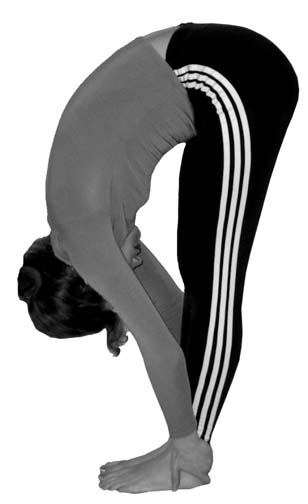
Padahastasana — Hand-Under-Foot Pose — is a deep standing forward fold where you slide the hands, palms up, beneath the soles of the feet. It intensely stretches the hamstrings and back body while giving the wrists a gentle traction.
Name meaning: From pāda meaning "foot", hasta meaning "hand", and āsana — the "hand-under-foot posture", a standing forward fold with the palms slid, facing up, under the soles of the feet.
Classification: Asana — a deep standing forward bend (hands under the feet).
Tradition & origin: Hand-Under-Foot Pose is modern: it belongs to 20th-century yoga as exercise (it follows Padangusthasana in the Ashtanga standing sequence), not the medieval hatha texts. Present it as modern postural yoga.
This guide was drafted with the help of AI and reviewed by us. It is for general education only and is not medical or professional advice. It may contain errors. Please practise mindfully, listen to your body, and consult a qualified yoga teacher or doctor for anything specific. Spotted an error? Tell us in the comments below.
How to do it — step by step
- 1Stand with the feet hip-width; fold forward from the hips.
- 2Bend the knees as needed and lift the toes.
- 3Slide the hands, palms up, under the feet so the toes reach the wrists.
- 4Lower the toes onto the hands and let the weight press down gently.
- 5On an inhale, lengthen the spine; on an exhale, fold deeper.
- 6Let the head hang heavy and the neck release.
- 7Bend the knees to release the hands and rise slowly.
Breath & hold
Breathe slowly; hold 30–45 seconds. Lengthen on the inhale, fold on the exhale.
Benefits
- ✓Deeply stretches the hamstrings and calves.
- ✓Releases the back and neck.
- ✓Gives the wrists a gentle traction/massage.
- ✓Calms the mind (head below the heart).
🪔 The traditional / desi way
- Pada = foot, hasta = hand — literally the hands beneath the feet, a deeper cousin of the standing forward fold.
- Traditional cue: bend the knees freely so the spine can lengthen; the depth is in the hips, not a rounded back.
Common mistakes
- ✕Rounding hard through the lower back with locked knees.
- ✕Yanking the torso down instead of releasing.
- ✕Rising too quickly and feeling dizzy.
Modifications & props
- 🧩Keep the knees bent as much as needed.
- 🧩Practise Uttanasana (hands to floor/shins) if reaching under the feet is too deep.
Muscles & anatomy
- 💪Deeply stretches the hamstrings and calves and lengthens the spine.
- 💪Gently stretches the wrists as the hands slide under the feet.
- 💪A mild inversion, letting the head hang.
What you may feel
- 🫧Normal: a deep hamstring stretch, a gentle wrist stretch, and a calming release.
- 🫧Warning sign: pulling at the low back or sitting bones — bend the knees generously.
Variations to grow into
On an inhale, straighten the arms and lengthen to a flat back (half-lift) between folds.
Deepen the fold, drawing the torso closer to the legs while keeping the hands flat under the feet.
Using props
- 🧱Bend the knees generously to keep the spine long.
- 🧱Practise Uttanasana (hands to floor/shins) if reaching under the feet is too deep.
Warm-up & counterpose
- Sun Salutations and gentle forward folds to warm the hamstrings.
- Rise slowly to standing; a gentle backbend to release the hamstrings.
Supporting exercises
Why: The lighter version; builds the fold.
How: Fold and hook the big toes with the fingers.
Why: Builds hamstring length.
How: Fold over both legs with soft knees.
Progression path
Start with Big-Toe Pose and bent knees; slide the hands under the feet and deepen the fold as the hamstrings open, keeping the back long.
Who it suits — and who should modify
- ✓Practitioners with good hamstring flexibility.
- ✓Those wanting a deeper fold than Big-Toe Pose, with the wrists gently stretched.
- ✓Anyone folding from the hips with a long spine (bend the knees).
- !Lower-back injury or high blood pressure — practise Uttanasana instead, or keep the knees generously bent.
- !Wrist issues — the hands are weight-bearing under the feet; keep it gentle or skip.
- !Rise slowly to avoid dizziness.
When to practise
In the standing sequence, once the hamstrings are warm.
A few times a week; hold 30–60 seconds.
Traditional view vs. modern evidence
A deep standing fold with the hands cradled under the feet.
Not in the medieval texts; a 20th-century pose.
Valued as a deep standing hamstring stretch and gentle inversion.
Curative claims are not established.
Evidence at a glance
The pose deeply stretches the hamstrings and gently the wrists.
Consistent with anatomy; the target tissues are clearly lengthened.
The mild inversion cures fatigue or disease.
Claims without solid supporting evidence.
Myths vs. reality
✕ Myth: You must get the palms flat and the head to the shins.
✓ Reality: A soft knee and a long spine matter more; forcing a locked knee risks the hamstrings.
✕ Myth: It is an ancient asana.
✓ Reality: It is a modern standing pose (Ashtanga standing sequence).
⚠️ Cautions
- Lower-back injury, high blood pressure, or wrist issues — practise Uttanasana instead, or keep the knees generously bent.
Frequently asked questions
Padahastasana or Uttanasana?
They are close forward folds. In Padahastasana the hands slide under the feet (deeper); in Uttanasana the hands rest on the floor, shins, or hold the elbows.
My hamstrings are too tight to reach under — help?
Bend the knees generously, or simply practise Uttanasana until the hamstrings open. Never force it.
Key takeaways
- ⭐A deep standing forward fold with the palms cradled under the feet.
- ⭐Bend the knees and keep the spine long; use Big-Toe Pose or Uttanasana to modify.
- ⭐Rise slowly, especially with blood-pressure issues.
- ⭐A modern pose (Ashtanga standing sequence).
References
- Wikipedia — List of asanas (Padahastasana / Hand-Under-Foot Pose) · Encyclopaedia, scholarly-sourced
- NCCIH — Yoga: What You Need To Know · Government health body (public domain)
Sources are provided for further reading; always consult a qualified teacher or clinician for personal guidance.
📝 Your private notes
Saved only on this device — jot down what helped.
💬 Improvements, corrections & suggestions
Found an error or have a better cue? Share it — practitioners help make each guide more accurate.
No comments yet — be the first to help improve this guide.