DAILY YOGA · Paripurna Matsyendrasana
Full Lord of the Fishes
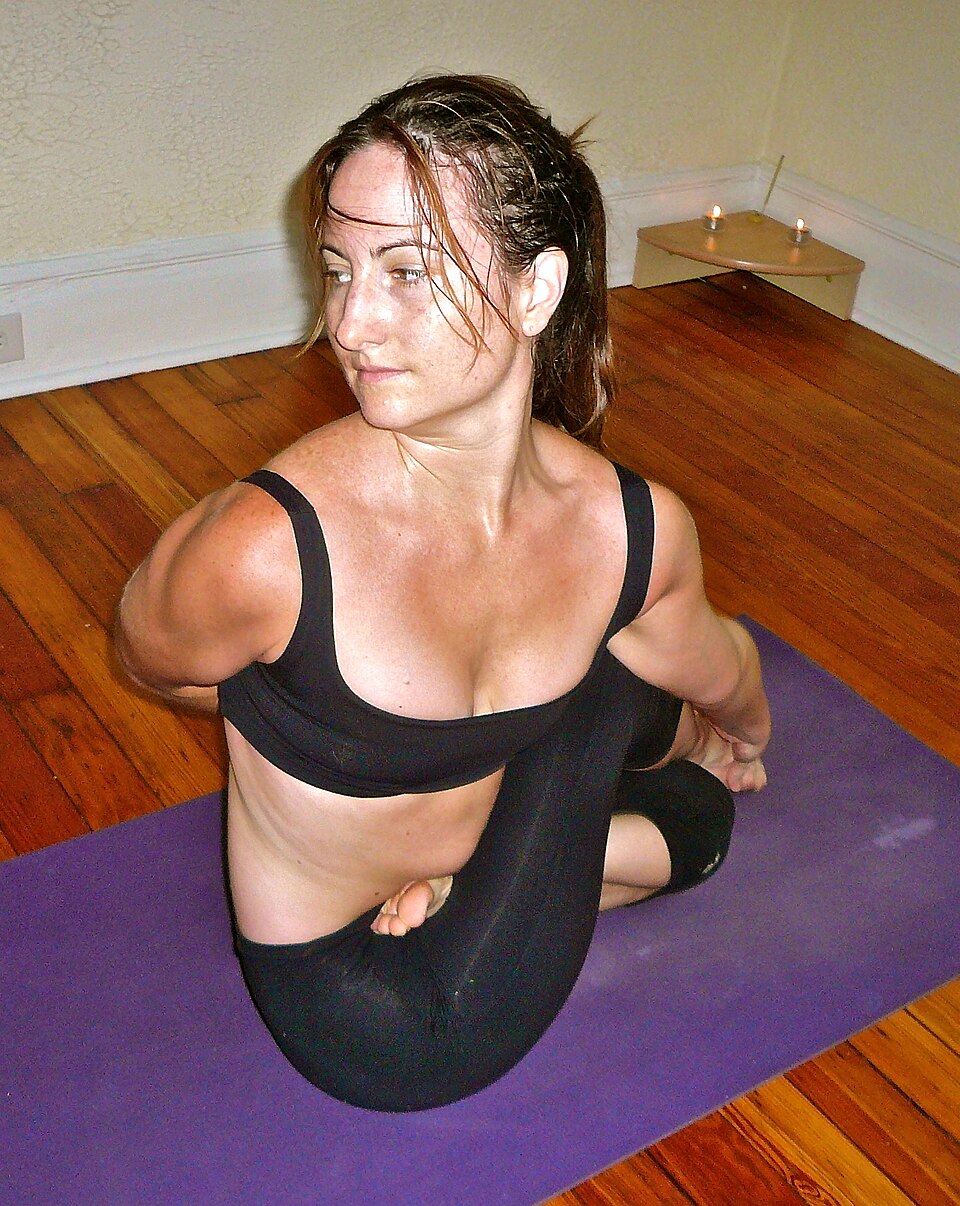
Paripurna Matsyendrasana — the Full Lord of the Fishes — is the complete, advanced form of the seated twist dedicated to Matsyendra: legs in a half-lotus-like fold, a deep spinal rotation and a full bind wrapping the body. It is a masterful blend of hip opening, twist and bind.
Name meaning: From paripūrṇa meaning "full/complete", Matsyendra ("lord of the fishes", a founding master of hatha yoga), and āsana — the "full lord-of-the-fishes posture", the complete bound form of the seated twist.
Classification: Asana — an advanced seated twist with a half-lotus fold and a full bind.
Tradition & origin: A genuinely classical lineage: Matsyendrasana is medieval — described in the 15th-century Hatha Yoga Pradipika (1.26–27, which says it "destroys many diseases") and the 17th-century Gheranda Samhita (2.22–23). The half form (Ardha Matsyendrasana) is one of the classic twelve asanas; this full bound elaboration is a later, advanced expression of that old pose.
This guide was drafted with the help of AI and reviewed by us. It is for general education only and is not medical or professional advice. It may contain errors. Please practise mindfully, listen to your body, and consult a qualified yoga teacher or doctor for anything specific. Spotted an error? Tell us in the comments below.
How to do it — step by step
- 1Sit and place one foot into half lotus (on the opposite thigh).
- 2Bend the other knee, foot flat, and cross it over the folded leg.
- 3Inhale and lengthen the spine tall.
- 4Exhale and twist deeply toward the crossed knee.
- 5Wrap one arm around the crossed leg and reach behind the back to bind with the other hand.
- 6Turn from the base of the spine; keep both sit bones grounded.
- 7Unwind slowly; switch sides.
Breath & hold
Inhale to lengthen, exhale to twist. Hold 20–30 seconds each side.
Benefits
- ✓Deeply mobilises and lengthens the spine.
- ✓Opens the hips, chest and shoulders.
- ✓Traditionally said to strongly aid digestion.
- ✓Builds focus and full-body coordination.
🪔 The traditional / desi way
- Named for Matsyendranath, a founding master of Hatha Yoga — the "full" form is the complete expression of his seat.
- Traditional wisdom: the half version (Ardha Matsyendrasana) prepares the body; the full pose needs open hips (half lotus) and a deep, safe twist.
Common mistakes
- ✕Forcing the half lotus with tight hips (knee strain).
- ✕Cranking the bind while the spine collapses.
- ✕Lifting a sit bone off the floor.
Modifications & props
- 🧩Practise Ardha Matsyendrasana (Half Lord of the Fishes) instead.
- 🧩Skip the half lotus; keep the bottom leg simply bent or extended.
- 🧩Use a strap for the bind.
Muscles & anatomy
- 💪Deeply rotates the muscles along the spine and works the obliques.
- 💪Opens the hips (half lotus), chest and shoulders (the bind).
- 💪Both sit bones stay grounded; the twist comes from the base of the spine.
What you may feel
- 🫧Normal: a deep, even spinal rotation and an opening across the chest and shoulders.
- 🫧Warning sign: knee pain in the lotus, or low-back pinching — come out; use the half version.
Variations to grow into
Practise Ardha Matsyendrasana (Half Lord of the Fishes) — the same twisting benefits, safely.
The full pose with the half-lotus fold and a complete bind wrapping the body — for very open, experienced practitioners.
Using props
- 🧱A strap for the bind.
- 🧱Skip the half lotus; keep the bottom leg simply bent or extended.
Warm-up & counterpose
- Gentle seated twists, hip openers and shoulder openers to prepare.
- A gentle forward fold or a neutral seated rest.
Supporting exercises
Why: The essential base twist; must be easy first.
How: Twist toward the raised knee, hand outside it.
Why: Opens the hips for the half lotus.
How: Sit with the soles together and the thighs supported.
Progression path
Master the half version and open the hips into an easy half lotus; add the deep twist and full bind only once the knees are safe and the shoulders open.
Who it suits — and who should modify
- ✓Advanced practitioners with open hips (easy half lotus) and a healthy spine and knees.
- ✓Those comfortable with Ardha Matsyendrasana (the half version).
- ✓People with the shoulder openness for the full bind.
- !Knee, spinal or disc injury, or pregnancy — practise the half version and skip the lotus and bind.
- !Tight hips — the half lotus will strain the knee; open the hips first.
- !Never force the lotus fold; knee pain is a clear signal to stop.
When to practise
In the seated part of a practice, once the hips and spine are warm.
Occasionally, for those with the requisite hip and shoulder openness.
Traditional view vs. modern evidence
The seat of Matsyendra, lord of the fishes; a disease-destroying twist in the old texts.
Genuinely medieval — Hatha Yoga Pradipika (15th c.), Gheranda Samhita (17th c.); this full bound form is a later elaboration.
Valued as an advanced deep twist, hip-opener and bind.
Disease-destroying/detox claims are traditional, not established.
Evidence at a glance
Seated twists mobilise the spine and open the hips, chest and shoulders.
Consistent with anatomy and general mobility exercise.
It destroys diseases / detoxifies the organs.
A traditional claim (HYP) offered as tradition, not established fact.
Myths vs. reality
✕ Myth: Twisting harder detoxifies or cures disease.
✓ Reality: The HYP's "destroys diseases" is traditional language; twists mobilise the spine and feel refreshing, but the squeeze-and-detox idea is a metaphor.
✕ Myth: The full bound form is necessary for the benefit.
✓ Reality: The half version gives the same spinal-twist benefits far more safely; the full bind is a bonus for the very open.
⚠️ Cautions
- Knee, spinal, or disc injury, or pregnancy — practise the half version instead and skip the lotus and bind.
Frequently asked questions
Should I attempt this if Half Lord is comfortable?
Only if your hips open easily into half lotus and your knees are healthy. Otherwise the half version gives the same twisting benefits safely.
My knee hurts in the lotus fold — what do I do?
Come out and skip the lotus; open the hips gradually with poses like Baddha Konasana. Never force the knee.
Key takeaways
- ⭐The complete, bound form of the classical Matsyendra twist.
- ⭐The base pose is genuinely medieval (HYP, Gheranda Samhita); this full bind is a later elaboration.
- ⭐Open the hips into an easy half lotus first; never force the knee.
- ⭐The half version gives the same benefits far more safely.
References
- Wikipedia — Matsyendrasana (medieval origins, HYP 1.26-27, Gheranda Samhita) · Encyclopaedia, scholarly-sourced
- NCCIH — Yoga: What You Need To Know · Government health body (public domain)
Sources are provided for further reading; always consult a qualified teacher or clinician for personal guidance.
📝 Your private notes
Saved only on this device — jot down what helped.
💬 Improvements, corrections & suggestions
Found an error or have a better cue? Share it — practitioners help make each guide more accurate.
No comments yet — be the first to help improve this guide.