DAILY YOGA · Paripurna Navasana
Boat Pose
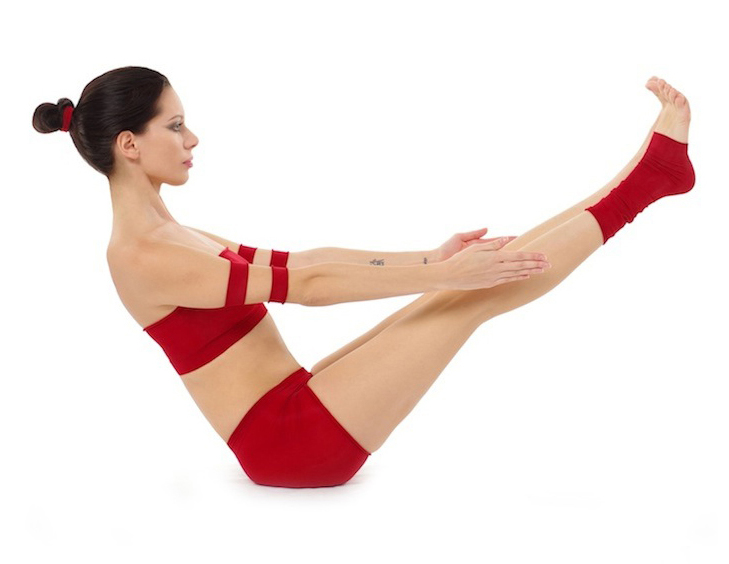
Paripurna Navasana — Full Boat Pose — is a balancing posture that builds deep core strength. Sitting on the "tripod" of the sit bones and tailbone, you lift the legs and reach the arms forward, holding the body in a "V" like a boat riding the water.
Name meaning: From paripūrṇa meaning "full", nāva / nau meaning "boat" and āsana meaning "posture" — the "full boat posture", the body balanced in a V like a boat riding the water.
Classification: Asana — a seated balancing core-strengthener.
Tradition & origin: Boat Pose has a real 19th-century record: it is illustrated in the Sritattvanidhi (Mysore Palace) under the name Naukāsana, also meaning "boat pose". The modern balancing form belongs to contemporary yoga as exercise.
This guide was drafted with the help of AI and reviewed by us. It is for general education only and is not medical or professional advice. It may contain errors. Please practise mindfully, listen to your body, and consult a qualified yoga teacher or doctor for anything specific. Spotted an error? Tell us in the comments below.
How to do it — step by step
- 1Sit with the knees bent, feet flat, hands behind the thighs.
- 2Lean back slightly and lift onto the sit bones, chest tall.
- 3Raise the shins parallel to the floor (half boat) to start.
- 4Straighten the legs toward a "V" if the spine can stay long.
- 5Reach the arms forward alongside the legs, palms facing in.
- 6Keep the chest lifted and the lower belly drawn in.
- 7Breathe steadily; lower with control to release.
Breath & hold
Breathe steadily — do not hold the breath. Hold 15–30 seconds; repeat 2–3 times.
Benefits
- ✓Strengthens the deep core, hip flexors and spine.
- ✓Improves balance and postural control.
- ✓Builds focus and stamina.
- ✓Tones the abdominal muscles.
🪔 The traditional / desi way
- The boat (nava) floats steady on moving water — the pose trains a stable centre amid the wobble.
- Traditional cue: lift from the chest, not by rounding the back. A proud heart keeps the "boat" from sinking.
Common mistakes
- ✕Rounding the lower back and collapsing the chest.
- ✕Holding the breath while gripping.
- ✕Straining the neck by tensing the shoulders.
Modifications & props
- 🧩Keep the knees bent (Half Boat / Ardha Navasana).
- 🧩Hold the backs of the thighs for support.
- 🧩Keep the toes lightly on the floor at first.
Muscles & anatomy
- 💪Working: the deep core (hip flexors, rectus abdominis and the deeper transversus abdominis) hold the V.
- 💪The spinal extensors keep the chest lifted and the back long.
- 💪The quadriceps engage to straighten or lift the legs.
What you may feel
- 🫧Normal: strong effort deep in the abdomen and hip flexors, and a lifted, balancing chest.
- 🫧Warning sign: the lower back or neck straining, or the spine rounding — bend the knees and lift the chest more.
Variations to grow into
Straighten the legs toward a full V while keeping the spine long and the chest lifted.
Ubhaya Padangusthasana (holding the toes with straight legs) or slow "boat-to-low-boat" pulses — greater core and balance challenges.
Using props
- 🧱Hold the backs of the thighs to support the lift while building strength.
- 🧱A strap around the soles of the feet to help keep the legs straight and the chest lifted.
Warm-up & counterpose
- Gentle core activation (dead-bug) and seated forward folds.
- A few Cat–Cow rounds.
- A supine rest with knees hugged to the chest, or a gentle supine twist.
- Child's Pose to release the lower back.
Supporting exercises
Why: Builds core strength with less load.
How: Balance with shins parallel to the floor, chest lifted, 15–20 seconds.
Why: Strengthens the hip flexors used to lift the legs.
How: Sitting tall, lift one straight leg at a time, 8–10 each side.
Progression path
Start with Half Boat holding the thighs; progress to releasing the hands, then straightening the legs toward a full V, keeping a long spine throughout.
Who it suits — and who should modify
- ✓Beginners, starting with Half Boat (knees bent, toes light).
- ✓Most people building deep core strength.
- ✓Those wanting better postural control and balance.
- !Modify / avoid: lower-back injury, hernia or recent abdominal surgery — practise Half Boat or skip.
- !Modify: pregnancy — avoid deep abdominal compression; choose a gentler core option.
- !Ease off if the neck or lower back takes over from the abdomen.
When to practise
Any time once warm; a good core element mid-practice.
Safe most days; 2–3 holds is plenty to build strength.
Traditional view vs. modern evidence
The steady boat riding moving water — training a stable centre amid the wobble; said to restore freshness.
Illustrated in the 19th-century Sritattvanidhi as Naukāsana; the modern balancing form is 20th-century.
Valued as an efficient deep-core strengthener and balance trainer.
Fat-burning and "freshness" claims are not established as specific effects.
Evidence at a glance
Boat Pose builds core and hip-flexor strength and postural control.
Consistent with exercise-physiology evidence for isometric core holds.
It restores freshness or energy on waking.
A traditional description; not established as a specific physiological effect.
Myths vs. reality
✕ Myth: Straight legs make it a "real" Boat Pose.
✓ Reality: A long spine with bent knees is better than straight legs with a rounded back; straighten only when the spine can stay lifted.
✕ Myth: Boat Pose burns belly fat.
✓ Reality: It builds core strength; targeted "spot reduction" of belly fat is not how the body works.
⚠️ Cautions
- Lower-back injury, hernia, pregnancy, or recent abdominal surgery — practise Half Boat or skip.
Frequently asked questions
My back rounds — what should I do?
Bend the knees and hold behind the thighs. A long spine with bent knees beats straight legs with a rounded back.
Where should I feel it?
Deep in the abdomen and hip flexors. If you mostly feel your neck or lower back, ease off and lift the chest more.
Key takeaways
- ⭐A seated V-balance that builds deep core and hip-flexor strength.
- ⭐Keep the spine long and chest lifted — Half Boat beats a rounded full Boat.
- ⭐Documented in the 19th-century Sritattvanidhi (Naukāsana).
- ⭐Modify with bent knees or a thigh-hold; avoid with back, hernia or pregnancy concerns.
References
- Wikipedia — Navasana (etymology & origins, Sritattvanidhi/Naukasana) · Encyclopaedia, scholarly-sourced
- NCCIH — Yoga: What You Need To Know · Government health body (public domain)
Sources are provided for further reading; always consult a qualified teacher or clinician for personal guidance.
📝 Your private notes
Saved only on this device — jot down what helped.
💬 Improvements, corrections & suggestions
Found an error or have a better cue? Share it — practitioners help make each guide more accurate.
No comments yet — be the first to help improve this guide.