DAILY YOGA · Pavanamuktasana
Wind-Relieving Pose
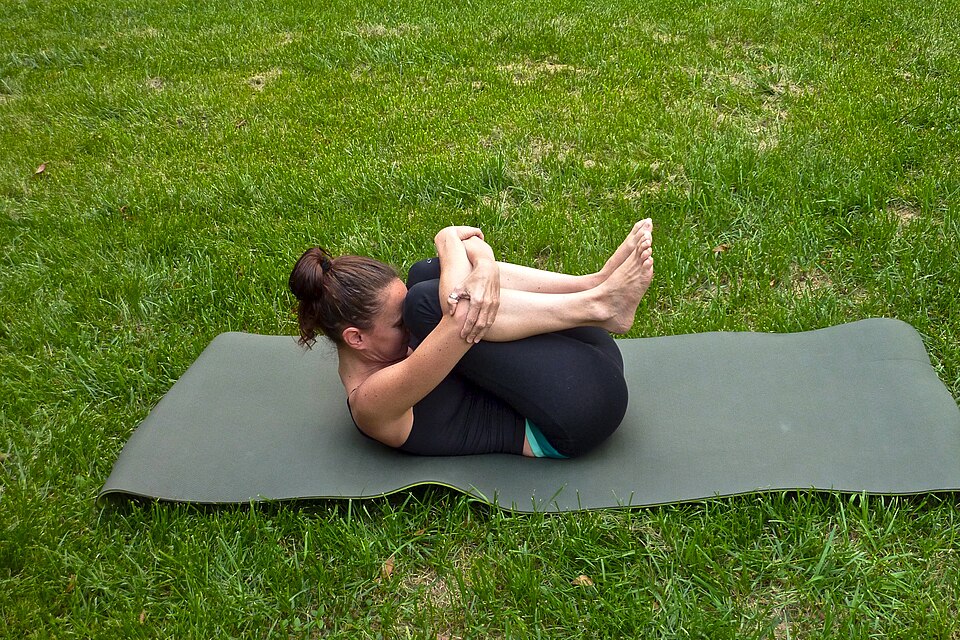
Pavanamuktasana — Wind-Relieving Pose — is a simple, soothing supine pose where the knees are hugged into the belly. As the name suggests, it helps release trapped gas and eases the lower back, and it is a gentle way to begin or end a floor practice.
Name meaning: From pavana meaning "wind", mukta meaning "free/released", and āsana — the "wind-releasing posture", named for its reputation for relieving trapped digestive wind.
Classification: Asana — a reclining, knee-to-chest compression pose.
Tradition & origin: Wind-Relieving Pose is modern: it is unknown in the medieval hatha texts and appears in the 20th century (e.g. as a set pose in Bikram Yoga). Present it as modern postural yoga.
This guide was drafted with the help of AI and reviewed by us. It is for general education only and is not medical or professional advice. It may contain errors. Please practise mindfully, listen to your body, and consult a qualified yoga teacher or doctor for anything specific. Spotted an error? Tell us in the comments below.
How to do it — step by step
- 1Lie on the back with the legs extended.
- 2Exhale and draw both knees toward the chest.
- 3Wrap the arms around the shins or the backs of the thighs.
- 4Keep the head, shoulders and tailbone resting down.
- 5Gently hug the knees closer with each exhale.
- 6Optionally rock side to side to massage the lower back.
- 7Release the legs slowly.
Breath & hold
Breathe slowly; hug the knees in on the exhale. Hold 30–60 seconds.
Benefits
- ✓Eases the lower back and sacrum.
- ✓Helps relieve trapped gas and bloating.
- ✓Gently massages the abdominal organs (aids digestion).
- ✓Calming and grounding.
🪔 The traditional / desi way
- Pavana = wind, mukta = release — a household remedy in India for a bloated or uneasy belly.
- Traditional cue: draw the knees in on the exhale, when the belly naturally softens; single-leg versions (one knee at a time) are common too.
Common mistakes
- ✕Lifting the head and straining the neck.
- ✕Pulling so hard the tailbone leaves the floor and the lower back rounds sharply.
Modifications & props
- 🧩Hug one knee at a time (the other leg stays extended or bent).
- 🧩Hold the backs of the thighs if grasping the shins strains the knees.
Muscles & anatomy
- 💪Gently compresses the abdomen and massages the digestive organs.
- 💪Releases the lower back and stretches the hips and glutes.
- 💪A gentle, supported movement rather than a strong stretch.
What you may feel
- 🫧Normal: a comfortable abdominal compression, a lower-back release, and often the relief of trapped wind.
- 🫧Warning sign: sharp abdominal or knee pain — ease the hug, hold the thigh, or come out.
Variations to grow into
Lift the head toward the knee on an exhale for a little more compression, or rock gently side to side to massage the back.
There is no "advanced" goal — the aim is comfortable release; simply breathe and let the belly and back soften.
Using props
- 🧱A folded blanket under the head or hips for comfort.
- 🧱Hold the backs of the thighs instead of the shins if the knees complain.
Warm-up & counterpose
- None needed — it is itself a gentle opener.
- Extend the legs long and rest, or move into a reclined twist.
Supporting exercises
Why: Complements the release of the lower back.
How: Drop bent knees to one side and turn the head the other way.
Why: Gently massages the spine.
How: Hug both knees and rock slowly along the spine.
Progression path
Start with one knee at a time and a light hug; progress to both knees together and a slight head-lift as it feels comfortable.
Who it suits — and who should modify
- ✓Almost everyone — a gentle, safe, accessible reclining pose.
- ✓Those with bloating, trapped wind or a stiff lower back.
- ✓A soothing warm-up or wind-down, and gentle enough for most bodies.
- !Recent abdominal surgery or hernia — keep the compression gentle or skip.
- !Later pregnancy — hug one knee at a time and keep pressure off the belly.
- !Knee issues — hold the backs of the thighs rather than the shins.
When to practise
Any time — lovely first thing to ease the belly and back, or to wind down.
Daily is fine; hold 30–60 seconds, or one knee at a time.
Traditional view vs. modern evidence
The "wind-freeing" pose; a gentle squeeze to release trapped air and settle the belly.
Not in the medieval texts; a 20th-century pose.
Valued as a gentle digestive-relief and lower-back-release pose.
Broad "cure" and "detox" claims are not established.
Evidence at a glance
The pose can help relieve trapped intestinal gas and ease a stiff lower back.
Plausible via gentle abdominal compression and positional change; robust trials are limited but the mechanism is reasonable.
It cures digestive disease.
A broad claim without solid supporting evidence.
Myths vs. reality
✕ Myth: It forces out "toxins" from the gut.
✓ Reality: The gentle compression can genuinely help release trapped wind and ease bloating, but it does not "detoxify" — that is a metaphor.
✕ Myth: Harder compression works better.
✓ Reality: A gentle, comfortable hug is enough; forcing the knees hard into the belly is unnecessary and can strain.
⚠️ Cautions
- Recent abdominal surgery, hernia, or late pregnancy — practise gently or one leg at a time, and check with a professional.
Frequently asked questions
Does it really help with gas?
Many people find the gentle abdominal compression genuinely helps release trapped wind and ease bloating — hence the name.
One knee or both?
Both together is the classic version; single-leg (one knee at a time) is a gentler variation that also targets each hip.
Key takeaways
- ⭐A gentle knee-to-chest pose that can relieve trapped wind and ease the lower back.
- ⭐Hug one knee at a time to modify; hold the thighs if the knees complain.
- ⭐Keep the hug comfortable — harder is not better.
- ⭐A modern pose, safe for almost everyone.
References
- Wikipedia — Shavasana / Pavanamuktasana (Wind-Relieving Pose, modern origins) · Encyclopaedia, scholarly-sourced
- NCCIH — Yoga: What You Need To Know · Government health body (public domain)
Sources are provided for further reading; always consult a qualified teacher or clinician for personal guidance.
📝 Your private notes
Saved only on this device — jot down what helped.
💬 Improvements, corrections & suggestions
Found an error or have a better cue? Share it — practitioners help make each guide more accurate.
No comments yet — be the first to help improve this guide.