DAILY YOGA · Purna Salabhasana
Full Locust
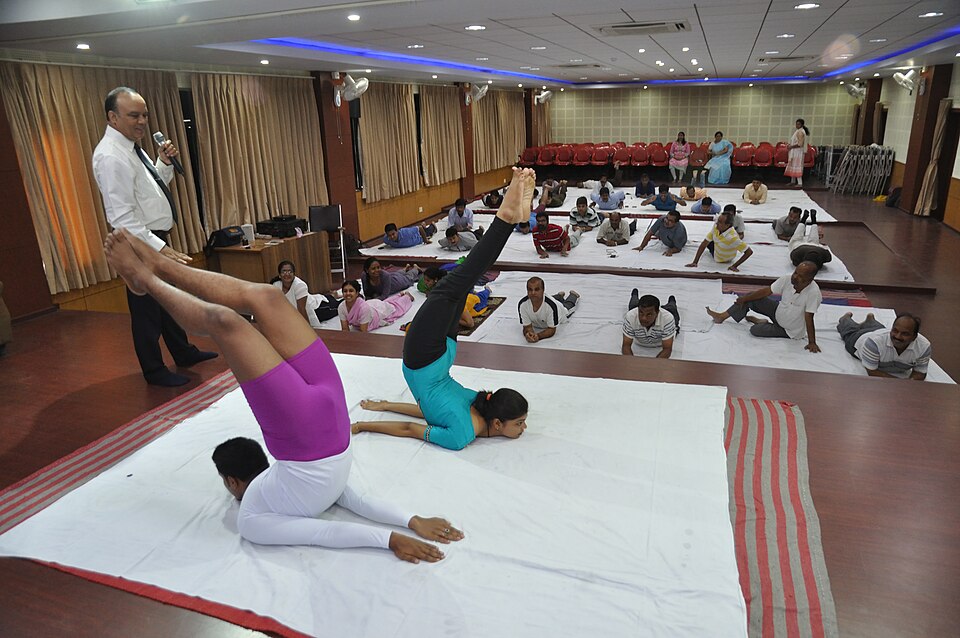
Purna Salabhasana — Full Locust — is the deep, advanced form of Locust where both legs lift high (sometimes overhead) while the chest and arms also lift, working the entire back body powerfully. It is a demanding backbend that builds serious spinal and posterior strength.
Name meaning: From pūrṇa meaning "full/complete", śalābha meaning "locust/grasshopper", and āsana — the "full locust posture", the deep form of Locust with the legs lifted very high.
Classification: Asana — an advanced prone backbend and whole-back strengthener.
Tradition & origin: The Locust family is old — Salabhasana appears in the medieval texts — but this deep FULL Locust (legs lifted high, even overhead) is a modern advanced development (e.g. Light on Yoga). So the base is classical; this deep form is modern.
This guide was drafted with the help of AI and reviewed by us. It is for general education only and is not medical or professional advice. It may contain errors. Please practise mindfully, listen to your body, and consult a qualified yoga teacher or doctor for anything specific. Spotted an error? Tell us in the comments below.
How to do it — step by step
- 1Lie on the belly, arms alongside or beneath the body.
- 2Rest the chin or forehead on the mat and lengthen the legs back.
- 3Inhale and lift the chest, arms, and both legs high off the floor.
- 4Advanced: press into the arms/hands to lift the legs higher, even overhead.
- 5Keep the legs straight and inner thighs lifting.
- 6Lengthen the back of the neck; do not crunch.
- 7Lower with control; rest and repeat.
Breath & hold
Breathe steadily while lifting; hold 10–20 seconds. Repeat 2–3 times with rest.
Benefits
- ✓Strongly strengthens the whole back body, glutes and hamstrings.
- ✓Opens the chest and shoulders.
- ✓Improves posture and spinal extension.
- ✓Builds backbend strength safely (when built up gradually).
🪔 The traditional / desi way
- The locust (salabha) poised to spring — in the full form the whole back coils with power.
- Traditional cue: lengthen long before lifting; the deep leg-lift comes from strength, not from throwing the legs.
Common mistakes
- ✕Crunching the lower back by over-squeezing.
- ✕Lifting the chin and compressing the neck.
- ✕Bending the knees instead of lengthening the legs.
Modifications & props
- 🧩Practise standard Salabhasana (chest and legs lower).
- 🧩Lift only the legs, or only the chest, at first.
Muscles & anatomy
- 💪Strongly strengthens the whole back body — spinal muscles, glutes and hamstrings.
- 💪Opens the chest and shoulders.
- 💪The arms/hands may press to help lift the legs high.
What you may feel
- 🫧Normal: strong effort through the entire back and legs, chest lifting.
- 🫧Warning sign: lower-back crunching or neck compression — lengthen first, lift less high, and keep the neck long.
Variations to grow into
Practise standard Salabhasana (chest and legs lifted modestly) to build the strength.
Press into the hands to lift the legs very high, even overhead — a demanding whole-back backbend for strong, open practitioners.
Using props
- 🧱A folded blanket under the hips or pelvis for comfort.
- 🧱Practise half Locust first to build strength safely.
Warm-up & counterpose
- Cobra, standard Locust and gentle backbends to warm the spine.
- Child's Pose or a gentle reclined twist to release the back.
Supporting exercises
Why: The base pose; builds back strength gradually.
How: Lift the chest and legs modestly from prone.
Why: Open the spine and strengthen the back.
How: Practise gentle backbends to prepare.
Progression path
Build standard Locust over weeks; lengthen the body long, then lift the legs progressively higher from strength — never throwing them or crunching the low back.
Who it suits — and who should modify
- ✓Advanced practitioners with a strong back and an open spine.
- ✓Those who have built up standard Locust over time.
- ✓People wanting a powerful posterior-chain strengthener.
- !Back or neck injury, hernia, or pregnancy — practise standard (half) Locust or skip.
- !Disc issues — deep extension may aggravate; build gradually.
- !Never throw the legs up; the deep lift comes from strength, not momentum.
When to practise
In the stronger, warmed part of a practice, after backbend preparation.
A couple of times a week; hold 10–20 seconds, repeat with rest.
Traditional view vs. modern evidence
The locust poised to spring; the whole back coiling with power.
The Locust base is old; this deep full form is modern.
Valued as a powerful whole-back and posterior-chain strengthener.
Cure claims are not established.
Evidence at a glance
Full Locust strengthens the whole posterior chain and opens the chest.
Consistent with exercise science for prone back-extension work.
It cures back or organ disease.
Broad claims without solid supporting evidence.
Myths vs. reality
✕ Myth: Higher legs are always better.
✓ Reality: The deep lift is only safe once the back is strong and long; forcing height crunches the lower back.
✕ Myth: It cures back disease.
✓ Reality: It strengthens the back powerfully, but specific cure claims are not established.
⚠️ Cautions
- Back or neck injury, hernia, or pregnancy — practise regular (half) Locust or skip. The overhead-leg version is advanced.
Frequently asked questions
How is this different from regular Locust?
Regular Locust lifts the chest and legs modestly; Full Locust lifts the legs very high (even overhead), pressing into the arms — much more demanding.
My lower back aches — help?
Lengthen the body long first, lift less high, and keep the legs active but not clenched. Build the strength gradually with standard Locust.
Key takeaways
- ⭐An advanced whole-back backbend — the legs lift very high from strength.
- ⭐Lengthen long first and lift progressively; never throw the legs or crunch the low back.
- ⭐The Locust base is old; this deep full form is modern.
- ⭐Build from standard Locust; skip with back/neck injury, hernia or pregnancy.
References
- Wikipedia — Salabhasana (Locust family; Purna/Full Locust) · Encyclopaedia, scholarly-sourced
- NCCIH — Yoga: What You Need To Know · Government health body (public domain)
Sources are provided for further reading; always consult a qualified teacher or clinician for personal guidance.
📝 Your private notes
Saved only on this device — jot down what helped.
💬 Improvements, corrections & suggestions
Found an error or have a better cue? Share it — practitioners help make each guide more accurate.
No comments yet — be the first to help improve this guide.