DAILY YOGA · Shavasana
Corpse Pose
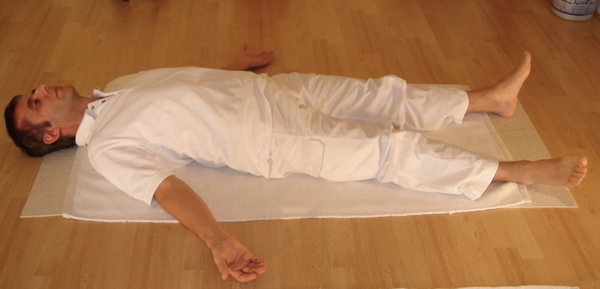
Shavasana — Corpse Pose — is the stillness at the end of practice, and often the hardest pose of all. Lying completely still, you let the body absorb the work you have done and drop into conscious relaxation. It is where the practice settles into the nervous system.
Name meaning: From śava meaning "corpse" and āsana meaning "posture" — the "corpse posture". Its alternative name Mritasana comes from mṛta, "death".
Classification: Asana — a supine relaxation pose; the usual posture for Yoga Nidra and a key pose in Restorative Yoga.
Tradition & origin: Shavasana is genuinely old: it is described in the 15th-century Hatha Yoga Pradipika (verse 1.32), which says that lying supine like a corpse "eliminates tiredness and promotes calmness of the mind" — notably one of the first non-seated postures taught within hatha yoga.
This guide was drafted with the help of AI and reviewed by us. It is for general education only and is not medical or professional advice. It may contain errors. Please practise mindfully, listen to your body, and consult a qualified yoga teacher or doctor for anything specific. Spotted an error? Tell us in the comments below.
How to do it — step by step
- 1Lie flat on the back on a comfortable surface.
- 2Let the feet fall open, a comfortable distance apart.
- 3Rest the arms a little away from the body, palms turned up.
- 4Tuck the shoulder blades slightly under so the chest is open.
- 5Close the eyes and let the whole face soften.
- 6Release any holding — jaw, hands, belly, legs — with each exhale.
- 7Stay still and simply watch the natural breath.
Breath & hold
Do not control the breath — observe it. Rest for 5–15 minutes. Come out slowly, wiggling fingers and toes, then rolling to one side before sitting up.
Benefits
- ✓Deeply relaxes the body and calms the mind.
- ✓Lowers heart rate and helps release stress.
- ✓Lets the benefits of the practice integrate.
- ✓Can improve sleep when practised before bed.
🪔 The traditional / desi way
- Called the "corpse" because you practise letting go so completely that the body rests as if lifeless while the mind stays quietly awake.
- Traditional teachers say five minutes of true Shavasana can restore the body more than a nap — the art is staying alert yet utterly relaxed.
Common mistakes
- ✕Skipping it to save time — it is not optional; it is where the practice lands.
- ✕Falling fully asleep every time (a sign of exhaustion rather than relaxation).
- ✕Fidgeting; stillness is the practice.
Modifications & props
- 🧩Bolster under the knees to ease the lower back.
- 🧩Light blanket over the body — stillness cools you down.
- 🧩Eye pillow to help the eyes soften.
Muscles & anatomy
- 💪The aim is release, not effort: every muscle group is scanned and consciously softened.
- 💪Supporting the natural curves (with props if needed) lets the postural muscles switch off.
What you may feel
- 🫧Normal: heaviness, warmth, slowing breath and heart rate, and a settled mind.
- 🫧Warning sign: lower-back ache lying flat, or rising anxiety — modify the position or shorten the stay.
Variations to grow into
Practise Yoga Nidra ("yogic sleep") in Shavasana — a guided body-scan meditation that deepens the rest.
Extend the stay to 20–30 minutes with a structured relaxation or breath-awareness technique, staying alert rather than asleep.
Using props
- 🧱A bolster or rolled blanket under the knees to ease the lower back.
- 🧱A light blanket over the body (stillness cools you) and an eye pillow to soften the eyes.
Warm-up & counterpose
- None — it is the rest that follows practice.
- Come out slowly: deepen the breath, wiggle fingers and toes, stretch, then roll to one side before sitting up.
Supporting exercises
Why: Teaches the body the feeling of letting go.
How: Gently tense then fully release each area from feet to face, one at a time.
Why: Settles the nervous system into rest.
How: Without controlling it, simply watch the breath rise and fall for several minutes.
Progression path
Begin with 5 minutes and extend gradually. As stillness becomes comfortable, add Yoga Nidra or longer breath-awareness relaxation.
Who it suits — and who should modify
- ✓Everyone — it is the universal closing relaxation.
- ✓Anyone managing stress or seeking better sleep (as a standalone practice too).
- ✓Beginners learning conscious relaxation.
- !Modify: late pregnancy — lie on the left side rather than flat on the back.
- !Modify: lower-back discomfort lying flat — bend the knees or place a bolster under them.
- !If staying still triggers anxiety, keep the eyes softly open and shorten the rest.
When to practise
At the end of any practice, and before sleep to wind down. Any time you need to reset.
Daily or as often as you like; there is no limit on rest.
Traditional view vs. modern evidence
Described in the Hatha Yoga Pradipika as removing tiredness and calming the mind; the "corpse" evokes total letting-go while the mind stays awake.
Genuinely classical — Hatha Yoga Pradipika 1.32 (15th century).
Used for the relaxation response, Yoga Nidra and restorative practice; supports stress reduction.
Specific curative claims beyond general relaxation are not established.
Evidence at a glance
Lying-down relaxation and slow breathing support stress reduction and calm.
Consistent with evidence that yoga and relaxation practices help with stress (NCCIH).
Practised before bed, it can help with sleep.
Relaxation before sleep is plausibly helpful; strong pose-specific sleep trials are limited.
It "cures" fatigue or disease.
The Hatha Yoga Pradipika describes it removing tiredness; treat as a traditional claim, valuable but not a medical cure.
Myths vs. reality
✕ Myth: Shavasana is just lying around — you can skip it.
✓ Reality: It is where the practice settles into the nervous system; consistent rest supports the relaxation response and is a real part of practice.
✕ Myth: You should fall asleep in it.
✓ Reality: The aim is to stay quietly awake yet fully relaxed; falling asleep every time can signal tiredness rather than skilled relaxation.
⚠️ Cautions
- In late pregnancy lie on the left side instead of flat on the back.
- If lying flat hurts the lower back, bend the knees with feet on the floor or place a bolster under the knees.
Frequently asked questions
Why is it so hard to lie still?
A busy mind resists stillness at first. With practice the body learns to let go, and Shavasana becomes deeply restful.
Can I do only Shavasana?
Yes — as a standalone relaxation it is wonderful for stress and sleep, even without a full practice.
Key takeaways
- ⭐The essential closing relaxation — stay still, soften everything, watch the breath.
- ⭐A genuinely classical pose (Hatha Yoga Pradipika, 15th century).
- ⭐Supports stress reduction and can aid sleep; also valuable as a standalone rest.
- ⭐Lie on the left side in late pregnancy; support the knees if the low back aches.
References
- Wikipedia — Shavasana (etymology & origins, Hatha Yoga Pradipika 1.32) · Encyclopaedia, scholarly-sourced
- NCCIH — Yoga: What You Need To Know · Government health body (public domain)
Sources are provided for further reading; always consult a qualified teacher or clinician for personal guidance.
📝 Your private notes
Saved only on this device — jot down what helped.
💬 Improvements, corrections & suggestions
Found an error or have a better cue? Share it — practitioners help make each guide more accurate.
No comments yet — be the first to help improve this guide.