DAILY YOGA · Siddhasana
Accomplished Pose
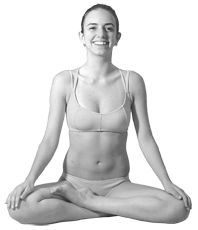
Siddhasana — the Accomplished (or Adept's) Pose — is a classic cross-legged meditation seat prized in the old texts for its steadiness. Simpler than Lotus but very stable, it is a favourite seat for long meditation and pranayama.
Name meaning: From siddha meaning both "perfect" and "adept/accomplished one", and āsana — the "accomplished posture", the seat of the perfected yogi. Also called Muktasana ("liberated pose").
Classification: Asana — a seated meditation posture.
Tradition & origin: Siddhasana is genuinely ancient — one of the oldest asanas. It is described as a meditation seat in the 10th-century Goraksha Sataka (1.10–12), which ranks it alongside Lotus as the most important asana; the 15th-century Hatha Yoga Pradipika (1.37–45) praises it as "the chief of all asanas". A real classical lineage, unlike most modern postural poses.
This guide was drafted with the help of AI and reviewed by us. It is for general education only and is not medical or professional advice. It may contain errors. Please practise mindfully, listen to your body, and consult a qualified yoga teacher or doctor for anything specific. Spotted an error? Tell us in the comments below.
How to do it — step by step
- 1Sit tall on a cushion with the legs extended.
- 2Bend one knee and draw that heel in toward the perineum.
- 3Bend the other knee and place that heel just above the first.
- 4Tuck the toes/edges of the feet into the opposite thigh-calf gap.
- 5Rest the hands on the knees in a mudra.
- 6Lengthen the spine, soften the shoulders, and settle the gaze inward.
Breath & hold
Breathe softly and naturally. Sit as long as is comfortable, switching the leg on top on different days.
Benefits
- ✓A very stable, sustainable seat for meditation.
- ✓Encourages an upright, easeful spine.
- ✓Traditionally said to steady the mind and energy.
- ✓Gently opens the hips and ankles.
🪔 The traditional / desi way
- Siddha = accomplished/adept — the seat of the perfected yogis, praised in the Hatha texts as one of the most important asanas for meditation.
- Traditional teaching values it for its stability: a steady seat is the foundation of steady breath and a steady mind.
Common mistakes
- ✕Slumping the spine after a few minutes.
- ✕Sitting flat on the floor so the pelvis tips back.
- ✕Always crossing the same leg on top.
Modifications & props
- 🧩Sit on a firm cushion so the knees drop below the hips.
- 🧩Support each knee with a block if it floats high.
Muscles & anatomy
- 💪Opens the hips and gently stretches the knees and ankles as the legs fold.
- 💪The back muscles hold the spine tall and steady.
- 💪It is a still, held seat rather than an active stretch.
What you may feel
- 🫧Normal: a settled, grounded feeling with an upright, easy spine.
- 🫧Warning sign: knee pain or numbness — sit higher, loosen the fold, or switch to Easy Pose.
Variations to grow into
Lower the cushion over time so the knees settle closer to the floor, keeping the spine tall.
For experienced meditators, the traditional heel placement at the perineum with the spine erect and the gaze soft — held for long pranayama and meditation.
Using props
- 🧱A firm cushion or zafu so the hips lift above the knees.
- 🧱A block under each knee if it floats high.
Warm-up & counterpose
- Gentle hip openers and ankle circles before settling in.
- Straighten and shake out the legs; a gentle forward fold.
Supporting exercises
Why: Opens the hips so the seat is comfortable.
How: Sit with the soles together and the thighs supported.
Why: A simpler seat to build sitting endurance.
How: Sit cross-legged on a cushion with a tall spine.
Progression path
Start seated high on a cushion for short sits; lengthen the time and lower the support as the hips open, keeping the spine tall and the mind at ease.
Who it suits — and who should modify
- ✓Most people with reasonable hip and knee comfort, sitting up on a cushion.
- ✓Anyone wanting a stable, traditional seat for meditation and pranayama.
- ✓A steady alternative to Lotus — often easier and just as stable.
- !Knee or hip discomfort — sit higher on a cushion or choose Easy Pose (Sukhasana).
- !Recent knee injury — avoid the deep folding and use a simple cross-legged seat.
- !If the knees float high, support them so there is no strain.
When to practise
Any time for meditation or breathing; classically practised at dawn or dusk.
Daily is ideal; build the length of the sit gradually.
Traditional view vs. modern evidence
The seat of the adept; "the chief of all asanas", said to open the door of liberation and cleanse the nadis.
Genuinely ancient — Goraksha Sataka (10th c.) and Hatha Yoga Pradipika (15th c.).
Valued as a stable, comfortable meditation and pranayama seat.
Siddhi/kundalini claims are traditional, not scientifically established.
Evidence at a glance
A stable, upright seat supports comfortable meditation and breathing.
A tall, supported seat is widely recommended for meditation practice.
It awakens kundalini or grants siddhis.
Traditional/subtle-body claims, offered as tradition rather than established fact.
Myths vs. reality
✕ Myth: Practising Siddhasana grants supernatural powers (siddhis).
✓ Reality: Traditional texts make such claims symbolically; there is no evidence of supernatural effects. Its real value is a stable seat for meditation.
✕ Myth: It "cleanses 72,000 nadis".
✓ Reality: This is traditional subtle-body language, not a physiological claim — honour it as tradition, not fact.
⚠️ Cautions
- Knee or hip discomfort — sit higher on a cushion, or choose Easy Pose (Sukhasana).
Frequently asked questions
Siddhasana or Sukhasana?
Both are fine meditation seats. Siddhasana has a specific heel placement and is very stable; Sukhasana (Easy Pose) is the simplest comfortable cross-legged seat.
Do I need to master Lotus first?
No. Siddhasana is often easier and just as steady for meditation.
Key takeaways
- ⭐A stable, traditional meditation seat — often easier than Lotus and just as steady.
- ⭐Sit up on a cushion so the hips lift and the spine stays tall.
- ⭐One of the oldest asanas — genuinely classical (10th–15th-century texts).
- ⭐Siddhi/nadi claims are traditional, not established fact.
References
- Wikipedia — Siddhasana (ancient origins, Goraksha Sataka, HYP) · Encyclopaedia, scholarly-sourced
- NCCIH — Yoga: What You Need To Know · Government health body (public domain)
Sources are provided for further reading; always consult a qualified teacher or clinician for personal guidance.
📝 Your private notes
Saved only on this device — jot down what helped.
💬 Improvements, corrections & suggestions
Found an error or have a better cue? Share it — practitioners help make each guide more accurate.
No comments yet — be the first to help improve this guide.