DAILY YOGA · Simhasana
Lion Pose
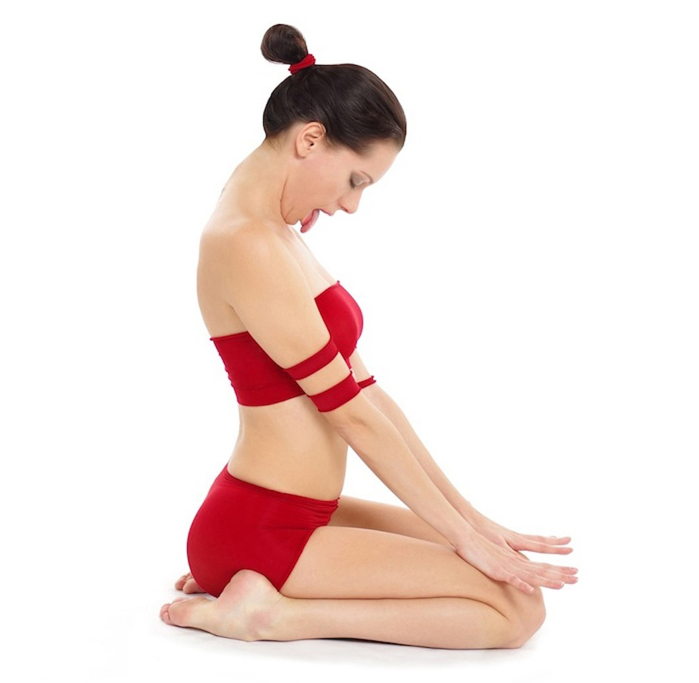
Simhasana — Lion Pose — is a playful, energising posture that releases tension in the face, jaw and throat. Sitting tall and exhaling with a big open-mouthed "roar" and outstretched tongue, it relieves stress and is said to refresh the voice and mind.
Name meaning: From siṁha meaning "lion" and āsana meaning "posture" — the "lion posture", named for the roaring-lion face (mouth wide, tongue out). Also called Narasimhasana, after Vishnu's lion-man avatar.
Classification: Asana — a seated/kneeling pose combined with a facial gesture and breath (a simple kriya-like practice).
Tradition & origin: Lion Pose is genuinely old: the posture is described in the 10th-century Vimanarcanakalpa, and it appears as Narasimhasana in the 19th-century Joga Pradipika. A rare case of a facial-gesture pose with a real classical lineage.
This guide was drafted with the help of AI and reviewed by us. It is for general education only and is not medical or professional advice. It may contain errors. Please practise mindfully, listen to your body, and consult a qualified yoga teacher or doctor for anything specific. Spotted an error? Tell us in the comments below.
How to do it — step by step
- 1Kneel in Vajrasana (sitting on the heels) or cross-legged.
- 2Place the hands on the knees or the floor, fingers spread wide.
- 3Inhale deeply through the nose.
- 4Open the mouth wide and stick the tongue out and down toward the chin.
- 5Exhale forcefully with a "haaa" sound, like a lion's roar.
- 6Gaze up toward the brow centre or the tip of the nose.
- 7Relax the face, then repeat 3–5 times.
Breath & hold
Inhale through the nose; exhale forcefully through the open mouth with the roar. Repeat 3–5 rounds.
Benefits
- ✓Releases tension in the face, jaw and throat.
- ✓Relieves stress and can lift the mood.
- ✓Traditionally said to benefit the voice and throat.
- ✓Energising and playful.
🪔 The traditional / desi way
- The lion (simha) — a symbol of courage; the roar is said to release pent-up tension and fear.
- Traditional cue: let the roar be wholehearted — a small, shy version misses the point. It is meant to feel freeing.
Common mistakes
- ✕Being too timid to actually exhale strongly.
- ✕Tensing the shoulders up by the ears.
Modifications & props
- 🧩Sit cross-legged or in a chair instead of kneeling.
Muscles & anatomy
- 💪Engages and then releases the muscles of the face, jaw and throat.
- 💪The eyes, tongue and facial muscles stretch actively; the seat is stable and relaxed.
- 💪A simple breath (a strong "haaa" exhale) accompanies the gesture.
What you may feel
- 🫧Normal: a strong, slightly comical stretch across the face and throat, and a refreshed, released feeling after.
- 🫧Warning sign: none significant — simply ease off if the jaw or neck feels strained.
Variations to grow into
Add the gaze to the third-eye or nose tip and a fuller "roaring" exhale for a stronger facial and throat release.
Iyengar's Simhasana II begins from Lotus, leaning forward onto the hands — for open hips and knees.
Using props
- 🧱A cushion under the seat, or a chair, if kneeling is uncomfortable.
Warm-up & counterpose
- None needed — it is itself a quick release.
- Relax the face and take a few normal breaths.
Supporting exercises
Why: Prepares the face and throat.
How: Slow jaw circles and gentle neck stretches before the gesture.
Why: Sets up the strong "roaring" exhale.
How: Inhale fully, then exhale with an open mouth and tongue out.
Progression path
Simply repeat the gesture a few times; add the gaze and a fuller roaring breath as you get comfortable, or explore the Lotus-based Simhasana II if the hips allow.
Who it suits — and who should modify
- ✓Everyone — a simple, safe, playful pose for releasing facial and throat tension.
- ✓Those wanting to loosen a tight jaw or relieve stress.
- ✓It can be done kneeling, cross-legged or in a chair.
- !Modify: knee issues in the kneeling version — sit cross-legged or in a chair.
- !Generally very safe with no specific contraindications.
- !Keep the tongue-and-face gesture comfortable, not strained.
When to practise
Any time you feel tense or stressed, or want to loosen the jaw and face; a quick refreshing reset.
As often as you like; a few "roars" is plenty.
Traditional view vs. modern evidence
The roaring lion (or Narasimha, Vishnu's lion-man avatar); a gesture to release the face and throat.
Genuinely old — described in the 10th-century Vimanarcanakalpa; Narasimhasana in the 19th-century Joga Pradipika.
Valued as a simple, playful release for facial/jaw tension and stress.
Throat/thyroid cure claims are not established.
Evidence at a glance
Lion Pose releases facial, jaw and throat tension and can feel refreshing.
Plausible via active stretch and a strong exhale; robust pose-specific evidence is limited.
It treats throat or thyroid conditions.
A common claim without solid supporting evidence.
Myths vs. reality
✕ Myth: Lion Pose cures throat and thyroid disease.
✓ Reality: It can relieve facial and throat tension and feels refreshing, but specific cure claims are not established.
✕ Myth: It is a silly modern gimmick.
✓ Reality: It is a genuinely old, named posture (10th-century texts) with a real place in the tradition.
⚠️ Cautions
- Knee issues in the kneeling version — sit cross-legged or on a cushion instead. Generally very safe.
Frequently asked questions
Do I really stick my tongue out?
Yes — reaching the tongue toward the chin is part of the release for the face and throat. Embrace the playfulness.
When is it useful?
Any time you feel tense, stressed, or need to loosen a tight jaw — it is a quick, refreshing reset.
Key takeaways
- ⭐A playful "roaring lion" pose that releases facial, jaw and throat tension.
- ⭐Open the mouth, stick the tongue out, and exhale strongly; do it kneeling, cross-legged or in a chair.
- ⭐A genuinely old, named posture (10th-century texts) — not a modern gimmick.
- ⭐Very safe; ease off if the jaw or neck feels strained.
References
- Wikipedia — Simhasana (etymology & origins, Vimanarcanakalpa) · Encyclopaedia, scholarly-sourced
- NCCIH — Yoga: What You Need To Know · Government health body (public domain)
Sources are provided for further reading; always consult a qualified teacher or clinician for personal guidance.
📝 Your private notes
Saved only on this device — jot down what helped.
💬 Improvements, corrections & suggestions
Found an error or have a better cue? Share it — practitioners help make each guide more accurate.
No comments yet — be the first to help improve this guide.