DAILY YOGA · Supta Kurmasana
Sleeping Tortoise
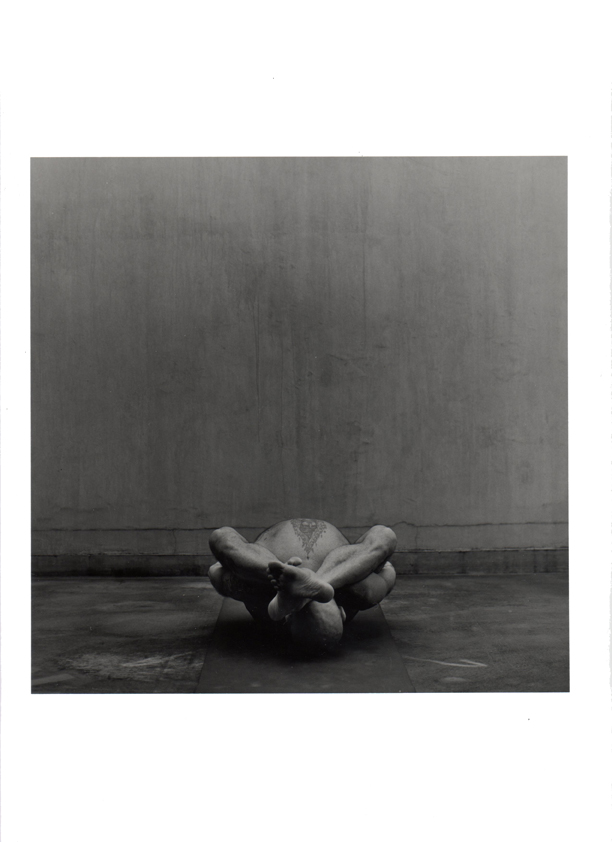
Supta Kurmasana — Sleeping Tortoise — is the advanced, bound progression of Tortoise Pose, where the legs cross behind the head (or ankles cross) while the arms bind behind the back, drawing the body into a deep, folded shell. It is a profound hip, shoulder and forward-fold opener that asks for great openness.
Name meaning: From supta meaning "sleeping/reclining", kūrma meaning "tortoise", and āsana — the "sleeping tortoise posture", the body fully folded with the feet crossed behind the head, like a tortoise tucked deep in its shell.
Classification: Asana — a very advanced deep forward fold with the legs behind the head.
Tradition & origin: A partly-classical case: the Tortoise/Kurmasana name and an upside-down form are ancient (the c.7th-century Ahirbudhnya Samhita), but this deep Sleeping-Tortoise binding with the legs behind the head is a modern advanced development (Ashtanga; Light on Yoga). So the name is old; this extreme form is modern.
This guide was drafted with the help of AI and reviewed by us. It is for general education only and is not medical or professional advice. It may contain errors. Please practise mindfully, listen to your body, and consult a qualified yoga teacher or doctor for anything specific. Spotted an error? Tell us in the comments below.
How to do it — step by step
- 1Begin in Kurmasana (Tortoise), arms threaded under the knees.
- 2Wrap the arms behind the back and clasp the hands (bind).
- 3Slowly work the legs higher up the shoulders.
- 4Advanced: cross the ankles behind the head (only with great openness).
- 5Rest the forehead down and draw the body inward like a shell.
- 6Keep the breath slow and never force.
- 7Come out gently, releasing the bind and legs.
Breath & hold
Breathe slowly and softly; hold 30–60 seconds, easing in gradually.
Benefits
- ✓Very deeply opens the hips, hamstrings and shoulders.
- ✓Profoundly calming and introspective (deep pratyahara).
- ✓Improves overall flexibility.
- ✓Builds patience and inward focus.
🪔 The traditional / desi way
- The "sleeping tortoise" — fully withdrawn into its shell, the deepest expression of turning the senses inward.
- Traditional wisdom: an advanced Ashtanga pose. Open the hips and hamstrings over a long time; the leg-behind-head is for very open bodies only.
Common mistakes
- ✕Forcing the legs behind the head before the hips are extremely open (neck/knee risk).
- ✕Straining the shoulders for the bind.
- ✕Holding the breath.
Modifications & props
- 🧩Practise Kurmasana (Tortoise) without the bind or leg-crossing.
- 🧩Cross the ankles in front (not behind the head).
- 🧩Use a strap for the arm bind.
Muscles & anatomy
- 💪An extreme stretch of the hips, hamstrings, back and shoulders.
- 💪The legs cross behind the head and the arms bind behind the back.
- 💪Demands exceptional hip and spine openness; the neck must not be loaded.
What you may feel
- 🫧Normal (for the very open): a profound, fully-enclosed forward fold and a deeply inward, calm quality.
- 🫧Warning sign: ANY neck pressure or pain — come out at once; this is the pose's key danger.
Variations to grow into
Practise Tortoise (Kurmasana) with a simple ankle-cross in front (not behind the head).
The full bind with both feet crossed behind the head and hands clasped behind the back — elite practitioners only.
Using props
- 🧱Work Kurmasana and hip openers instead while building openness.
- 🧱A strap for the arm bind once safely in the shape.
Warm-up & counterpose
- Extensive hip, hamstring and shoulder opening, and a deep Tortoise.
- A gentle backbend and a reclined twist to release the spine and hips.
Supporting exercises
Why: The essential base; must be deep and comfortable first.
How: Deep seated forward fold, arms sliding under the legs.
Why: Open the hips enough to take the legs behind the head safely.
How: Figure-4, Fire Log and Pigeon over months/years.
Progression path
Open the hips deeply over years and master Tortoise; only then, with guidance, work one leg and then both behind the head — never loading the neck.
Who it suits — and who should modify
- ✓Only exceptionally open, advanced practitioners with very open hips, hamstrings and back.
- ✓Those with a safe, comfortable Tortoise (Kurmasana) first.
- ✓People who have opened the hips deeply over years — build very slowly.
- !Neck, lower-back, hamstring or shoulder injury — do NOT attempt the legs-behind-head; practise Tortoise instead.
- !Anyone without a deep, easy Tortoise — forcing this risks the neck and knees.
- !Never force the legs behind the head; the neck is vulnerable.
When to practise
Only in a deep, thoroughly-warmed advanced practice.
Rarely and cautiously, for those with the requisite openness.
Traditional view vs. modern evidence
The tortoise asleep, withdrawn into its shell; a deep doorway to sense-withdrawal (pratyahara).
The name/upside-down form is ancient; this legs-behind-head binding is modern.
An elite deep forward fold — with a real neck-safety concern.
Spiritual-power and cure claims are not established.
Evidence at a glance
The pose is an extreme hip/hamstring/back stretch and is deeply calming.
Consistent with the biomechanics of an extreme forward fold, for those able to do it safely.
It grants spiritual powers or cures disease.
Symbolic/broad claims without supporting evidence.
Myths vs. reality
✕ Myth: Everyone can reach legs-behind-head with enough practice.
✓ Reality: It needs exceptional, often anatomy-dependent openness; for most, Tortoise is the appropriate practice — forcing risks the neck and knees.
✕ Myth: It grants special spiritual powers.
✓ Reality: It is a deep, calming fold; such claims are symbolic, not established. Its real value is the inward focus (pratyahara).
⚠️ Cautions
- Neck, lower-back, hamstring, or shoulder injury — do NOT attempt the leg-behind-head; practise Tortoise (Kurmasana) instead. Never force the neck.
Frequently asked questions
Do I need to cross my legs behind my head?
No — that is only for exceptionally open bodies. Work Tortoise Pose and a simple ankle-cross in front; forcing the legs behind the head risks the neck and knees.
Why is it so calming?
The deep, fully-folded inward shape strongly turns attention inward — the tradition's image of a tortoise withdrawing into its shell (pratyahara).
Key takeaways
- ⭐An elite deep fold with the legs crossed behind the head — exceptional openness required.
- ⭐For most people, Tortoise (Kurmasana) with the ankles crossed in front is the right practice.
- ⭐Real neck danger — never force the legs behind the head.
- ⭐The name is ancient; this extreme binding is modern.
References
- Wikipedia — Kurmasana (Supta Kurmasana / Sleeping Tortoise) · Encyclopaedia, scholarly-sourced
- NCCIH — Yoga: What You Need To Know · Government health body (public domain)
Sources are provided for further reading; always consult a qualified teacher or clinician for personal guidance.
📝 Your private notes
Saved only on this device — jot down what helped.
💬 Improvements, corrections & suggestions
Found an error or have a better cue? Share it — practitioners help make each guide more accurate.
No comments yet — be the first to help improve this guide.