DAILY YOGA · Upavistha Konasana
Wide-Angle Seated Forward Bend
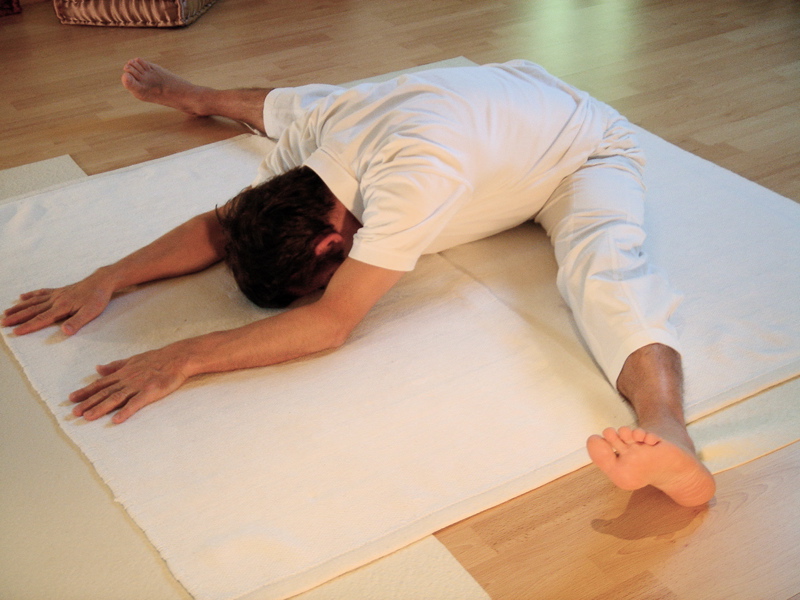
Upavistha Konasana — Wide-Angle Seated Forward Bend — is a seated pose with the legs spread wide, folding forward to stretch the hamstrings, inner thighs and back. It is a patient, grounding opener that improves flexibility for many seated and standing poses.
Name meaning: From upaviṣṭa meaning "seated" (legs open) and koṇa meaning "angle", with āsana — the "seated wide-angle posture", the legs spread wide from a seated fold.
Classification: Asana — a seated wide-legged forward bend (hamstring, inner-thigh and back stretch).
Tradition & origin: Wide-Angle Seated Forward Bend is a modern pose: it is not found in the medieval hatha texts but is described in the 20th century (e.g. Iyengar's Light on Yoga). Present it as modern postural yoga.
This guide was drafted with the help of AI and reviewed by us. It is for general education only and is not medical or professional advice. It may contain errors. Please practise mindfully, listen to your body, and consult a qualified yoga teacher or doctor for anything specific. Spotted an error? Tell us in the comments below.
How to do it — step by step
- 1Sit tall and spread the legs wide into a comfortable "V".
- 2Flex the feet and point the kneecaps toward the ceiling.
- 3Press the thighs down and root the sit bones.
- 4Inhale and lengthen the spine, hands in front.
- 5Exhale and walk the hands forward, hinging from the hips.
- 6Keep the back long; stop where the spine begins to round.
- 7Breathe, softening a little more with each exhale.
Breath & hold
Breathe slowly; hold 45–90 seconds. Lengthen on the inhale, fold on the exhale.
Benefits
- ✓Stretches the hamstrings and inner thighs deeply.
- ✓Opens the hips and groin.
- ✓Lengthens the spine and back body.
- ✓Calming when folded forward.
🪔 The traditional / desi way
- Upavistha = seated, kona = angle — a wide, open base that teaches patience: the hips release slowly, over weeks and months.
- Traditional cue: keep the kneecaps and toes pointing up, and fold from the hips — never round the back to reach further.
Common mistakes
- ✕Rolling onto the backs of the thighs so the knees turn out and roll in.
- ✕Rounding the spine to reach forward.
- ✕Spreading the legs so wide the inner knees strain.
Modifications & props
- 🧩Sit on a folded blanket to tilt the pelvis forward.
- 🧩Narrow the legs and keep the fold shallow.
- 🧩Rest the torso on a bolster placed in front.
Muscles & anatomy
- 💪Stretched: the inner thighs (adductors), the hamstrings and the back body.
- 💪Working (lightly): the hip flexors draw you forward; the quadriceps keep the kneecaps pointing up.
- 💪The aim is a long spine folding from the hips, not a rounded reach.
What you may feel
- 🫧Normal: a broad stretch through the inner thighs and the backs of the legs.
- 🫧Warning sign: sharp inner-thigh or behind-the-knee pain — narrow the legs, sit higher, and ease the fold.
Variations to grow into
Walk the hands forward and fold from the hips with a long spine, resting the forearms (or torso) toward the floor.
A full forward fold with the chest toward the floor, or holding the big toes — only with open hamstrings and inner thighs.
Using props
- 🧱A folded blanket under the sitting bones to tilt the pelvis forward.
- 🧱A bolster in front to rest the torso on; narrow the legs for a gentler stretch.
Warm-up & counterpose
- Bound Angle and gentle hamstring stretches.
- Seated pelvic tilts.
- Bring the legs together and fold gently, or a supine knees-to-chest.
- A reclined twist.
Supporting exercises
Why: Opens the inner thighs the wide-angle fold needs.
How: Sit with soles together and let the knees ease down; 30–60 seconds.
Why: Lengthens the hamstrings safely.
How: Lying down, raise one leg with a strap; 30 seconds each side.
Progression path
Start sitting tall on a cushion with the legs comfortably wide, keeping the spine long; widen the legs and deepen the hip-fold over time — never forcing the inner thighs.
Who it suits — and who should modify
- ✓Beginners, sitting up on a cushion with a shallow fold.
- ✓Anyone wanting to open tight inner thighs and hamstrings.
- ✓Those seeking a calming, grounding seated stretch.
- !Modify: groin or hamstring injury — narrow the legs, sit high, and fold only slightly.
- !Modify: lower-back issues — keep the spine long and the fold shallow.
- !Protect the knees: point the kneecaps up and avoid the legs rolling in.
When to practise
Any time; soothing later in a practice or in the evening.
Safe daily; hold comfortably and repeat.
Traditional view vs. modern evidence
A grounding, opening seated fold in the modern seated sequence.
Not in the medieval hatha texts; described in the 20th century (Light on Yoga).
Valued as an inner-thigh, hamstring and back-body stretch and a calming fold.
Organ-specific curative claims are not established.
Evidence at a glance
The pose stretches the inner thighs, hamstrings and back body.
Consistent with the biomechanics of a wide-legged seated fold.
It cures reproductive or organ ailments.
A traditional framing sometimes taught; not established as a specific medical effect.
Myths vs. reality
✕ Myth: The wider and lower, the better.
✓ Reality: Over-widening or forcing the fold risks the inner thighs and knees; a long spine and comfortable width matter more.
✕ Myth: You must get your chest to the floor.
✓ Reality: That is an advanced expression; even sitting tall with wide legs is a strong, valuable stretch.
⚠️ Cautions
- Groin or hamstring injury, or lower-back issues — sit on a cushion, narrow the legs, and fold only slightly.
Frequently asked questions
I can barely lean forward — is that normal?
Very. Sit up on a cushion and keep the spine long; even sitting tall with the legs wide is a great stretch. Depth develops slowly.
My knees roll in — what do I do?
Point the kneecaps and toes toward the ceiling and press the backs of the thighs down to protect the knees.
Key takeaways
- ⭐A seated wide-legged fold that opens the inner thighs, hamstrings and back.
- ⭐Sit up on a cushion, keep the spine long, and fold from the hips.
- ⭐A modern pose (Light on Yoga), not a classical asana.
- ⭐Point the kneecaps up and narrow the legs to protect the knees and inner thighs.
References
- Wikipedia — Paschimottanasana (covers Upavishthakonasana, modern origin) · Encyclopaedia, scholarly-sourced
- NCCIH — Yoga: What You Need To Know · Government health body (public domain)
Sources are provided for further reading; always consult a qualified teacher or clinician for personal guidance.
📝 Your private notes
Saved only on this device — jot down what helped.
💬 Improvements, corrections & suggestions
Found an error or have a better cue? Share it — practitioners help make each guide more accurate.
No comments yet — be the first to help improve this guide.