DAILY YOGA · Urdhva Padmasana
Lotus in Shoulderstand
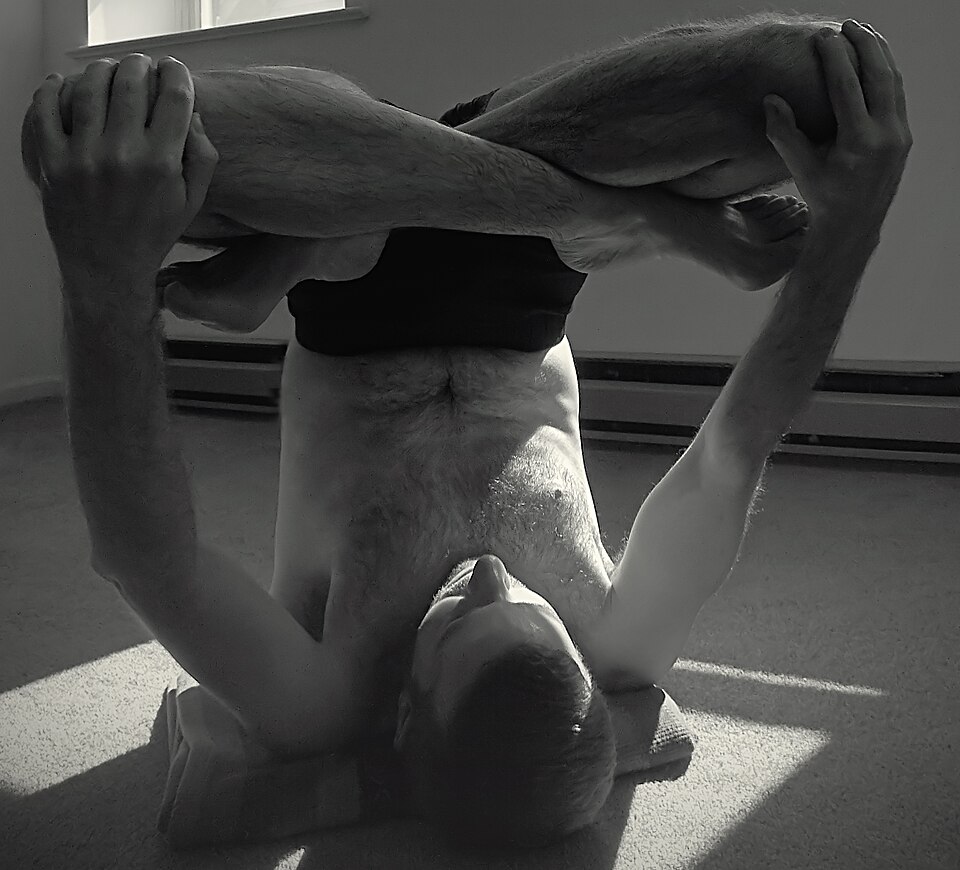
Urdhva Padmasana — Upward Lotus (in Shoulderstand) — is an advanced pose where, balanced in Shoulderstand, the legs fold into Lotus and the hands support the knees. It combines the calm of an inversion with the symmetry of Lotus, and needs both an open Lotus and a safe, strong Shoulderstand.
Name meaning: From ūrdhva meaning "upward", padma meaning "lotus", and āsana — the "upward lotus posture": the legs folded into Lotus while balanced in Shoulderstand, the Lotus lifted skyward.
Classification: Asana — an advanced inversion (Lotus balanced in Shoulderstand).
Tradition & origin: Upward Lotus in Shoulderstand is modern: it combines Lotus (ancient) with the modern Shoulderstand cycle (Sarvangasana as a held pose is 20th-century). As this combined balance it belongs to modern postural yoga.
This guide was drafted with the help of AI and reviewed by us. It is for general education only and is not medical or professional advice. It may contain errors. Please practise mindfully, listen to your body, and consult a qualified yoga teacher or doctor for anything specific. Spotted an error? Tell us in the comments below.
How to do it — step by step
- 1Establish a steady Salamba Sarvangasana (Shoulderstand), shoulders on a blanket.
- 2Keeping the balance, fold one foot then the other into Lotus (Padmasana) in the air.
- 3Once the legs are crossed in Lotus, bring the hands to support the knees.
- 4Press the knees up as the hands support, opening the hips.
- 5Keep the neck long and still — never turn the head.
- 6Breathe slowly and evenly.
- 7Unfold the Lotus and lower through Shoulderstand with control.
Breath & hold
Breathe slowly; hold 20–40 seconds once steady. Never strain the neck.
Benefits
- ✓Calming inversion with the symmetry of Lotus.
- ✓Opens the hips within the inversion.
- ✓Strengthens the core and improves balance.
- ✓Deepens focus and steadiness.
🪔 The traditional / desi way
- The lotus lifted skyward — the meditative seat turned upward within the "queen of asanas".
- Traditional wisdom: needs an easy Lotus AND a safe Shoulderstand; protect the neck throughout, on a folded blanket.
Common mistakes
- ✕Forcing Lotus with tight hips (knee strain) while inverted.
- ✕Turning the head.
- ✕Losing the Shoulderstand base and collapsing.
Modifications & props
- 🧩Stay in Shoulderstand; skip the Lotus if the hips/knees are not ready.
- 🧩Practise Lotus separately on the ground first.
Muscles & anatomy
- 💪The shoulders, upper back and core stabilise the inversion.
- 💪The hips and knees fold into Lotus (open hips essential).
- 💪The hands support the knees; the weight stays on the shoulders, not the neck.
What you may feel
- 🫧Normal: a steady, lifted inversion with the Lotus resting and the shoulders bearing the weight.
- 🫧Warning sign: any neck pressure, or knee strain in Lotus — come out; never load the neck or force the knees.
Variations to grow into
Stay in Shoulderstand and skip the Lotus if the hips/knees are not ready.
Lower the folded Lotus toward the face (Pindasana in Shoulderstand) — for the very open, with great neck care.
Using props
- 🧱A folded blanket under the shoulders to protect the neck.
- 🧱Practise Lotus separately on the ground first.
Warm-up & counterpose
- Deep hip openers for Lotus and a comfortable Shoulderstand.
- Release the Lotus, lower down, and rest; a gentle Fish or reclined rest.
Supporting exercises
Why: The essential, safe inversion base.
How: Hold a steady, well-aligned Shoulderstand with a blanket under the shoulders.
Why: Must be comfortable before folding it in the air.
How: Fold into Lotus only with open hips, never forcing the knees.
Progression path
Establish a safe Shoulderstand and an easy seated Lotus; only then fold into Lotus while inverted, keeping the weight on the shoulders and never turning the head.
Who it suits — and who should modify
- ✓Advanced practitioners with an easy seated Lotus and a steady, safe Shoulderstand.
- ✓Those with open hips and knees and a healthy neck.
- ✓People confident folding into Lotus while inverted.
- !Neck/cervical injury, high blood pressure, glaucoma, pregnancy or menstruation — avoid (traditional inversion guidance).
- !Knee issues — never force Lotus, especially in the air; skip.
- !Anyone without a safe Shoulderstand and easy seated Lotus — not yet.
When to practise
Within a Shoulderstand sequence, late in a practice, well warmed.
Occasionally, for experienced practitioners with the requisite openness.
Traditional view vs. modern evidence
The upward lotus; the symmetry of Lotus lifted in a calm inversion.
Lotus is ancient; this combined Shoulderstand balance is modern.
An advanced inversion combining Lotus with Shoulderstand.
Detox/anti-ageing claims are not established.
Evidence at a glance
The pose builds shoulder/core stability and balance (given open hips and a safe Shoulderstand).
Consistent with the biomechanics of the inversion.
It detoxifies or reverses ageing.
Popular inversion claims without solid supporting evidence.
Myths vs. reality
✕ Myth: You can force Lotus in the air with enough effort.
✓ Reality: Folding Lotus inverted is harder than on the ground; forcing the knees risks injury — the hips must open first.
✕ Myth: Inversions detoxify or reverse ageing.
✓ Reality: Being inverted can feel refreshing, but such claims are not established.
⚠️ Cautions
- AVOID with neck injury, high blood pressure, glaucoma, or knee issues (the Lotus). Advanced; learn with a teacher and a blanket under the shoulders.
Frequently asked questions
Do I need an easy Lotus first?
Yes — folding into Lotus in the air is harder than on the ground. Make sure seated Lotus is comfortable and your Shoulderstand is steady before combining them.
Is it safe for my neck?
Only with a safe Shoulderstand foundation, a blanket under the shoulders, and no head-turning. Skip it with any neck issue.
Key takeaways
- ⭐An advanced inversion — Lotus folded and lifted in Shoulderstand.
- ⭐Needs an easy seated Lotus and a safe Shoulderstand first; never force the knees.
- ⭐Keep the weight on the shoulders (blanket underneath); skip with any neck issue.
- ⭐A modern combined pose (Lotus is ancient).
References
- Wikipedia — Sarvangasana / Padmasana (Urdhva Padmasana in Shoulderstand) · Encyclopaedia, scholarly-sourced
- NCCIH — Yoga: What You Need To Know · Government health body (public domain)
Sources are provided for further reading; always consult a qualified teacher or clinician for personal guidance.
📝 Your private notes
Saved only on this device — jot down what helped.
💬 Improvements, corrections & suggestions
Found an error or have a better cue? Share it — practitioners help make each guide more accurate.
No comments yet — be the first to help improve this guide.