DAILY YOGA · Ustrasana
Camel Pose
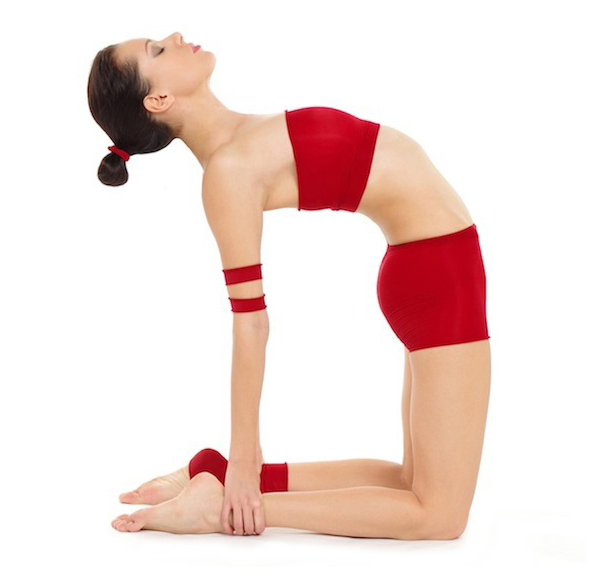
Ustrasana — Camel Pose — is a kneeling backbend that opens the whole front of the body: chest, belly and hip flexors. It is energising and heart-opening, and a wonderful antidote to hours of hunching forward. Approach it with length first, then depth.
Name meaning: From uṣṭra meaning "camel" and āsana meaning "posture" — the "camel posture", named for the arched shape echoing a camel's humped back.
Classification: Asana — a kneeling backbend and chest-opener.
Tradition & origin: The kneeling backbend as practised today is a modern pose: it is described in the 20th century by Krishnamacharya's pupils — Pattabhi Jois in Ashtanga yoga and B. K. S. Iyengar in his 1966 Light on Yoga. (A different, standing pose was called Ushtrasana in the 19th-century Sritattvanidhi.) Present it as a modern backbend rather than a medieval asana.
This guide was drafted with the help of AI and reviewed by us. It is for general education only and is not medical or professional advice. It may contain errors. Please practise mindfully, listen to your body, and consult a qualified yoga teacher or doctor for anything specific. Spotted an error? Tell us in the comments below.
How to do it — step by step
- 1Kneel with the shins hip-width, tops of the feet down (or toes tucked for more height).
- 2Place the hands on the lower back, fingers pointing down.
- 3Lift the chest and lengthen the spine upward first.
- 4Press the hips forward over the knees as you begin to arch back.
- 5Keep the neck long; reach the hands toward the heels if available.
- 6Let the head follow last, only if the neck stays comfortable.
- 7To exit, lead with the chest lifting, hands back to the lower back.
Breath & hold
Breathe steadily; hold 20–30 seconds. Lift on the inhale, deepen gently on the exhale. Come out slowly.
Benefits
- ✓Opens the chest, shoulders, abdomen and hip flexors.
- ✓Strengthens the back muscles.
- ✓Counteracts slouching and desk posture.
- ✓Energising and often mood-lifting.
🪔 The traditional / desi way
- Named for the camel (ustra) — the arched shape echoes the animal's humped back.
- Traditionally a "heart-opener": teachers cue offering the heart upward, meeting the backbend with an open, unguarded attitude.
Common mistakes
- ✕Dropping the head back and crunching the neck first.
- ✕Leading with the hips collapsing back instead of pressing forward.
- ✕Squeezing the buttocks hard and jamming the lower back.
Modifications & props
- 🧩Keep the hands on the lower back and don't reach for the heels.
- 🧩Tuck the toes to raise the heels closer to the hands.
- 🧩Place blocks beside the ankles to rest the hands on.
Muscles & anatomy
- 💪Working: the spinal extensors, and the glutes and hamstrings help hold the hips forward.
- 💪Stretched: the hip flexors, abdominals, chest and front of the shoulders and throat.
- 💪The quadriceps lengthen as the hips press forward over the knees.
What you may feel
- 🫧Normal: a strong opening across the front body and effort in the back.
- 🫧Warning sign: neck pinching or lower-back compression — lift the chest more, keep the neck long, and lift the hips over the knees.
Variations to grow into
Reach both hands to the heels with the hips pressing forward, keeping the chest lifting and the neck long.
Deepen toward Laghu Vajrasana or Kapotasana territory — deep kneeling backbends for very open, well-prepared spines, best with a teacher.
Using props
- 🧱Blocks beside the ankles to rest the hands on so you need not reach the heels.
- 🧱Toes tucked to raise the heels closer to the hands.
Warm-up & counterpose
- Cat–Cow and a few low Cobra lifts.
- Hip-flexor and quad stretches.
- Child's Pose (Balasana) to release the lower back after the backbend.
- A gentle seated forward fold to neutralise the spine.
Supporting exercises
Why: Builds gentle back extension before the deeper kneeling arch.
How: Hold a low backbend for 20–30 seconds, leading with the chest.
Why: Opens the front hips that Camel demands.
How: From a kneeling lunge, ease the hips forward; 20–30 seconds each side.
Progression path
Start with hands on the lower back and the neck neutral; progress to reaching one heel, then both, keeping the chest lifting. Add depth only as the back stays comfortable.
Who it suits — and who should modify
- ✓Intermediate practitioners ready for a moderate backbend.
- ✓Beginners, in the hands-on-lower-back version with the neck neutral.
- ✓Desk workers wanting to open a rounded chest and shoulders.
- !Modify: neck injury — keep the neck neutral (gaze forward/up), never drop the head back.
- !Modify: lower-back injury — keep it shallow, hips over knees, and avoid over-squeezing the glutes.
- !Relative caution: high or low blood pressure, or migraine — take a gentle version and come out slowly to avoid dizziness.
When to practise
Any time once warm; a good mid-practice heart-opener. Avoid straining on a full stomach.
Safe most days; a couple of moderate holds is enough.
Traditional view vs. modern evidence
Taught as a "heart-opener" — offering the chest upward with an open, unguarded attitude.
The modern kneeling form is 20th-century (Jois, Iyengar); a different standing pose bore the name in the 19th-century Sritattvanidhi.
Valued for chest and hip-flexor opening and back strengthening.
Emotional or chakra-specific "healing" claims are not established.
Evidence at a glance
Camel opens the chest and hip flexors and strengthens the back.
Consistent with the biomechanics of a kneeling backbend.
It counters the effects of prolonged forward-hunched sitting.
Plausible and widely taught; direct pose-specific evidence is limited.
Myths vs. reality
✕ Myth: You must drop your head all the way back.
✓ Reality: Letting the head hang back can strain the neck; a long neck with a forward or upward gaze is safer and just as valid.
✕ Myth: Camel opens the heart chakra to heal emotion.
✓ Reality: Backbends can feel energising and uplifting, but specific chakra-healing claims are traditional, not established fact.
⚠️ Cautions
- Neck or lower-back injury, high or low blood pressure, migraine — practise a shallow version with hands on the lower back and the neck neutral. Come out slowly to avoid dizziness.
Frequently asked questions
Do I have to drop my head back?
No. Keeping the neck long and the gaze forward or up is safer, especially for beginners. Let the head release only if it feels comfortable.
I feel dizzy afterwards — why?
Backbends can affect blood pressure. Come out slowly, then rest in Child's Pose for a few breaths before standing.
Key takeaways
- ⭐A kneeling backbend that opens the chest, belly and hip flexors.
- ⭐Lift the chest and keep the neck long — never crunch the head back.
- ⭐A modern pose (20th century), though a different standing pose once shared the name.
- ⭐Come out slowly and rest in Child's Pose; ease off with neck, back or blood-pressure issues.
References
- Wikipedia — Ustrasana (etymology & origins) · Encyclopaedia, scholarly-sourced
- NCCIH — Yoga: What You Need To Know · Government health body (public domain)
Sources are provided for further reading; always consult a qualified teacher or clinician for personal guidance.
📝 Your private notes
Saved only on this device — jot down what helped.
💬 Improvements, corrections & suggestions
Found an error or have a better cue? Share it — practitioners help make each guide more accurate.
No comments yet — be the first to help improve this guide.