DAILY YOGA · Utkata Konasana
Goddess Pose
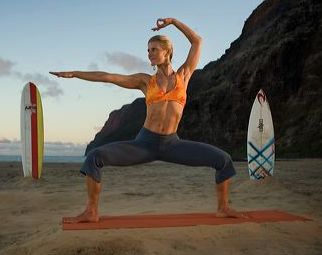
Utkata Konasana — Goddess Pose — is a powerful wide-legged squat that strengthens the legs and opens the hips, radiating a grounded, empowered feeling. Feet turned out and knees bending wide, it builds heat and stability low to the earth.
Name meaning: From utkaṭa meaning "fierce/powerful", koṇa meaning "angle", and āsana — the "fierce-angle posture", a wide, powerful squat. The English name "Goddess Pose" reflects its strong, empowered feeling.
Classification: Asana — a standing wide-legged squat (a variation of Utkatasana).
Tradition & origin: Goddess Pose is a modern variation of Utkatasana. While the name Utkatasana is old (a low squat appears in the 19th-century Sritattvanidhi), this specific wide-legged, turned-out "Goddess" squat belongs to modern postural yoga. Present it as modern.
This guide was drafted with the help of AI and reviewed by us. It is for general education only and is not medical or professional advice. It may contain errors. Please practise mindfully, listen to your body, and consult a qualified yoga teacher or doctor for anything specific. Spotted an error? Tell us in the comments below.
How to do it — step by step
- 1Step the feet wide apart and turn the toes out about 45°.
- 2Bend the knees deeply, tracking them over the toes.
- 3Sink the hips toward knee height, keeping the torso upright.
- 4Lengthen the tailbone down and lift the chest.
- 5Bend the elbows to 90° (cactus arms) or bring palms together.
- 6Draw the shoulders down and breathe steadily.
- 7Press through the feet to rise.
Breath & hold
Breathe steadily through the effort; hold 20–40 seconds. Inhale to lengthen, exhale to sink.
Benefits
- ✓Strengthens the thighs, glutes, calves and core.
- ✓Opens the hips and inner thighs.
- ✓Builds heat, stamina and a sense of power.
- ✓Improves lower-body stability.
🪔 The traditional / desi way
- The "fierce goddess" squat — a low, rooted stance evoking Shakti, the powerful feminine energy.
- Traditional cue: knees track over the toes, tailbone lengthens down — strong and wide, grounded like a mountain with an open base.
Common mistakes
- ✕Letting the knees collapse inward.
- ✕Tipping the torso forward instead of staying upright.
- ✕Over-arching the lower back with flared ribs.
Modifications & props
- 🧩Squat less deeply and build over time.
- 🧩Rest the hands on the thighs.
Muscles & anatomy
- 💪Strengthens the quadriceps, glutes and inner thighs (adductors) and the deep core.
- 💪Opens the hips and groins with the thighs turned out.
- 💪The upper back and shoulders work if the arms are raised.
What you may feel
- 🫧Normal: a strong working heat in the thighs and glutes and an opening across the hips.
- 🫧Warning sign: knee pain or the knees caving inward — press them open over the toes and squat less deeply.
Variations to grow into
Add arm variations (cactus arms, or prayer at the chest) and sink toward thighs-parallel for more strength.
Pulse or hold longer, or add a heel-lift onto the balls of the feet for a balance and calf challenge.
Using props
- 🧱A wall behind you for support and to check alignment.
- 🧱A block between the hands for the arms, or hands on hips.
Warm-up & counterpose
- Gentle squats, hip circles and lunges to warm the legs and hips.
- Stand tall and shake out the legs; a gentle forward fold.
Supporting exercises
Why: Builds the same leg strength with the feet together.
How: Sit the hips back with the knees bent and arms raised.
Why: Strengthens the legs and grooves knee-over-toe tracking.
How: Squat and rise with the knees tracking over the toes; 10–15 reps.
Progression path
Start with a higher, narrower squat and hands on the hips; over time widen the stance, deepen toward thighs-parallel and add arm and pulsing variations.
Who it suits — and who should modify
- ✓Most practitioners — a strong but accessible standing squat.
- ✓Those wanting to build leg and glute strength and open the hips.
- ✓Anyone seeking a grounding, empowering standing pose.
- !Knee injury — keep the squat shallow and the knees tracking over the toes, never caving in.
- !Hip or groin issues — narrow the stance and squat less deeply.
- !Balance difficulty — stand near a wall or chair for support.
When to practise
In the standing/strengthening part of a practice, once warm.
A few times a week; hold 20–45 seconds, or pulse for strength.
Traditional view vs. modern evidence
A fierce, grounded squat; a strong, empowered standing shape.
A modern variation of Utkatasana (whose name is old); not itself in the medieval texts.
Valued as a leg- and glute-strengthening hip-opener.
Hormonal and "feminine energy" claims are not established.
Evidence at a glance
The pose strengthens the legs and glutes and opens the hips.
Consistent with exercise science for sustained wide-squat holds.
It balances hormones or awakens feminine energy.
A symbolic claim without solid supporting evidence.
Myths vs. reality
✕ Myth: Deeper is always better.
✓ Reality: Depth is only useful while the torso stays upright and the knees track over the toes; going too low can strain the knees.
✕ Myth: Goddess Pose is an ancient sacred asana.
✓ Reality: It is a modern variation of Utkatasana; the empowering "goddess" framing is contemporary.
⚠️ Cautions
- Knee or hip injury — reduce the depth of the squat.
Frequently asked questions
My knees cave in — how do I fix that?
Actively press the knees open toward the little toes and keep the feet firmly grounded, especially the outer edges.
How low should I go?
Ideally toward thighs-parallel, but only as far as you can keep the torso upright and knees tracking over the toes.
Key takeaways
- ⭐A strong wide-legged squat that builds leg and glute strength and opens the hips.
- ⭐Press the knees open over the toes; never let them cave in.
- ⭐Squat only as low as the torso stays upright.
- ⭐A modern variation of Utkatasana.
References
- Wikipedia — Utkatasana (Utkata Konasana / Goddess Pose variation) · Encyclopaedia, scholarly-sourced
- NCCIH — Yoga: What You Need To Know · Government health body (public domain)
Sources are provided for further reading; always consult a qualified teacher or clinician for personal guidance.
📝 Your private notes
Saved only on this device — jot down what helped.
💬 Improvements, corrections & suggestions
Found an error or have a better cue? Share it — practitioners help make each guide more accurate.
No comments yet — be the first to help improve this guide.