DAILY YOGA · Utthita Parsvakonasana
Extended Side Angle
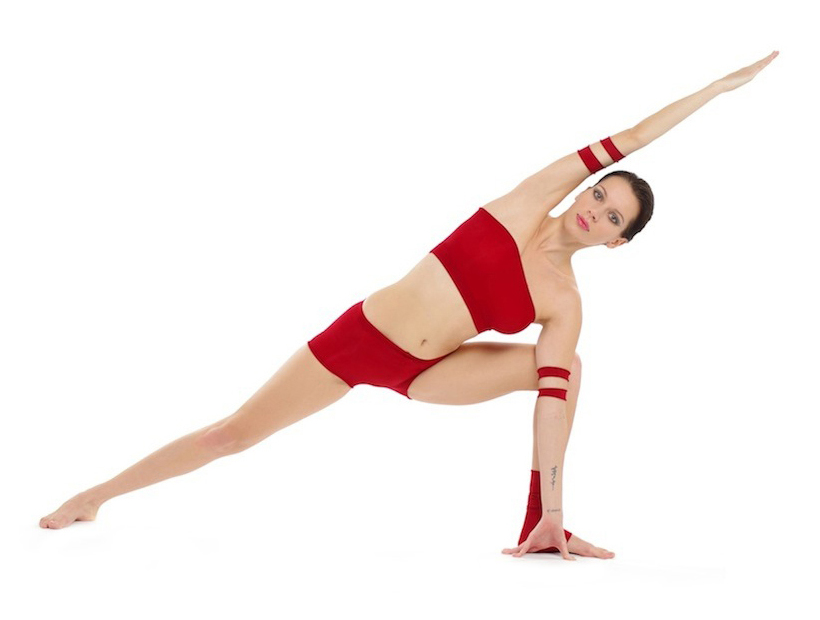
Utthita Parsvakonasana — Extended Side Angle — is a powerful standing pose that creates one long line of energy from the back heel to the top fingertips, while deeply stretching the side body and strengthening the legs.
Name meaning: From utthita meaning "extended", pārśva meaning "side" or "flank", koṇa meaning "angle", and āsana meaning "posture" — the "extended side-angle posture", one long line from the back heel to the top hand.
Classification: Asana — a wide-stance standing pose combining a lunge with a deep side-stretch.
Tradition & origin: Like Triangle and the Warriors, Extended Side Angle is part of the modern standing-pose repertoire developed in the 20th century (it appears in Iyengar's Light on Yoga and related teaching) rather than the medieval hatha texts. Present it as modern postural yoga.
This guide was drafted with the help of AI and reviewed by us. It is for general education only and is not medical or professional advice. It may contain errors. Please practise mindfully, listen to your body, and consult a qualified yoga teacher or doctor for anything specific. Spotted an error? Tell us in the comments below.
How to do it — step by step
- 1From Warrior II, keep the front knee bent over the ankle.
- 2Lower the front forearm onto the front thigh, or the hand to the floor/block inside or outside the foot.
- 3Extend the top arm over the ear, palm facing down.
- 4Turn the chest open toward the ceiling.
- 5Create one straight line from the back heel to the top hand.
- 6Press the back foot firmly and keep the back leg strong.
- 7Gaze up under the top arm; then rise with control.
Breath & hold
Breathe steadily; hold 30–45 seconds each side. Extend on the inhale, root on the exhale.
Benefits
- ✓Strengthens the legs, knees and ankles.
- ✓Stretches the side body, waist and groin.
- ✓Opens the chest and shoulders.
- ✓Builds stamina and stability.
🪔 The traditional / desi way
- Parsva = side, kona = angle — the pose carves a long diagonal, teaching the body to lengthen rather than crunch.
- Traditional cue: reach out of the crown of the head through the top hand, as if slipping through a narrow gap between two panes of glass.
Common mistakes
- ✕Collapsing the chest toward the floor instead of turning it open.
- ✕Dumping weight onto the front thigh/hand.
- ✕Letting the back foot lift or the back leg go soft.
Modifications & props
- 🧩Rest the forearm on the thigh instead of the hand on the floor.
- 🧩Use a block under the lower hand.
Muscles & anatomy
- 💪Working: the front-leg quadriceps and glutes, and the back leg and its foot arch, hold the strong lunge.
- 💪Stretched: the entire top side body — the waist (obliques), ribs, and the top-arm side — plus the inner thighs.
- 💪The core stabilises the long line and keeps the chest open.
What you may feel
- 🫧Normal: strong front-leg effort and a long stretch up the whole top side of the body.
- 🫧Warning sign: front-knee strain or neck pinching — reduce the bend, track the knee over the ankle, and lower the gaze.
Variations to grow into
Take the lower hand to the floor (or a block) outside the front foot and reach the top arm over the ear for a longer line.
Bind the arms (Baddha Parsvakonasana), reaching one hand under the thigh to clasp the other behind the back — with open shoulders and hips.
Using props
- 🧱A block under the lower hand so the chest stays open and the line long.
- 🧱Forearm resting on the front thigh as an easier, stable option.
Warm-up & counterpose
- Warrior II and gentle lunges.
- Side-body and hip openers.
- A forward fold or Mountain Pose to re-centre.
- A gentle standing twist.
Supporting exercises
Why: Builds the leg strength the lunge needs.
How: Hold Warrior II for 20–40 seconds each side.
Why: Opens the obliques and ribs the pose lengthens.
How: Reach one arm overhead and lean gently to the side; 20–30 seconds each side.
Progression path
Begin with the forearm on the thigh and a modest bend; progress to the hand on a block, then the floor, reaching the top arm over the ear for a full line.
Who it suits — and who should modify
- ✓Beginners, resting the forearm on the thigh and using a block.
- ✓Most intermediate practitioners building leg strength and side-body length.
- ✓Those wanting to open the hips, chest and waist.
- !Modify: neck issues — gaze forward or down instead of up at the top arm.
- !Modify: knee injury — reduce the front-knee bend and keep it over the ankle.
- !Relative caution: low blood pressure — rise slowly.
When to practise
Any time once warm; a staple of the standing sequence.
Safe regularly; a hold per side is enough.
Traditional view vs. modern evidence
Taught in the modern schools as a strong, opening standing pose with one long side line.
Not in the medieval hatha texts; part of the 20th-century standing-pose repertoire.
Valued for leg strength and a deep side-body, hip and inner-thigh stretch.
No specific medical claims beyond strength and stretch are established.
Evidence at a glance
The pose builds leg strength and stretches the side body, hips and inner thighs.
Consistent with the biomechanics of a wide-stance lunge with a side-stretch.
As part of yoga, it supports flexibility and fitness.
Per NCCIH summaries of yoga overall.
Myths vs. reality
✕ Myth: The lower hand must reach the floor.
✓ Reality: A collapsed reach to the floor is worse than a long line with the forearm on the thigh or a block.
✕ Myth: It is an ancient posture.
✓ Reality: It is part of the modern standing-pose set (20th century), not a medieval asana.
⚠️ Cautions
- Neck issues — gaze forward or down instead of up. Knee injury — reduce the front-knee bend.
Frequently asked questions
Hand on the floor or forearm on the thigh?
Whichever lets you keep the chest open and the line long. Forearm-on-thigh or a block is often better than a collapsed reach to the floor.
Where should I feel the stretch?
Along the entire top side body, from the back heel through the waist to the top hand.
Key takeaways
- ⭐A strong standing pose with one long line from the back heel to the top hand.
- ⭐Keep the chest open and the line long — forearm-on-thigh or a block beats a collapsed reach.
- ⭐A modern standing pose, not a classical asana.
- ⭐Lower the gaze for the neck and track the front knee over the ankle.
References
- Wikipedia — Utthita Parsvakonasana (modern standing pose) · Encyclopaedia, scholarly-sourced
- NCCIH — Yoga: What You Need To Know · Government health body (public domain)
Sources are provided for further reading; always consult a qualified teacher or clinician for personal guidance.
📝 Your private notes
Saved only on this device — jot down what helped.
💬 Improvements, corrections & suggestions
Found an error or have a better cue? Share it — practitioners help make each guide more accurate.
No comments yet — be the first to help improve this guide.