DAILY YOGA · Vajrasana
Thunderbolt (Diamond)
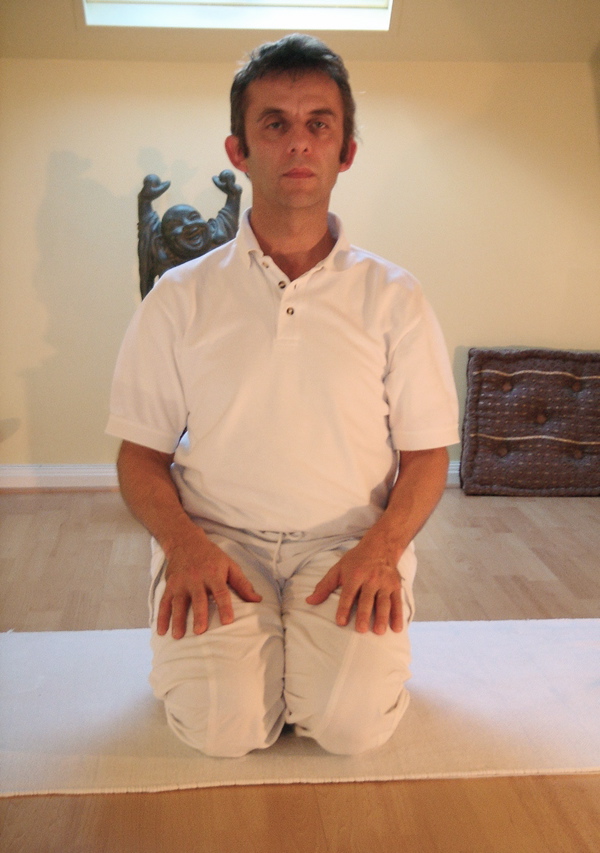
Vajrasana — Thunderbolt or Diamond Pose — is a simple kneeling seat and one of the few yoga postures traditionally recommended after eating. It creates a tall, stable spine and is a favourite for breathing practices and quiet sitting.
Name meaning: From vajra — a weapon whose name means "thunderbolt" or "diamond" — and āsana meaning "posture" — the "thunderbolt" or "diamond posture", a firm kneeling seat.
Classification: Asana — a kneeling meditation seat (sitting back on the heels).
Tradition & origin: The name Vajrasana is old but its meaning has shifted: the 15th-century Hatha Yoga Pradipika used it as a synonym for Siddhasana (a cross-legged seat), and the 17th-century Gheranda Samhita (2.12) describes something closer to Virasana. In other texts it means the modern kneeling-down seat with the buttocks on the heels. So the name is medieval; this particular kneeling form is one of several the name has denoted.
This guide was drafted with the help of AI and reviewed by us. It is for general education only and is not medical or professional advice. It may contain errors. Please practise mindfully, listen to your body, and consult a qualified yoga teacher or doctor for anything specific. Spotted an error? Tell us in the comments below.
How to do it — step by step
- 1Kneel on the mat with the knees together and shins flat.
- 2Bring the big toes to touch and let the heels fall slightly apart.
- 3Sit back onto the heels, spine tall.
- 4Rest the hands on the thighs, palms down.
- 5Relax the shoulders and soften the face.
- 6Breathe slowly and settle.
Breath & hold
Breathe naturally. Sit for a few minutes to as long as is comfortable.
Benefits
- ✓Creates a stable, upright seat for breathing and meditation.
- ✓One of the few poses safe to sit in after a meal (may aid digestion).
- ✓Gently stretches the ankles, knees and thighs.
- ✓Calming and grounding.
🪔 The traditional / desi way
- Vajra means thunderbolt/diamond — firm and unbreakable. Traditionally sat in for a few minutes after meals to support digestion.
- A common seat for prayer and pranayama across India; its stability makes long sitting easier for many than cross-legged seats.
Common mistakes
- ✕Slumping the spine after a while.
- ✕Forcing tight ankles or knees to fold flat.
Modifications & props
- 🧩Sit on a cushion or block placed between the heels.
- 🧩Roll a small towel under the ankles if they feel strained.
Muscles & anatomy
- 💪The ankles, knees and thighs fold to sit back on the heels; the postural back muscles hold the spine tall.
- 💪It is a low-effort seat once settled — comfort and an upright spine are the aim.
- 💪Prolonged pressure can compress the nerves of the lower leg (see cautions).
What you may feel
- 🫧Normal: a grounded, upright ease; mild tingling in the feet at first as circulation adjusts.
- 🫧Warning sign: persistent numbness, or foot/ankle pain — come out and shake the legs; do not sit through numbness.
Variations to grow into
Use it as the base for gentle breathing practices (e.g. Kapalbhati or Nadi Shodhana) with a tall, easy spine.
Supta Vajrasana (reclining) or Laghu Vajrasana are advanced kneeling backbends — quite different, demanding poses for open, strong knees and thighs, best with a teacher.
Using props
- 🧱A cushion or block between the heels to reduce knee and ankle strain.
- 🧱A rolled towel under the ankles for comfort.
Warm-up & counterpose
- Gentle ankle and knee mobility before kneeling.
- Extend the legs and shake them out; a gentle seated forward fold releases the knees.
Supporting exercises
Why: Eases the ankles and thighs into the kneeling fold.
How: Gently stretch the front of the ankles and the quadriceps before sitting.
Why: Lets the knees and circulation adapt gradually.
How: Sit for 30–60 seconds at first, building up over time.
Progression path
Begin with a cushion between the heels for short spells, reducing the lift and extending the time as the knees and ankles adapt — always stopping before numbness sets in.
Who it suits — and who should modify
- ✓Most people, as a simple, stable seat for breathing and meditation.
- ✓Anyone wanting a posture that can be used gently after meals.
- ✓Beginners learning an upright seated alternative to cross-legged sitting.
- !Modify / avoid: knee injury — sit on a cushion between the heels, or avoid; deep kneeling can strain the knees.
- !Relative caution: ankle pain — pad the ankles with a rolled towel.
- !Do not stay long enough to lose sensation in the feet/legs (see nerve caution below).
When to practise
Any time; uniquely, it is one of the few seats traditionally used gently after meals to support digestion.
Safe daily in comfortable spells; take breaks rather than holding until the legs go numb.
Traditional view vs. modern evidence
A firm "thunderbolt/diamond" seat; uniquely allowed gently after meals and used for breathing practice.
A medieval name whose meaning varied (Hatha Yoga Pradipika, Gheranda Samhita 2.12); this kneeling form is one of several.
Valued as an accessible upright seat; flagged for a real nerve-compression risk if held too long.
Specific digestive-cure claims are not established.
Evidence at a glance
Prolonged Vajrasana can compress the common fibular (peroneal) nerve and cause temporary "foot drop".
Documented as "yoga foot drop" (Chusid, JAMA 1971); avoid holding until the legs go numb.
A stable kneeling seat supports steady breathing and meditation.
Consistent with the value of a stable base for sitting practice.
It directly cures indigestion.
A traditional after-meal use; may feel settling but is not a medical cure.
Myths vs. reality
✕ Myth: Vajrasana after every meal cures all digestive problems.
✓ Reality: It is a comfortable seat traditionally used after eating and may feel settling, but it is not a cure for digestive disease.
✕ Myth: The longer you kneel, the better.
✓ Reality: Prolonged kneeling can compress leg nerves ("yoga foot drop"); take breaks and never sit through numbness.
⚠️ Cautions
- Knee or ankle injury — place a cushion between the hips and heels, or under the ankles. Ease out if the knees complain.
Frequently asked questions
My feet go numb — is that normal?
Mild tingling is common at first as circulation adjusts. Sit on a cushion to reduce pressure and come out if it becomes uncomfortable.
Can I really sit in this after eating?
Yes — it is one of the few poses traditionally done after meals, thought to gently support digestion. Keep it easy, not deep.
Key takeaways
- ⭐A firm kneeling seat — one of the few used gently after meals.
- ⭐Sit on a cushion between the heels to protect the knees and ankles.
- ⭐A medieval name whose meaning has shifted over the centuries.
- ⭐Do not sit through numbness — prolonged kneeling can cause temporary "foot drop".
References
- Wikipedia — Vajrasana (yoga) (etymology, origins & contraindications) · Encyclopaedia, scholarly-sourced
- Chusid 1971, "Yoga Foot Drop", JAMA · Peer-reviewed medical journal
Sources are provided for further reading; always consult a qualified teacher or clinician for personal guidance.
📝 Your private notes
Saved only on this device — jot down what helped.
💬 Improvements, corrections & suggestions
Found an error or have a better cue? Share it — practitioners help make each guide more accurate.
No comments yet — be the first to help improve this guide.