DAILY YOGA · Vasisthasana
Side Plank
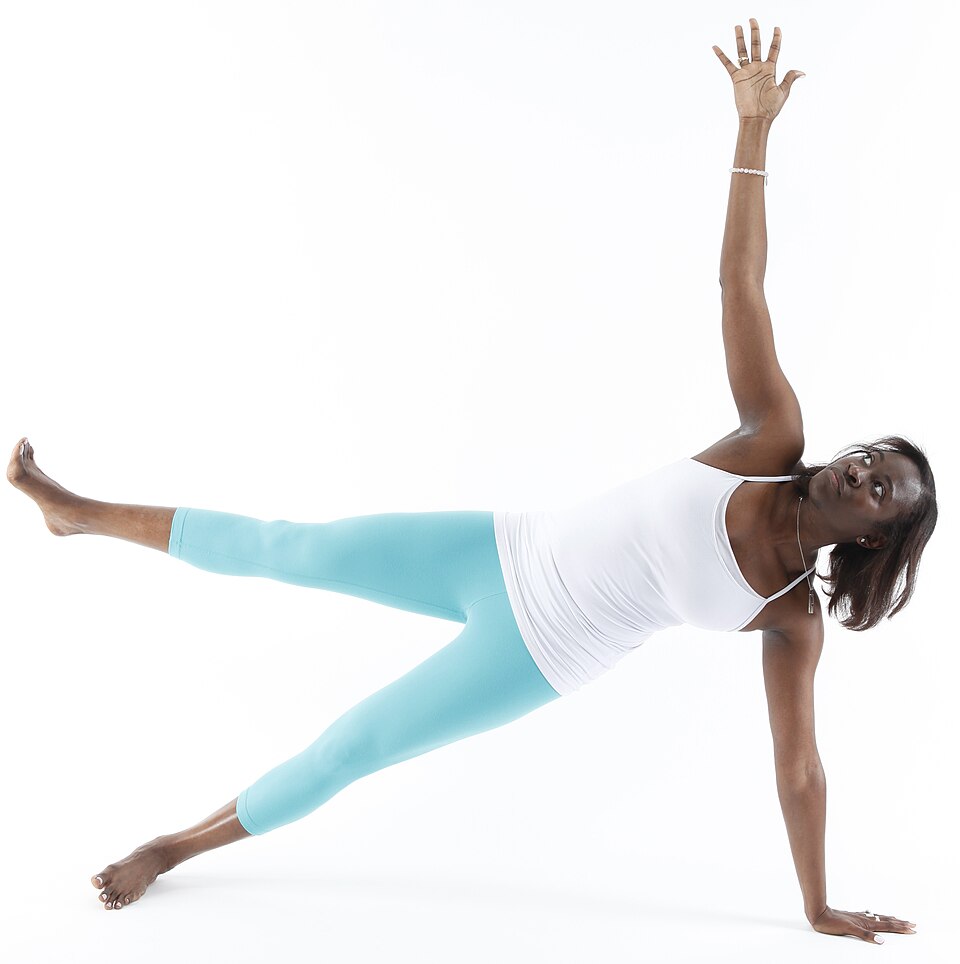
Vasisthasana — Side Plank — is a balancing arm-support pose that strengthens the wrists, arms, core and legs, all along one side of the body. Named after the sage Vasistha, it teaches steady, whole-body integration on a single hand.
Name meaning: From Vasiṣṭha, a revered Vedic sage, and āsana meaning "posture" — "Vasishtha's posture", commonly called Side Plank in English (the fuller name is Utthita Vasisthasana, "extended").
Classification: Asana — a side-balancing arm and core strengthener.
Tradition & origin: Side Plank is a modern pose: it is not described in the medieval hatha texts and appears in the 20th century in the Ashtanga (vinyasa) yoga of Pattabhi Jois. It carries a sage's name but belongs to modern yoga as exercise.
This guide was drafted with the help of AI and reviewed by us. It is for general education only and is not medical or professional advice. It may contain errors. Please practise mindfully, listen to your body, and consult a qualified yoga teacher or doctor for anything specific. Spotted an error? Tell us in the comments below.
How to do it — step by step
- 1Begin in Plank, hands under shoulders.
- 2Shift onto the outer edge of the right foot and stack the left foot on top.
- 3Roll onto the right hand, stacking the shoulder over the wrist.
- 4Reach the left arm straight up, opening the chest to the side.
- 5Lift the hips so the body is one straight line.
- 6Engage the legs and core; gaze up, forward or down.
- 7Hold, then return to Plank and switch sides.
Breath & hold
Breathe steadily; hold 15–30 seconds each side. Do not hold the breath.
Benefits
- ✓Strengthens the wrists, arms, shoulders and core.
- ✓Tones the legs and improves balance.
- ✓Builds whole-body stability and focus.
- ✓Prepares the body for deeper arm balances.
🪔 The traditional / desi way
- Vasistha was one of the great rishis (seers) — the pose carries a sense of steady, upright dignity held on a single point.
- Traditional cue: press the floor away and lift the hips — the strength comes from the whole side, not just the arm.
Common mistakes
- ✕Letting the hips sag toward the floor.
- ✕Stacking the shoulder behind (not over) the wrist.
- ✕Collapsing into the supporting shoulder.
Modifications & props
- 🧩Lower the bottom knee to the floor for support.
- 🧩Rest on the forearm instead of the hand.
- 🧩Stagger the feet (top foot in front) for a wider base.
Muscles & anatomy
- 💪Working: the obliques and deep core, the bottom shoulder (deltoid, serratus, rotator cuff), and the wrist/forearm hold the line.
- 💪The glutes and legs keep the hips lifted and the body straight.
- 💪The top arm and gaze help open the chest.
What you may feel
- 🫧Normal: strong effort down the supporting side and through the core, with a lifted, open chest.
- 🫧Warning sign: wrist pain or the shoulder collapsing — move to the forearm, drop the bottom knee, and lift the hips.
Variations to grow into
Stack the feet (rather than staggering) and lift the top leg, or reach for the big toe (Vasisthasana B) for a bigger balance and flexibility challenge.
One-Legged Side Plank with the top leg raised high, or Wild Thing (Camatkarasana) transitions — for strong, stable shoulders.
Using props
- 🧱A forearm base to remove wrist load.
- 🧱The bottom knee down, or feet staggered, for a wider, easier base.
Warm-up & counterpose
- Plank and wrist mobility.
- A few gentle side-body stretches.
- Child's Pose or Downward Dog to release the wrists and shoulders.
- A gentle wrist counter-stretch.
Supporting exercises
Why: Builds the shoulder and core strength Side Plank needs.
How: Hold a straight-line plank for 20–40 seconds.
Why: Strengthens the obliques used to lift the hips.
How: On your side, lift the hips off the floor from the forearm 8–10 times each side.
Progression path
Begin with a forearm or knee-down side plank, then the full pose with staggered then stacked feet, adding the lifted leg or toe-hold as strength and balance grow.
Who it suits — and who should modify
- ✓Intermediate practitioners with healthy wrists building side strength.
- ✓Beginners, using the knee-down or forearm version.
- ✓Those wanting oblique, shoulder and hip stability.
- !Modify: wrist injury — rest on the forearm (elbow under shoulder).
- !Modify: shoulder injury — lower the bottom knee and keep the hold short.
- !Relative caution: late pregnancy — take a knee-down, staggered version or skip.
When to practise
Any time; a good strength element mid-practice.
Safe most days for healthy wrists; a hold or two per side.
Traditional view vs. modern evidence
Named for the sage Vasishtha; the modern teaching emphasis is steady strength and an open chest.
Not in the medieval hatha texts; a 20th-century Ashtanga pose.
Valued as a lateral core and shoulder strengthener and balance challenge.
Beyond strength and stability, specific medical claims are limited.
Evidence at a glance
Side Plank builds oblique, shoulder and hip strength and trunk stability.
Side-bridge/side-plank holds are well established in exercise science for lateral core strength.
Lateral core work may support spinal health.
General evidence supports core stability for back health, though not this pose specifically.
Myths vs. reality
✕ Myth: Side Plank is an ancient sage's pose.
✓ Reality: It carries the sage Vasishtha's name but is a 20th-century pose (Ashtanga/Pattabhi Jois), not a medieval asana.
✕ Myth: You must stack the feet perfectly to start.
✓ Reality: Staggering the feet or dropping the bottom knee is a valid, stable way to build the pose.
⚠️ Cautions
- Wrist, elbow or shoulder injury — use the forearm on the floor and/or the bottom knee down.
Frequently asked questions
My hips keep dropping — help?
Press the bottom hand and foot firmly down and actively lift the hips. Dropping the bottom knee makes it much easier while you build strength.
Wrist hurts — alternative?
Come onto the forearm (elbow under shoulder) instead of the hand.
Key takeaways
- ⭐A side balance that builds oblique, shoulder and hip strength.
- ⭐Press the bottom hand and foot down and lift the hips; forearm or knee-down to modify.
- ⭐A modern pose (Ashtanga/Pattabhi Jois) with a sage's name.
- ⭐Move to the forearm for wrist comfort.
References
- Wikipedia — Vasishthasana / Side Plank (etymology & origins) · Encyclopaedia, scholarly-sourced
- NCCIH — Yoga: What You Need To Know · Government health body (public domain)
Sources are provided for further reading; always consult a qualified teacher or clinician for personal guidance.
📝 Your private notes
Saved only on this device — jot down what helped.
💬 Improvements, corrections & suggestions
Found an error or have a better cue? Share it — practitioners help make each guide more accurate.
No comments yet — be the first to help improve this guide.