DAILY YOGA · Vrikshasana
Tree Pose
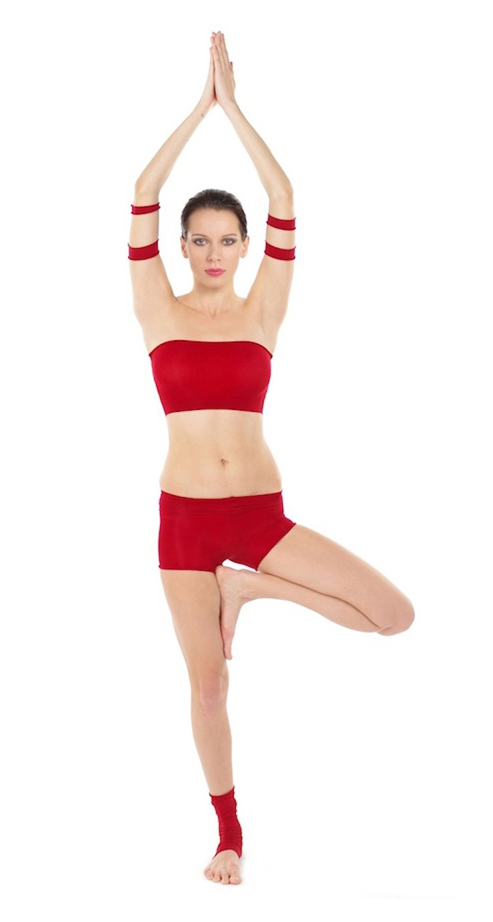
Vrikshasana — Tree Pose — is the best-loved balancing posture in yoga. Standing on one leg like a tree rooted in the earth, it builds steadiness, focus and quiet confidence.
Name meaning: From vṛkṣa meaning "tree" and āsana meaning "posture" — the "tree posture", rooted through one leg and reaching upward like branches.
Classification: Asana — a one-legged standing balance pose.
Tradition & origin: The standing one-legged balance as taught today belongs to modern yoga as exercise; the tree is a deeply resonant image in Indian thought, but this particular balancing posture is not a medieval hatha pose. Present it as a modern balance practice carrying an old symbol.
This guide was drafted with the help of AI and reviewed by us. It is for general education only and is not medical or professional advice. It may contain errors. Please practise mindfully, listen to your body, and consult a qualified yoga teacher or doctor for anything specific. Spotted an error? Tell us in the comments below.
How to do it — step by step
- 1Begin in Tadasana, weight even on both feet.
- 2Shift the weight onto one foot and root it firmly down.
- 3Bend the other knee and place the sole on the inner calf or inner thigh (never on the knee).
- 4Press foot and leg into each other to create stability.
- 5Bring the palms together at the heart, or reach the arms overhead like branches.
- 6Fix the gaze softly on one still point ahead (drishti).
- 7Breathe, then switch sides.
Breath & hold
Breathe smoothly and evenly. Hold for 20–40 seconds each side. A steady gaze steadies the breath and the balance.
Benefits
- ✓Improves balance and posture.
- ✓Strengthens the standing leg, ankle and foot.
- ✓Sharpens focus and concentration.
- ✓Builds a calm, steady mind.
🪔 The traditional / desi way
- The "vriksha" (tree) is sacred in Indian thought — rooted below, reaching to the sky, giving shade to all. Standing as a tree is a meditation on that generosity and steadiness.
- Traditional tip: a wobble is not failure — a real tree sways in the wind and stays rooted. Return to the breath and the gaze.
Common mistakes
- ✕Placing the foot directly on the knee joint — keep it above or below.
- ✕Collapsing into the standing hip; keep both hips level.
- ✕Holding the breath while concentrating.
Modifications & props
- 🧩Rest the toes on the floor with the heel on the ankle (kickstand).
- 🧩Practise beside a wall for support.
Muscles & anatomy
- 💪Working: the standing-leg ankle, calf, quadriceps and glute stabilise; the deep core keeps you upright.
- 💪Engaged: the lifted-leg hip presses outward against the foot to hold the shape.
- 💪Balance relies on constant small adjustments from the foot and ankle.
What you may feel
- 🫧Normal: active work in the standing foot and ankle, and a calm, focused steadiness.
- 🫧Normal: some sway — a real tree sways too; return to the breath and gaze.
- 🫧Warning sign: knee pain from foot placement, or dizziness — reposition the foot or come down.
Variations to grow into
Take the sole to the inner thigh and reach the arms overhead like branches, keeping the hips level.
Explore a slow gaze upward, or close the eyes briefly to challenge balance — only with a stable base and space to step out safely.
Using props
- 🧱A wall or chair at your side for support while learning.
- 🧱A "kickstand" (toes down, heel to ankle) as an easier foot position.
Warm-up & counterpose
- Ankle circles and gentle calf raises.
- A few rounds of Tadasana to feel even grounding.
- Return to Tadasana and feel both feet even before switching sides.
Supporting exercises
Why: Builds the basic balance the pose needs.
How: Stand on one leg near support for 20–30 seconds each side, progressing to hands-free.
Why: A stronger base steadies the whole pose.
How: Rise onto the balls of the feet and lower slowly, 10–12 times.
Progression path
Begin with a kickstand foot near a wall, progress to the inner calf, then the inner thigh, and finally add the arms overhead and a longer hold as balance improves.
Who it suits — and who should modify
- ✓Beginners (start with the toes on the floor, heel to ankle, near a wall).
- ✓Older adults working on balance, using support.
- ✓Anyone wanting steadier focus and stronger feet and ankles.
- !Modify: balance difficulties, low blood pressure or dizziness — stay near a wall and keep the arms low.
- !Relative caution: migraine or vertigo — avoid arms overhead and a raised gaze.
- !Never press the lifted foot against the side of the knee joint.
When to practise
Any time; balance is often steadiest when you are alert rather than tired.
Daily practice improves balance quickly; a couple of holds per side is enough.
Traditional view vs. modern evidence
The sacred tree — rooted below, reaching skyward, giving shade — is a meditation on steadiness and generosity.
The balancing posture as practised now is modern; the tree symbol itself is ancient.
Valued for training balance, proprioception and foot/ankle strength.
No specific medical claims beyond balance and lower-leg strength are established.
Evidence at a glance
Balance-focused practice like Tree Pose can improve balance and stability.
NCCIH notes yoga may help improve balance; single-leg standing work directly trains it.
It strengthens the feet, ankles and legs.
Consistent with the demands of sustained single-leg standing.
Myths vs. reality
✕ Myth: Wobbling means you are doing it wrong.
✓ Reality: Sway is normal and part of how balance is trained; steadiness grows with practice.
✕ Myth: The foot can rest on the knee.
✓ Reality: Never place the foot against the knee joint — use the inner calf or inner thigh to protect the knee.
⚠️ Cautions
- Low blood pressure, dizziness, or migraine — keep the arms lower and stay near a wall.
Frequently asked questions
I keep falling — how do I balance better?
Fix your eyes on one unmoving point, press the foot and leg together, and breathe slowly. Balance improves quickly with daily practice.
Where should the foot go?
The inner calf or inner thigh — anywhere except directly on the knee.
Key takeaways
- ⭐A one-legged balance that steadies the mind and strengthens the feet and ankles.
- ⭐Fix the gaze, press foot and leg together, and let a little sway be normal.
- ⭐Never place the foot on the knee joint.
- ⭐Use a wall or kickstand foot while balance develops.
References
- NCCIH — Yoga: What You Need To Know (balance benefits) · Government health body (public domain)
- Wikipedia — Vrikshasana · Encyclopaedia, scholarly-sourced
Sources are provided for further reading; always consult a qualified teacher or clinician for personal guidance.
📝 Your private notes
Saved only on this device — jot down what helped.
💬 Improvements, corrections & suggestions
Found an error or have a better cue? Share it — practitioners help make each guide more accurate.
No comments yet — be the first to help improve this guide.